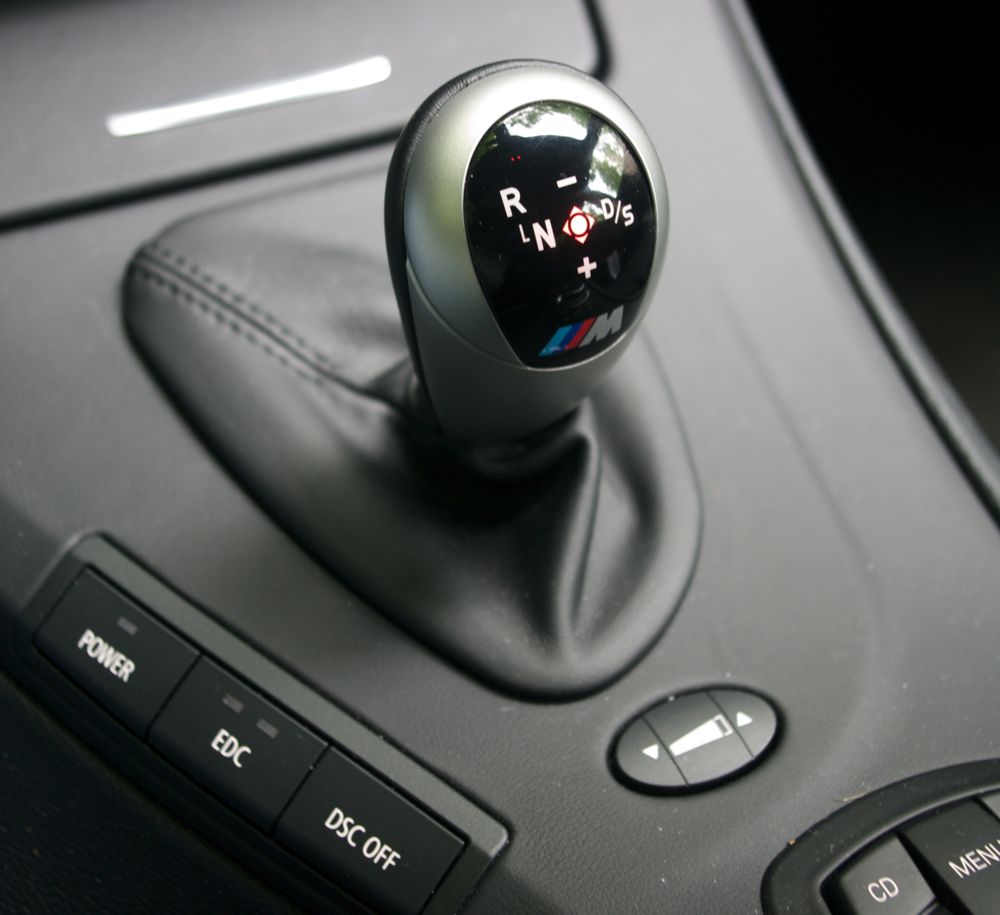
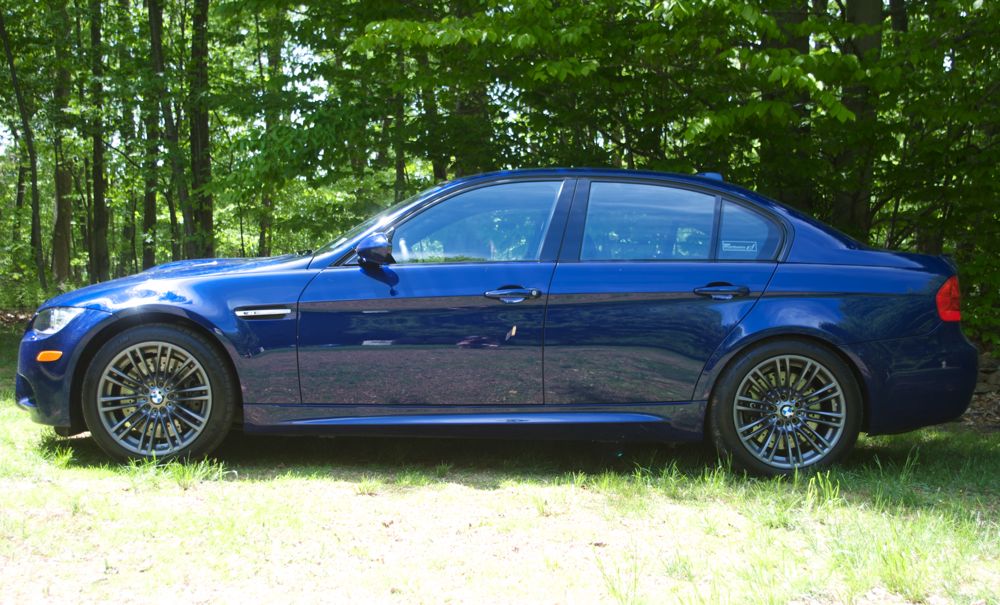
Dealing with BMW’s M3 (a wolverine in poodle garb if ever there was one) is a very interesting task. It’s ludicrously strong, and even though 414 horsepower and a curb weight of 3,700 looks pretty screamy on paper it actually feels a bit quicker than even these figures imply. My tester was equipped with BMW’s new 7- speed Dual Clutch Automatic, and while it’s magnificent at getting the power to the rear wheels with amazing urgency I never felt completely comfortable with it. It’s a technological Tour De Munich, with a number of modes to confuse the initial user. BMW states, “The Drivelogic control offers 11 different shift programs to suit the needs of individual drivers. Drivelogic offers 5 programs that allow for automatic operation of the transmission as well as 6 manual programs.” I’d opt for the 6-speed manual transmission, just to avoid all these all-powerful silicon chips.
The Dual Clutcher is pretty heavy stuff, and the weird little control unit in the console that operates it (along with the now common paddle shifters on the wheel for manual mode) is as mildly irritating as the iDrive controller, which is still a marvel of ergonomic and functional inefficiency. The M also wasn’t real wild about staying in reverse, and shifted pretty abruptly at times. God only knows what this test mule has been through, though, as it did have over 4,000 press miles on it and who knows what some of these vile journo-punks did when nobody was looking. Annoyances aside, this is a wicked-fast, wicked-handling and brilliantly-braked piece of hardware. lt’s such a great size, too, and answers the question of what would happen if a Mitsubishi Evo swallowed a Viper. True, the electronics dictate an owner’s manual so vast it has to live in the trunk, but such are the times we live in.
Monthly Archives: May 2010
Final Thoughts on The Ultimate Aprilia
Hey, say want you want about me, but I said earlier I would give you my further thoughts on the Aprilia RSV4 R once I’d spent more quality time on the device and dammit, I’m a creature devoted to supporting my utterances. Anyway, as the insanely strong V-Four has now left my custody there is much to say (which will be dealt with in detail in all of the usual publications-consult your House Elf, or do some searches, to discover where they are). I will, however, share with you the following:
First, this bike is just another Aprilia. By saying that I wish to pass on a great compliment, as I’ve yet to ride one of these polished Italian machines and not find the build quality excellent. But solid construction is one thing; Aprilias take it a step further and really flaunt the fact that functional engineering can be beautiful. Artistic, even. The hellbeast that is the RSV is absolutely no exception in this regard, for while it is a performance masterpiece it still has that special attention to detail that makes this brand so desirable. The welds on the al-yoo-minium frame are so lovely they make people like me who have in fact welded at some point in our lives weep in appreciation. Hey, I don’t know whether it’s done by an artisan in Italy or an artisan in Italy that happens to be a robot from Japan, but it is a beautiful thing.
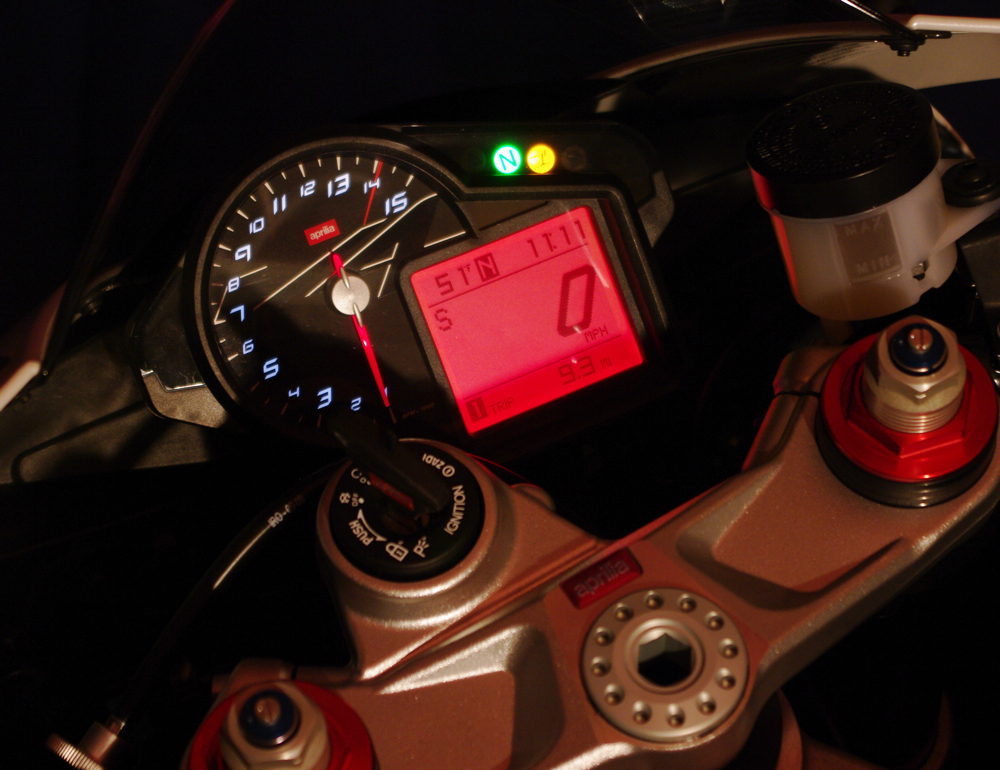
Performance: the Vee Fower is a serious rush. Unique power delivery in terms of feel, and it builds like a locomotive. Here’s techno-porn in the form of adjustable engine mapping, for you can select R for road (where horsepower is limited to 140) or S for Sport (where RPMs are limited slightly in lower gears a bit) or T for Track (which unleashes the entire herd of 180 horsepower to create mayhem and, basically, show you how good the chassis, suspension and brakes are). A long wheelbase for what is after all a race bike lends high-speed stability, but the bike still steers reasonably quickly if you give it some effort.
The bike went back to Aprilia in one piece, and I returned to my duties in similar shape. This is a really fine superbike, and very unique in personality. I shall watch its racing career with great interest.
Hybrid Fever!
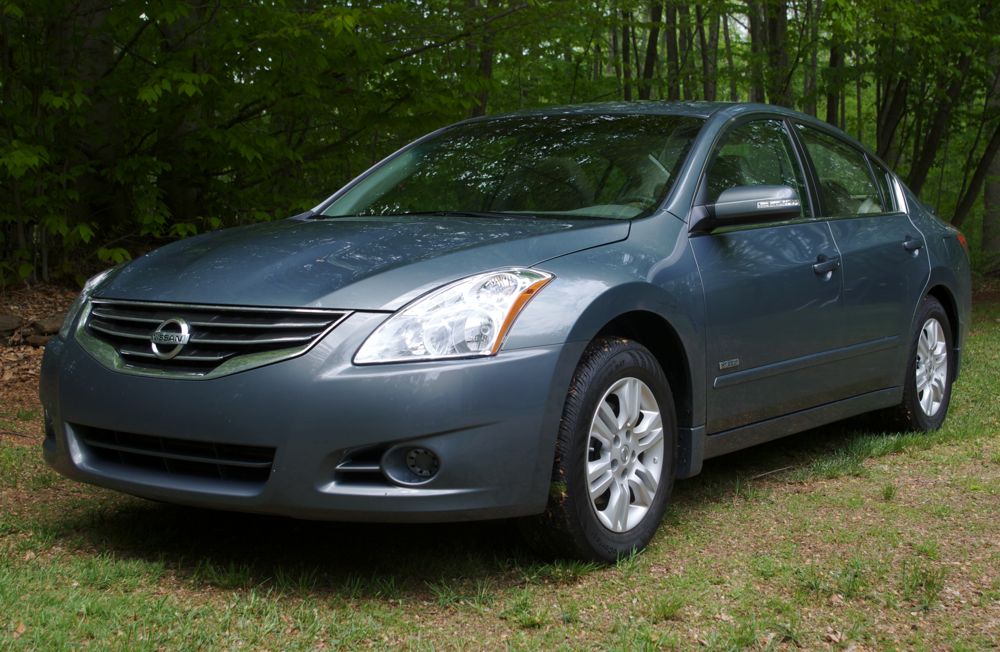
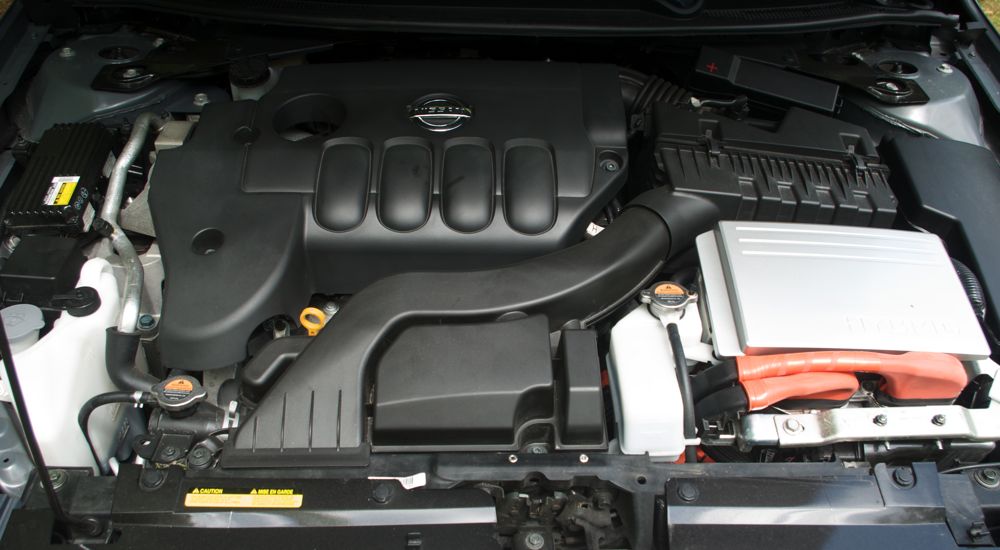
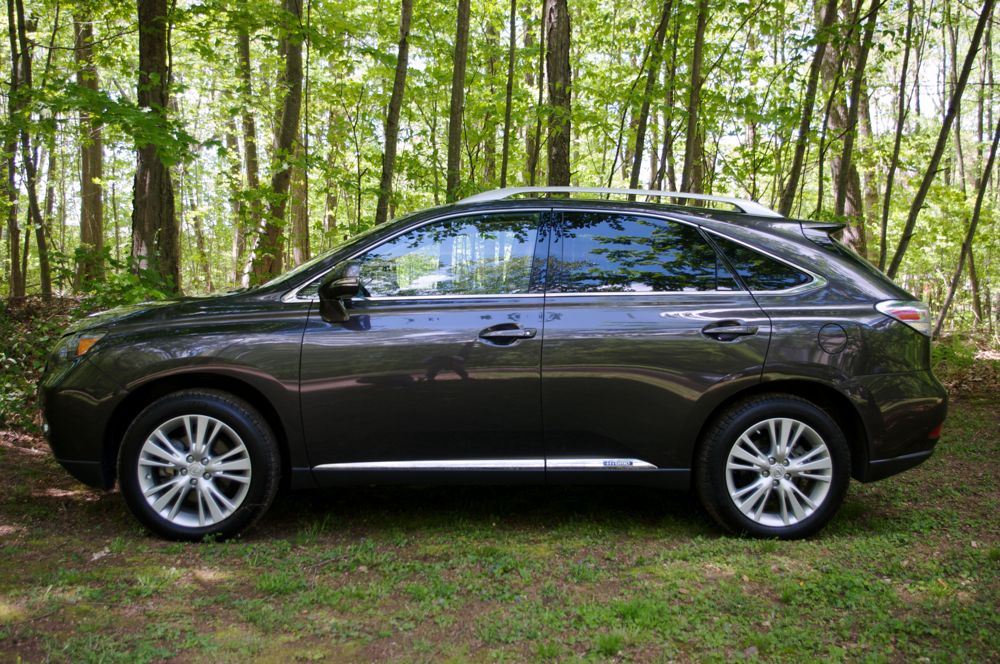
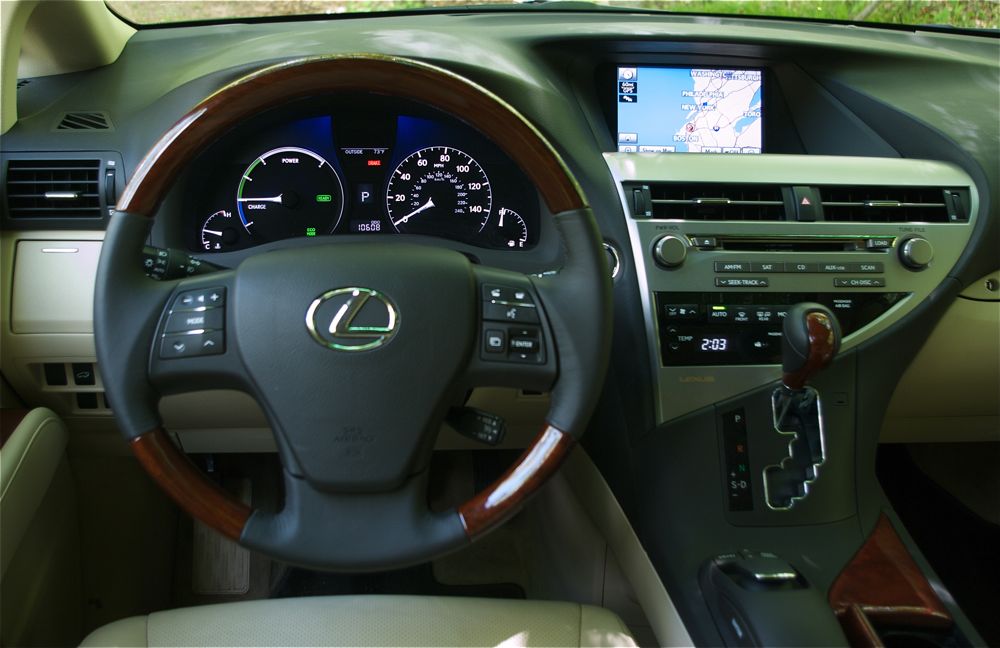
It’s not every day, or every week for that matter, that I have a brace of Hybrid autos to evaluate. But it just happened, and as I am (unlike a substantial number of auto journos who seem to feel threatened by them) a fan of the breed I’ve really enjoyed interacting with both of these eco-friendly machines. It’s been especially interesting to see the evolution of both the Nissan Altima Hybrid and the Lexus RX450h, as they have been tweaked to the point that they are quite improved over their original permutations. They are reasonably quick (both getting to 60 MPH in less than 7.5 seconds) and very refined in terms of transitioning between the gas engine and electric motor. Handling is crisp on both as well, although they are very different vehicles of course and the RX’s higher profile means more body lean and less steering response (although it is still quite acceptable). What we have here is a midsize sedan with almost full-size room that delivered an average of 34.6 MPG in mixed driving, and a midsized luxury SUV that got 31 MPG in a similar driving cycle. Costly, yes, but well worth the dinero if you need a vehicle in one of these categories and like the idea of consuming less fuel and spewing less crap into the air.
Lock No More
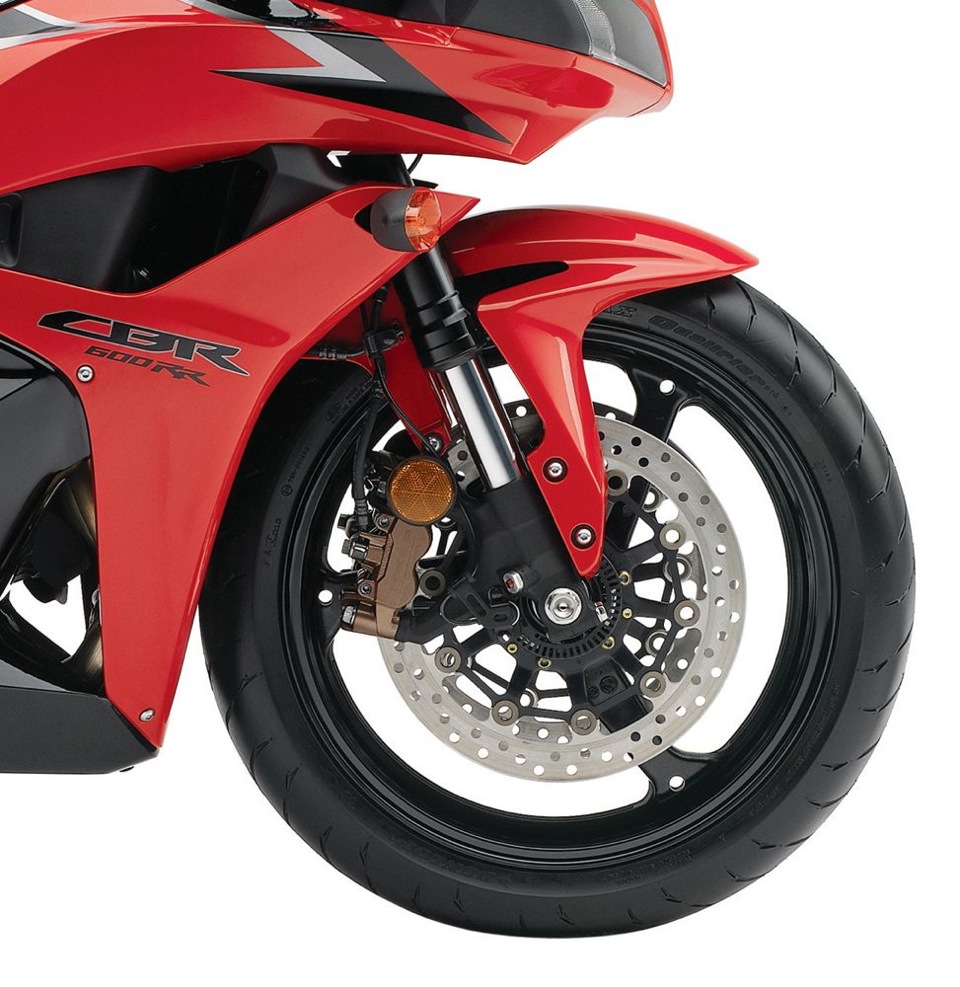
According to an article on the Consumer Reports Auto Blog, the Insurance Institute for Highway Safety is recommending that the government mandate Antilock brakes for street motorcycles. This recommendation is based on a statistical study the Institute did that shows quite clearly that ABS clearly helps reduce fatal motorcycle accidents. Of course, as with any study like this there could be other factors such as the type of rider that will buy an ABS-equipped motorcycle, but overall I thing the conclusions reached are pretty sound. Unlike so many kneejerk reactionary types that doesn’t think the government should mandate anything, I don’t have a problem with this proposal. My reasoning is due to the fact that ABS on bikes has improved dramatically since BMW first started putting in on their machines many years ago (Crikey, it was last century in fact!), and it is also lighter, more sophisticated and less expensive that it has been in the past. The state-of-the-art Honda ABS system I played with on a CBR600RR a year or two ago was flat out amazing, too, and good enough even for track use. If memory serves, Japan put a regulation in place ages ago that every manufacturer that sells motorcycles in their country must have at least one model with ABS, so even though you might think some manufacturers might not have much experience with the technology (such as Harley-Davidson) they actually do.
Again, like with ABS in cars it requires a different braking technique in panic stop situations; i.e. just nail the brakes as hard as you can and steer the thing. There’s no pumping or modulation required. Tires and brakes on bikes these days have become so good that a skilled rider can brake really effectively (meaning that ABS would rarely have to kick in) but in those particularly nasty, low traction situation the computers can literally save your bacon. It will be interesting to see what the manufacturers have to say when and if a mandate is established, although I’ll wager it wouldn’t go into effect for a few years.