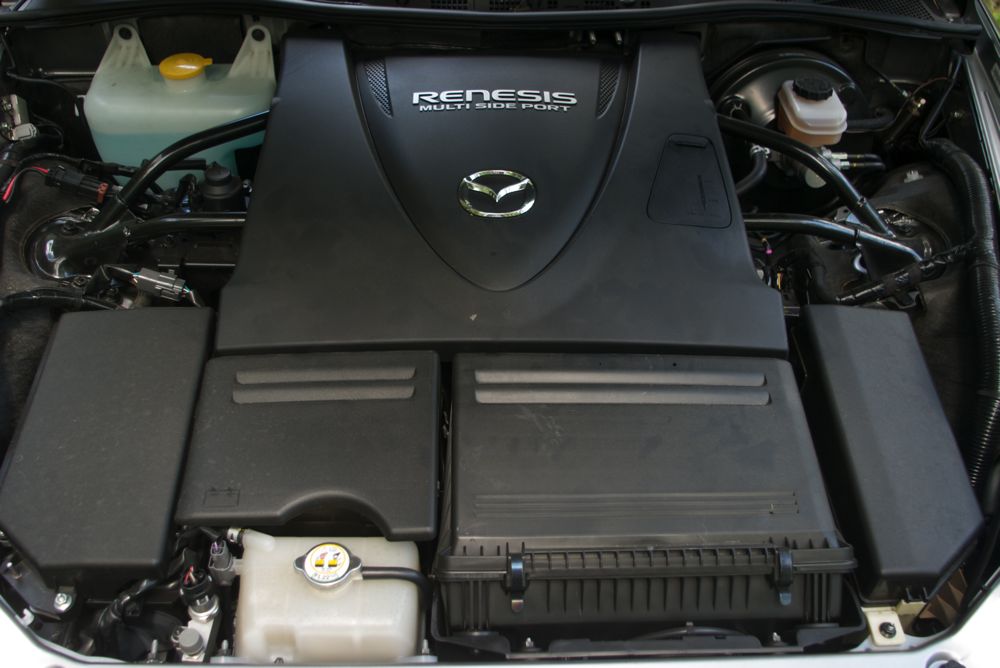
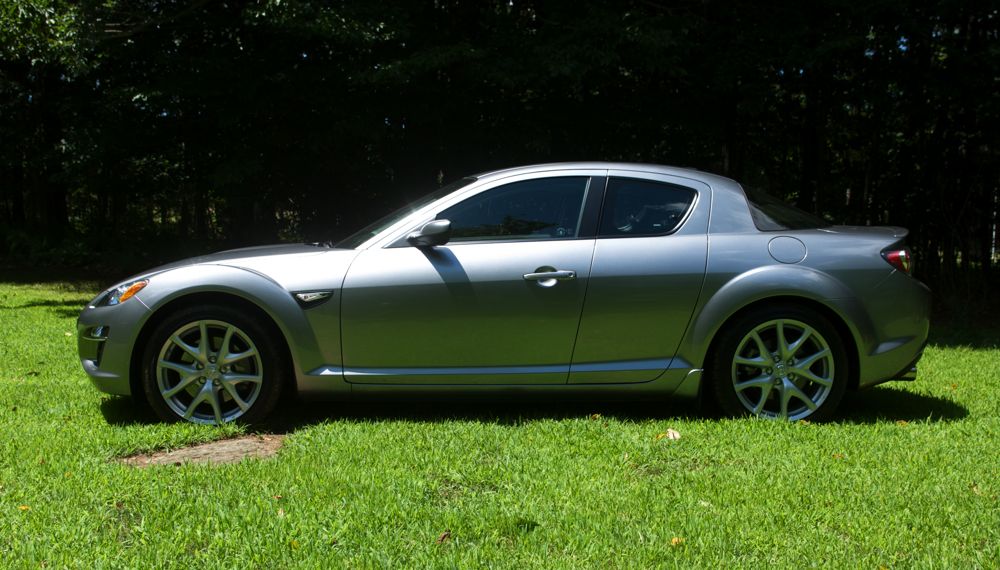
Let’s face it: unlike the motorcycle world, there isn’t really a huge variation in engine types among new autos for sale in the US. You have your Inline Fours, Inline Fives, V6s, V8s, and the odd V12. Oh, and then there’s the Flat Fours and Flat Sixes, so OK there is a bit of variety (and there are diesels in addition to gas models out there). But by far the most unique engine among the lot is the 1.3-liter RENESIS Rotary found in the Mazda RX-8. With 232 horsepower (with the 6-speed manual transmission) in a truly compact package, nothing in the world of internal combustion feels like this slick, unique mill. This engine design has undergone constant tweaking over many decades, and is now a seriously fun way to haul around this equally unique rear-drive platform. It’s silky smooth, hums in an intoxicating way and redlines at 9,000 RPM. Unlike earlier versions this latest permutation seems to have more low-end torque than before (although you still have to rev it a bit to get to the meat of the powerband). The car also has those funky rear-hinged rear doorettes that help access to the rear seats (and reminds me of the same rear door design of many, but thankfully not all, extended cab pickups).
All in all, this is a sports car that is truly unusual and (for me at least) a real ball to drive. Solid handling, great brakes and a very well-tuned suspension round out a grand touring kind of sports machine, and while it’s not a true hard-core sportster it does hustle along quite confidently. The purr of the rotary’s twin rotors seals the deal, and this is one Hummer I’m glad didn’t go the way of the Dodo.
Monthly Archives: July 2010
Dr. Suess Would Have Loved It
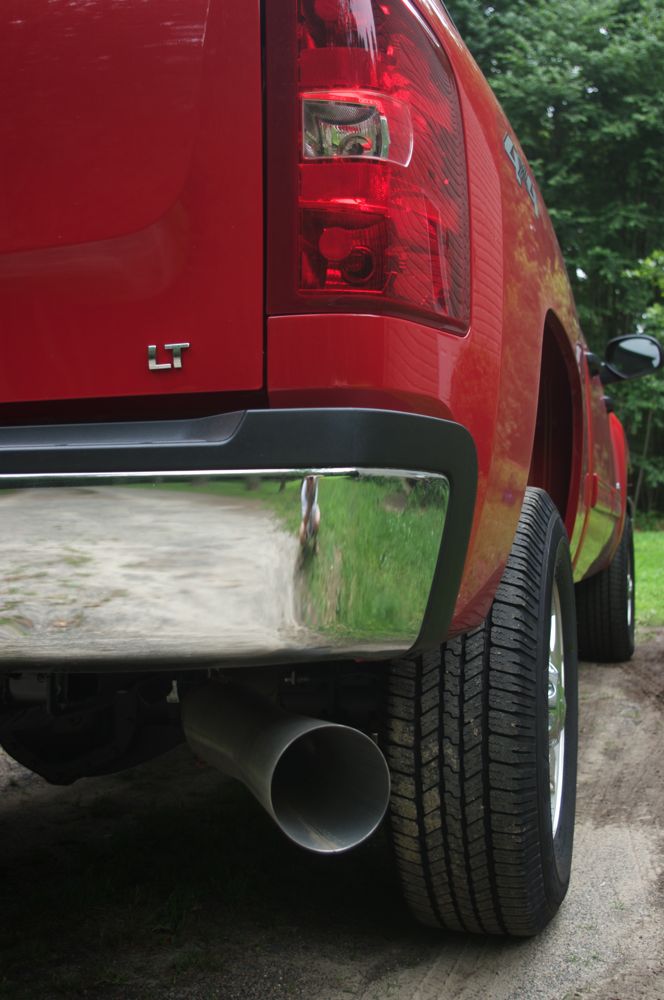
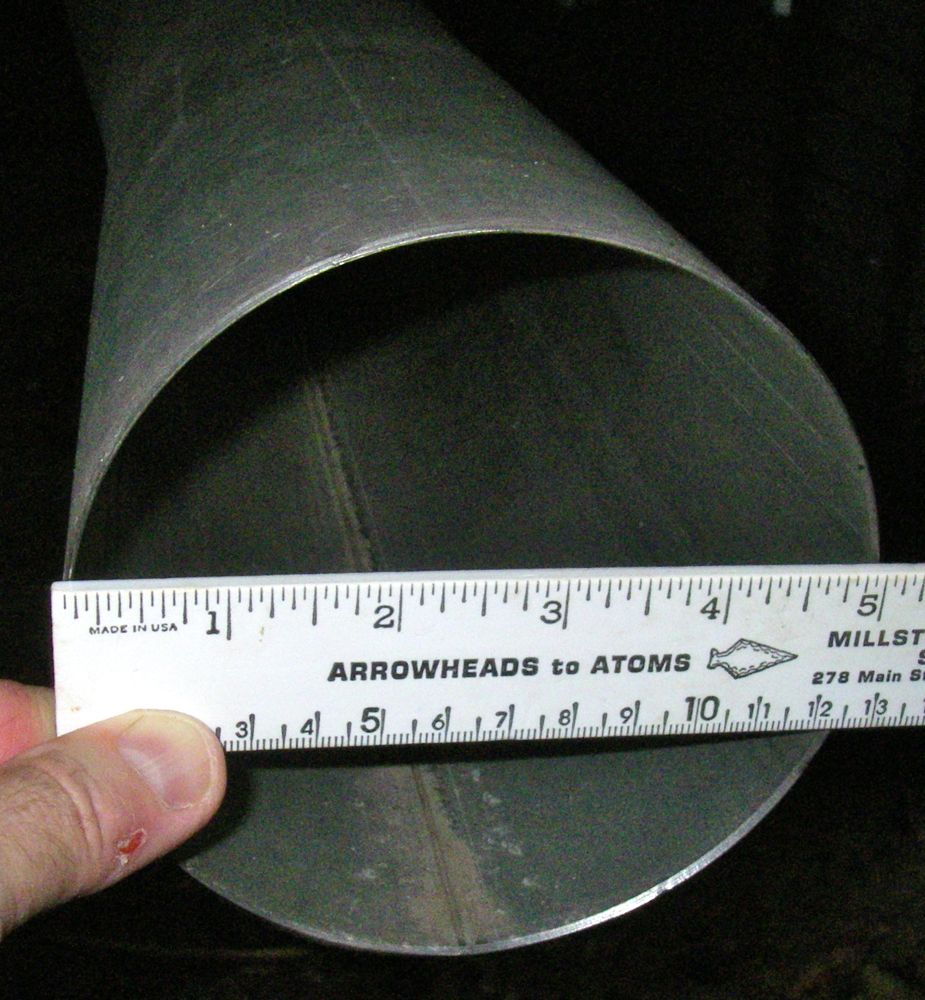
I’ve noticed a trend that seems to be getting out of hand, and while it’s possible there is a true functional reason behind it I still find it a be odd, and kinda hilarious. As the diesel engines for HD pickups become more and powerful, complex and sophisticated, the size of the exhaust pipes are getting X-Treme. The 2011 Chevy Silverado 2500 HD with the massive 6.6-liter Duramax Diesel has the biggest stock exhaust pipe I’ve ever seen on a light-duty (comparatively speaking) vehicle. Actually, it’s really more of a tunnel to the engine than a pipe. It’s the kind of thing that reminds me of a huge horn that might be blown by a creature from the imagination of Dr. Seuss, only not quite as ornate. Five inches in diameter, this thing. Does it make the driver feel more formidable? It ought to, considering the diesel w/ the 6-speed Allison transmission adds about $8395 to the price.
Does This Butt Make My Car Look Fat?
Cadillac has had a lot of creative fun (or angst, depending on your point of view) trying to get the sport wagon thing down. I personally thought the original SRX that was axed after the 2009 MY was a really interesting vehicle, but they really didn’t consider it a wagon (although if the old Olds/Buick Vista Cruisers/Sport Wagon sisters weren’t wagons, then what were they?). The SRX arrived in ’04, and was as square as a wagon could and therefore had decent room although it initially had some reliability issues.
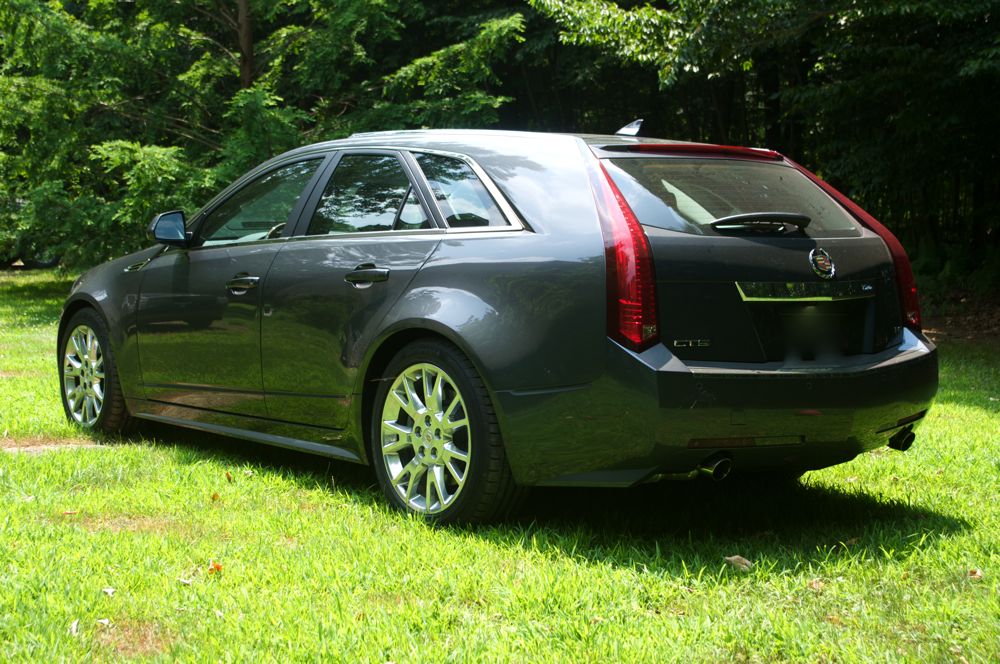
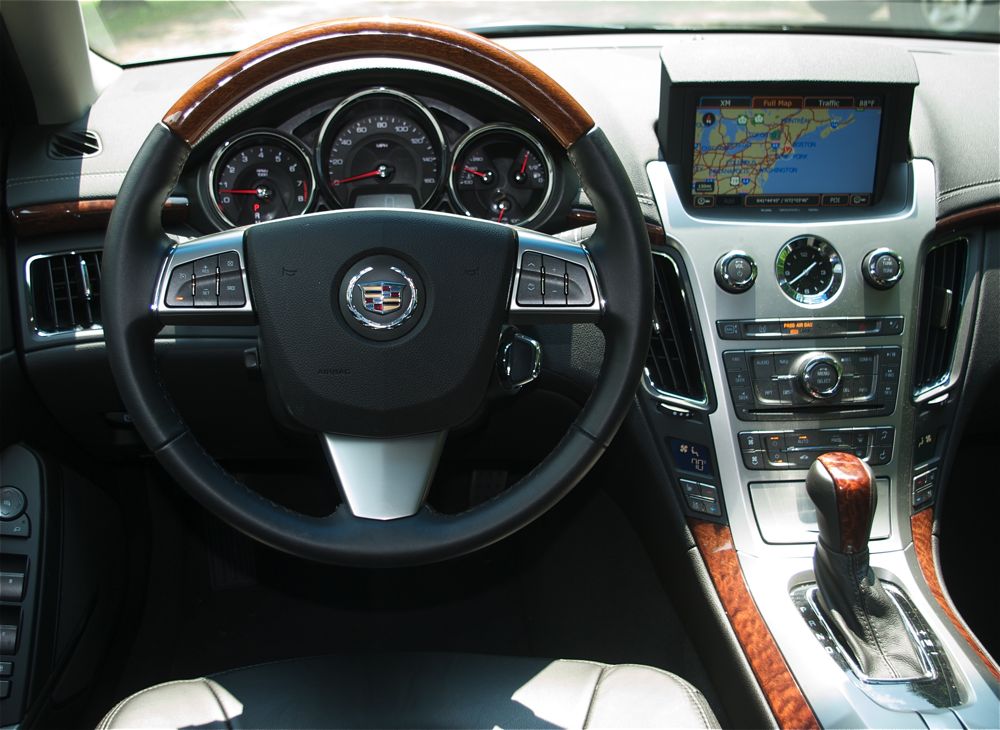
Anyway, the 2010 SRX is very different and much more in the modern crossover SUV mold, but Cadillac in not only not done with the whole sport wagon thing, they are actually calling a spade a spade with the 2010 CTS (wait for it. . . ) Sport Wagon. Much sleeker than the original SRX and definitely more Sport than Wagon in many ways, it’s pretty bold move but then again the sport wagon class is starting to gain popularity here in the US after considerable success abroad. This new entry is pretty tightly tied to the CTS sedan chassis, so there’s not a whole lot of real wagon room and versatility. In fact, I have doubts about GM’s claim that there is 53 cubic feet of space back there with the rear seats folded. But whatever. Most purchasers will probably just haul around priceless paintings or Ming vases anyway, and in this application it should work nicely. The Stay Puft CTS also handles well enough, and has a smooth RWD drivetrain with AWD available.
Location, Location, Location
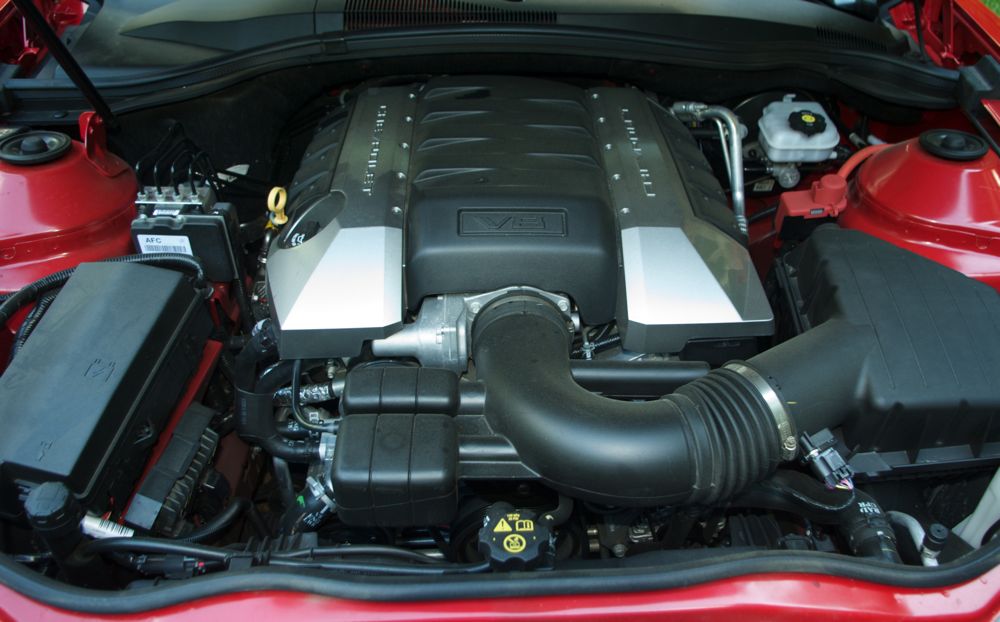
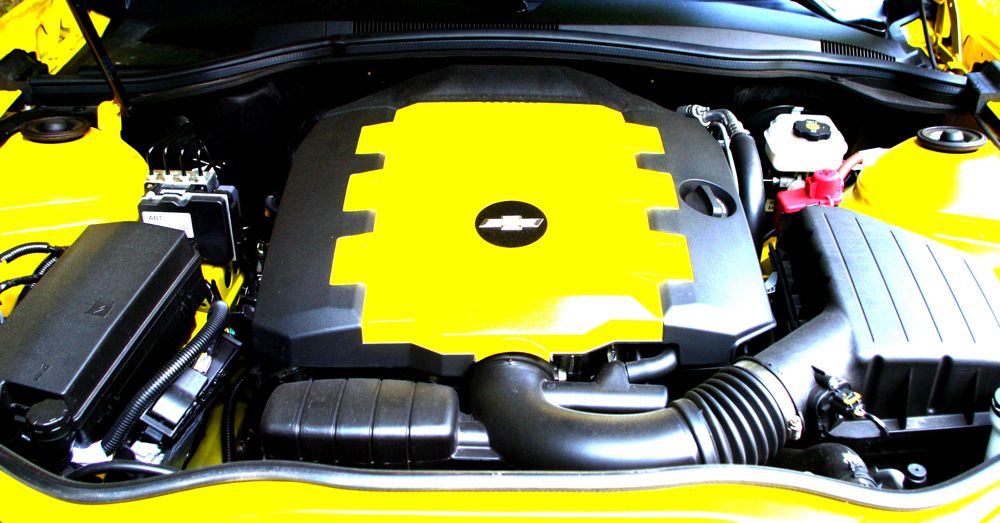
One of the first thins I noticed about the Camaro SS’ 6.2-liter V8 when I opened the hood was how set back the engine is in the engine bay. This is in contrast to the V6 in the non-SS versions where the engine is mounted much closer to the front of the car, further from the lateral axis of the front axles (the red body is the SS, the Yellow the V6 RS). The big old lump of a V8 (made of aluminum, but still pretty heavy) in the SS is mounted much further towards the back, near the firewall, which has benefits in terms of centralizing the car’s mass for better balance and therefore crisper handling. Another thing I like about this is on the cooling front, where there’s more air around the engine and much more room for a larger radiator and associated chilling technologies.
It’s A Cultural Thing
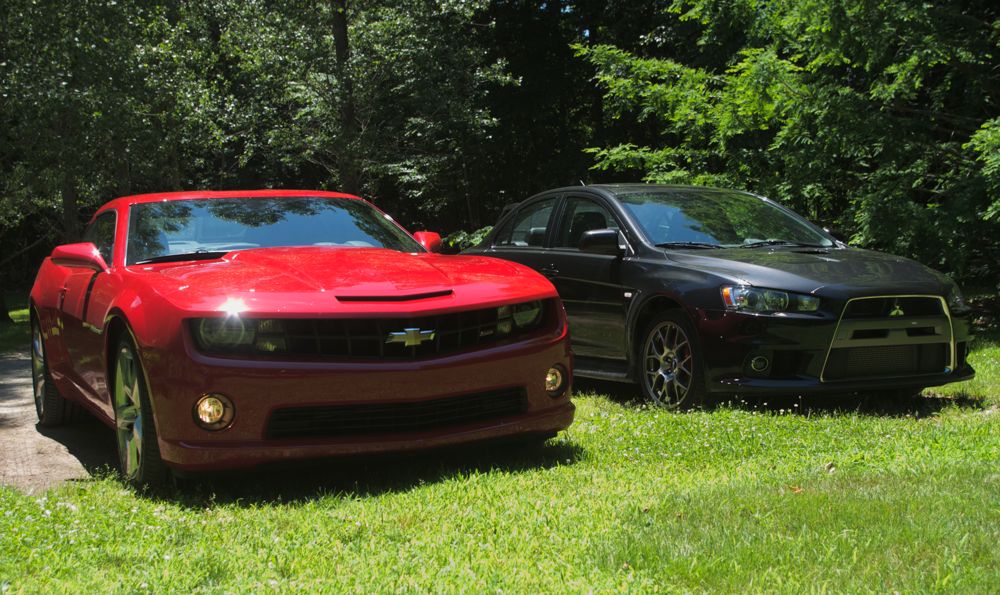
Here’s a real odd couple that amazingly enough both have basically the same mission in life: pin your butt in the seat and go down the road wickedly fast. In one corner, we have the Chevy Camaro SS. Over theyah, we have the Mitsubishi Lancer Evolution MR. The Chevy has an insanely huge 6.2-liter V8 with 426 horsepower, and a six-speed manual gearbox. The EVO has 2.4-liter Inline Four with a nasty intercooled twin-scroll turbocharger and 291 horsepower. One is a rear-drive American Icon (built in Canada of course), the other sports rally car DNA, All Wheel Drive and tons of serious Japanese electronic tuning and traction technology. One pretends to have a back seat, the other has a surprisingly roomy one. They are as different as chalk and cheese, but both go, turn and stop amazingly well. It’s really a great side-by-side, because they are both a barrel of minkeys (see: Inspector Jacques Clouseau) in their own way.
Funny, I love the EVO and have never had the Camaro Gene, even when I was a kid. I fully acknowledge that GM did pretty much exactly what they wanted to do with this car, and for a certain taste it nails all the right buttons. But I find it claustrophobic, a tad clumsy and full of cheap-ass plastic interior appointments. Great Brembo brakes, though.
The Mitsubishi actually approaches being a practical car, in addition to being a highly communicative RoadBeast. I hate Twin Clutch automatics generally, but the MR is getting it down. The doors sounds as tinny as, well, a tin can when you shut them. It drinks gas. It also has steering that is downright telepathic.