Can You Hear Me Now?

This has been a very significant decade for automotive diesel engines, and fortunately for you I’m not going to wade through a chronology of the changes that have made the evolution of the “smokers” so interesting. I just don’t have the time, you see, and neither do you. Instead, I will just take a moment to sing the praises of the latest diesel I’ve sampled, which happens to be a sterling example of how far we’ve come in cleaning up and polishing these durable, torque-happy engines. 

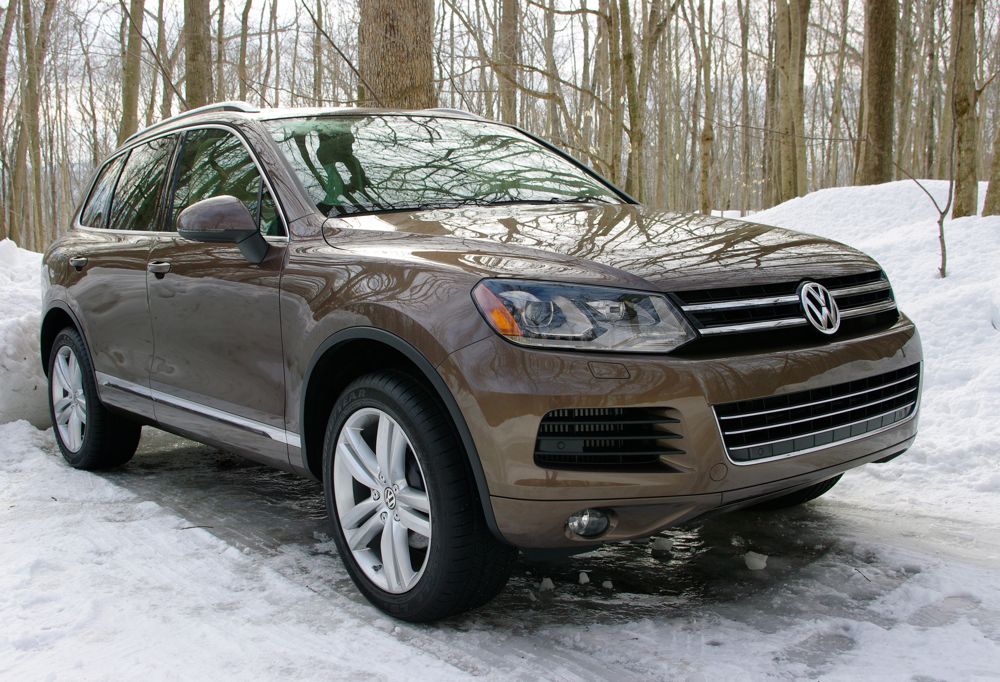
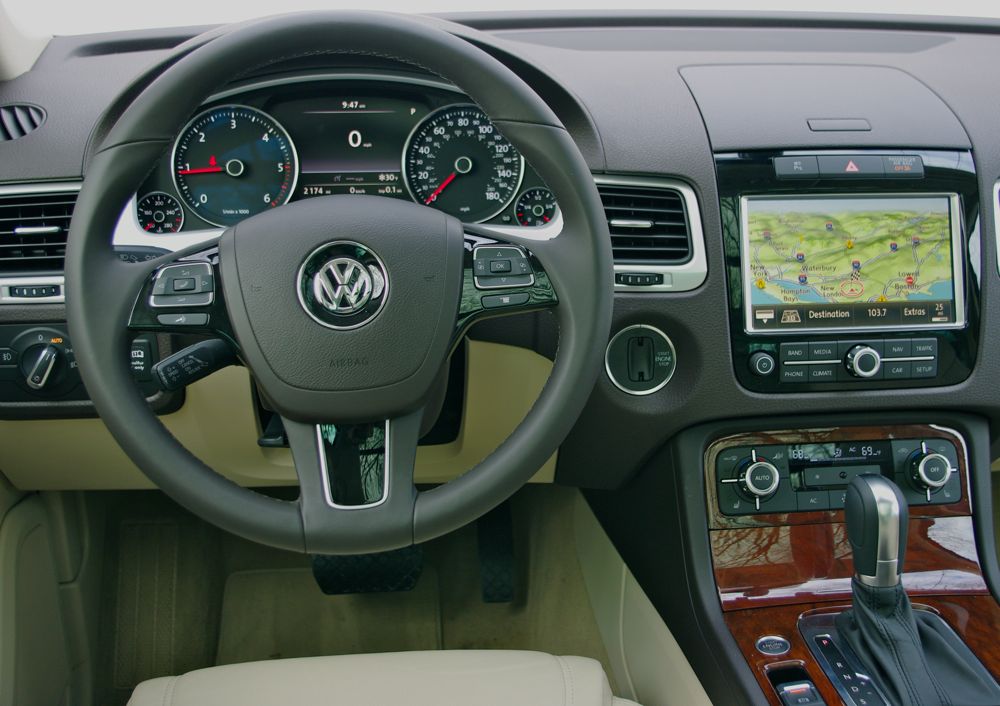
You’ve no doubt heard of the clean diesel phenomena, and what we have is a very complex exhaust treatment systems that manages to get rid of all the nasty particulates and other evil combustion by-products so the diesel engine is as clean emission-wise as most gas engines. This was no small task, and also required the adoption of mandatory low-sulphur diesel fuel to make the technology work. But work it does, and not only are modern marvels like the Volkswagen Touareg TDI’s plucky 3-liter turbocharged V6 clean they are amazingly refined, robust, and most surprisingly of all, quiet. The Touareg is already an interesting critter, with its weird name (it has a desert nomad heritage), luxurious insides and surprisingly capable All Wheel Drive chassis. The TDI powerplant suits it to a T, and the amazing thing is how it is, and isn’t, an engine that you would recognize as a diesel. Torque? Yes. Lots. 406 lb.-ft. they say, and I believe it. So the diesel’s reputation for stump-pulling grunt is intact. Also present is decent fuel economy, as we saw about 25 MPG in a week of mixed driving, much of it in very winterish conditions.

So what’s missing, apart from all the foul, lung-choking particulate poop that diesels used to spew at will? Noise. Vibration. And Harshness. For those of you in the auto trade (or at least enthusiasts that enjoy the literature), you know of the ol’ NVH as there are entire engineers (and entire engineering teams) devoted to quelling these refinement-spoiling demons. This new TDI mill is pretty amazing, and can actually pass for a gas engine in polite company. It really is that smooth and quiet, and while there is some diesel clatter from time to time it’s truly night and day even when compared to diesels from just a few years ago. Downsides? Well, it is a tad pricey (but not excessively so) and it is an incredibly complex engine that requires a refill of AdBlue fluid (which is mostly urea) during regular maintenance intervals. It’s a very complicated, highly-advanced catalyst sort of thing. You have to feed the beast so it will behave.

But in return for these minor things to deal with, you get a very state-of-the-art green engine that has amazing things going for it. Oh, and it’s quiet, too, believe it or not. Did I mention that already? Hopefully, it will have at least a decent measure of the longevity diesels are famous for to seal the deal. Time will tell on that last score.
Touareg_tdi_aTouareg_tdi_bTouareg_tdi_c

The Wheels of Winter

Well, how’s your lower back treatin’ ya, eh? I have shoveled and shoveled and everything was fine until I was clearing a trail for one of our cats (long story), and a strange, unpleasant pain ensued. Oops. Thus we have one of the many downsides of the Winter from Hell, where we have received more snow in a month than any month in history (or so I am told). I have no reason to doubt this claim. It has been pretty cold and white, all the damn time.

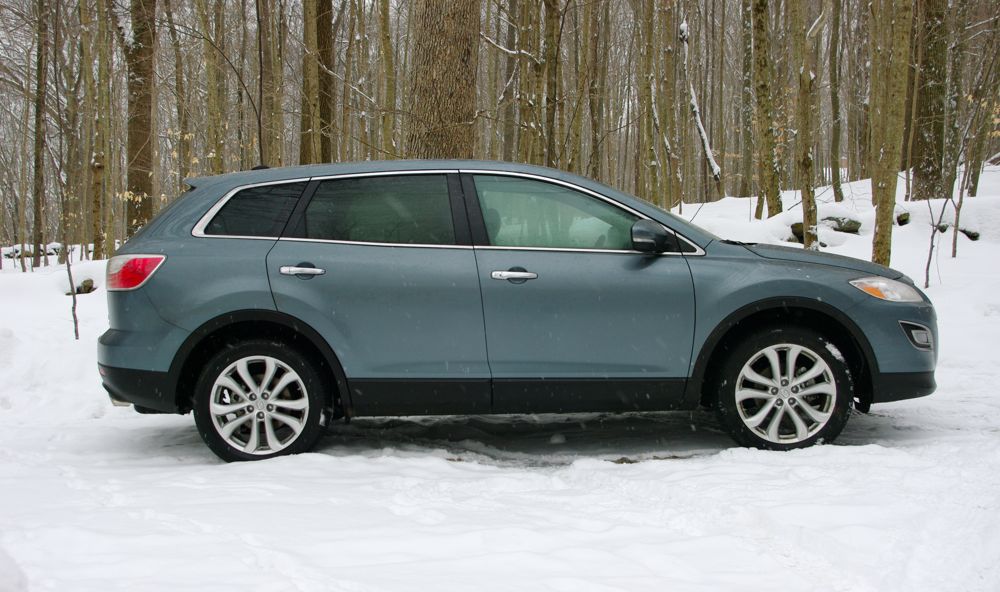
But there has been a drop or two of lemonade in this lemon of a season. It’s given me the opportunity to do a proper shakeout of some all wheel drive machines (and some non-AWD autos as well) under very wintery conditions. A lot has changed in the last couple of decades in terms of both the availability and sophistication of four wheel drive systems, and now what was just a comparatively simple mechanical drivetrain has now become more complex, and largely electronic in nature. Here’s two examples of the state of play: the Mazda CX-9 AWD and the Jeep Grand Cherokee 4X4. The Mazda’s AWD is simple as you really never even have to think about it. Normally it’s a FWD machine until things start to slip, and then you get help from the rear wheels to keep you moving. It works splendidly, and great tires and decent ground clearance have made even unplowed roads negotiable. It was very sure-footed, and I was impressed.
The Jeep has the marque’s latest off-road wizardry, so much so that it’s a bit daunting at first to wade through it all. This includes Quadra-Trac II, Select-Terrain traction control and Quadra-Lift air suspension. Got that? It is a ball to play with, as the Select-Terrain switch has a mess o’ modes including Sport, Auto, Snow, Sand and Mud, Rock, Skulls (see Terminator II) and Crushed Cars. OK, I made those last two up, but you get the point. Amazing stuff, really.
However, I have to admit I preferred the Mazda in the snow. Why? A very simple reason: tires. The OEM units on the Jeep, astoundingly, were really lousy in the snow compared with the standard All Seasons on the Mazda. The Jeep’s shoes were in fact Mud and Snow rated like pretty much all the units sold in these parts, and were made be a very reputable manufacturer. But they really couldn’t deal with snow and ice very well at all. Even with all the electronic aides and modes and Trial Rated badges and Quadratics the Jeep slid around a fair amount, and even glided backwards a bit when parked on hills. No fault of the vehicle there, to be sure. Bloody hoops were the culprit, don’t cha know.
Take home lesson, and if you don’t know this already you should take heed: nothing is better for traction, on any type of surface, that excellent tires. 2WD cars with full-on snow shoes do amazingly well on even really nasty snow and ice. And crappy rubber can make even the best AWD systems around lose their might when the surface gets nasty. I’m just sayin’.

Cx-9G