One of the the last things you should ever do in life is think that a certain company will never make a certain product. For example, you may be under the silly impression that Starbucks will never build a nuclear power plant. Well, I for one won’t be shocked when a huge cooling tower goes up across from our house with a huge Starbucks logo on it. Oh sure, it may not happen for a year or many, but I’m not dismissing the notion that it could happen. Stranger occurrences have, in fact, occurred.
Case in point: Ducati, that glorious Italian manufacturer that has graced us with some of the most fantastic sporting motorcycles in creation has done something some of YOU said they never would do. OK, fair enough, I said they wouldn’t do it either. But, they have actually built their version of a cruiser, and it’s a pretty amazing bike (and not just a Marinara-colored Harley clone, either). Not only is it a more laid back mount than your typical Duck (even the Monster and Streetfighter are still more ergonomically sporty), it looks like the the Devil. I say Devil but in this case we’re talking Liz Hurley from Bedazzled, and she’s been working out. Oh, and I should mention that this two-wheeled Hell Hurley goes like crap through a goose when you pour on the coal. It’s also one of the most electronically sophisticated motorcycles on the planet, and a real big deal for Ducati. Oh, and there’s a tale about the name: apparently one of the Ducati engineers thought a pre-production prototype looked primed for mayhem, and mentioned its devilish aspect. Just like that, a new Red Menace was born: the Diavel.
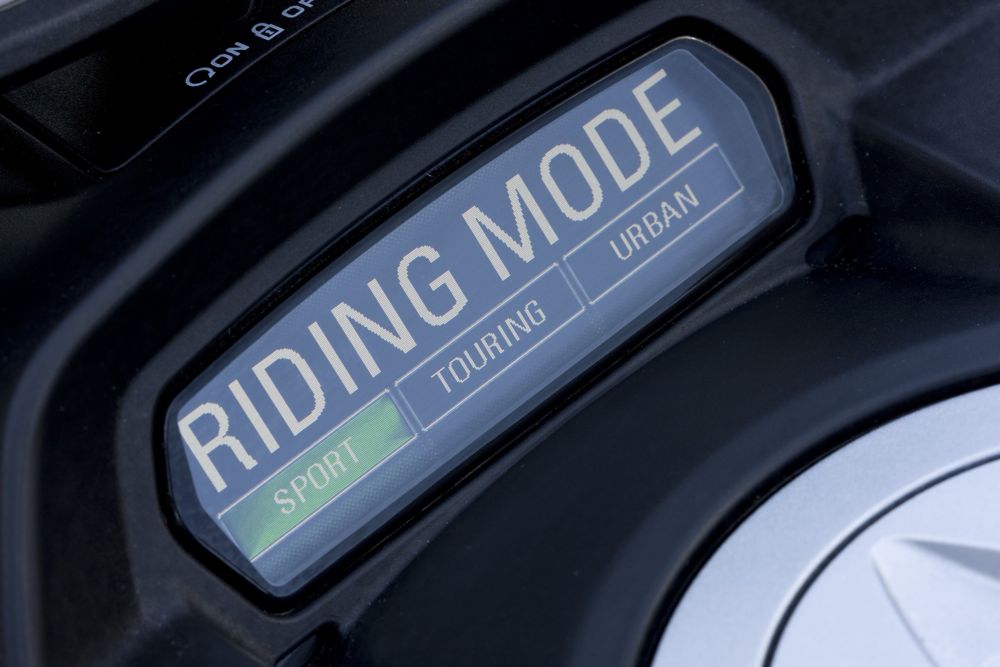
The heart and soul of any motorcycle (even electric ones, oddly enough) is what resides in the engine room, and the Diavel is armed with not just a really good Ducati V-Twin but their best one. This engine is ultimately derived from their amazing 1098 race bike; a mighty mill called the Testastretta 11º. The degree bit refers to valve overlap, and suffice it to say this is one of the most charismatic, ballsy, and intoxicatingly stonkish engines ever to be bolted into a stylish, lightweight trellis-style frame. Its 162 horses gets fed via a 6-speed transmission to a huge, 240-series rear radial, but not before it goes through some truly wicked electronics that allow you to tune the output a bit. By using a toggling switch on the handlebar, you can select three riding modes that each offer different power output mapping as well as differing levels of Traction Control intrusion. Sport and Touring modes let you access all the ponies but while dealing out the power a bit more sedately for the Touring setting, while Urban quells the fires to the point where “only” 100 horsepower is available to help keep you out of trouble especially in the wet, nasty greasiness of the urban riderscape in the rains come. For those who are really into navigating through menus, the Traction Control parameters for each riding mode can be tweaked as well, giving you an astounding number of tuning choices.
Regardless of the mode, the Diavel is wickedly fast, beautifully balanced and an amazingly entertaining especially when you really cut loose on the thing. It’s also surprisingly comfortable, even with its unusual “sport cruiser” ergonomics. There’s also a decent amount of cornering clearance to help you exploit the excellent suspension and stay up with your more sporting riding buddies. Standard ABS Brembos do the braking chores admirably, and nothing is spared on this motorcycle in terms of the latest, best components available to make the Diavel a real flagship. There’s even a Smart Key so you don’t have to fish out the old-style key deep from that forgotten pocket in your winter riding gear that’s underneath your rain gear. The DevilMoto is a real bold move for Ducati, and time will tell if it catches on with the punters. But I’ll tell you this: The engineers at this passionate company really set out to show what they can do no matter what the genre of motorcycle, and I thought the Diavel was a technical marvel and an absolute blast to ride. It also carves a visual swath wherever it goes, making it a very striking machine in a sea of me too cruisers.




 RollingProse