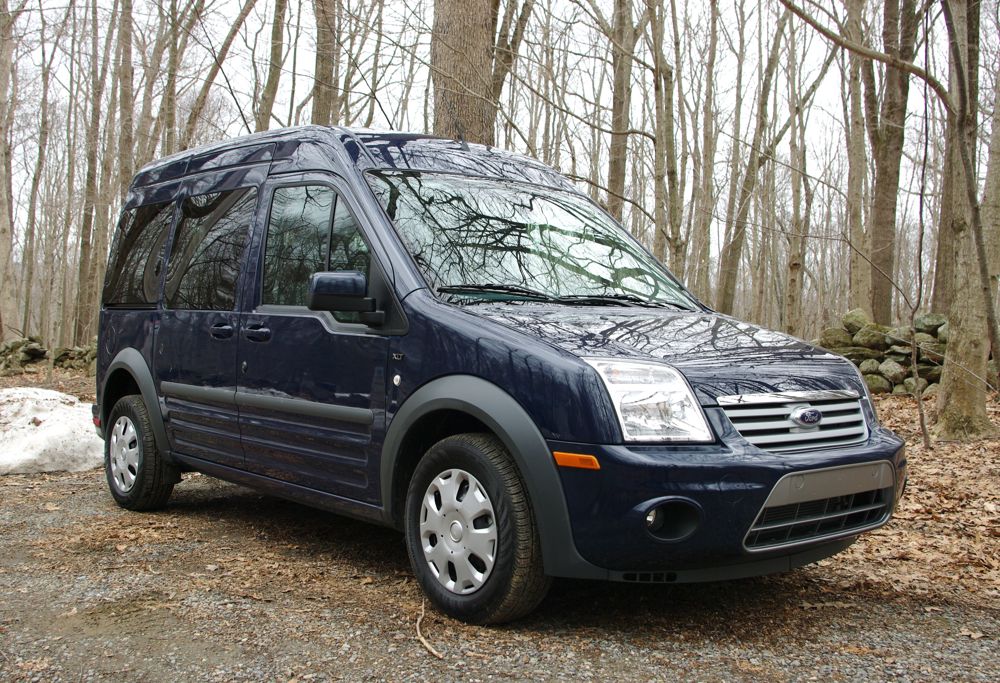
In keeping with the topic of space utilization touched on by the previous smart passion cabriolet discussion (see previous post, complete with Red Green Appreciation photo), we have a vehicle that, while certainly not huge on the outside, could almost haul said weenie little smart car around in its cargo area. This Master of Space doesn’t refer to itself in the lower case like the smart does, either, and proudly calls itself the Ford Transit Connect. This is a very European take on the van/minivan genre that is not only quite brilliant, but a great fit for a lot of folks in these United States. The basic chassis foundation is the same starting point as found on the Ford Focus, although it’s really a very different beast. What we ultimately have here in the T-Connect is a front-drive minivan with a very tall roof, great mileage and a really impressive amount of room. The version I tested had a rear seat (but no third row although there’s certainly room for one), and a decent number of creature comforts for about $25K. With the rear seat in operation you have 78 cubic feet of load space, and with that seat folded you have 118 cubic feet of cargo-gobblin’ goodness. This is a lot of room by itself, but when you see how small the vehicle’s footprint is it’s very smart packaging indeed.
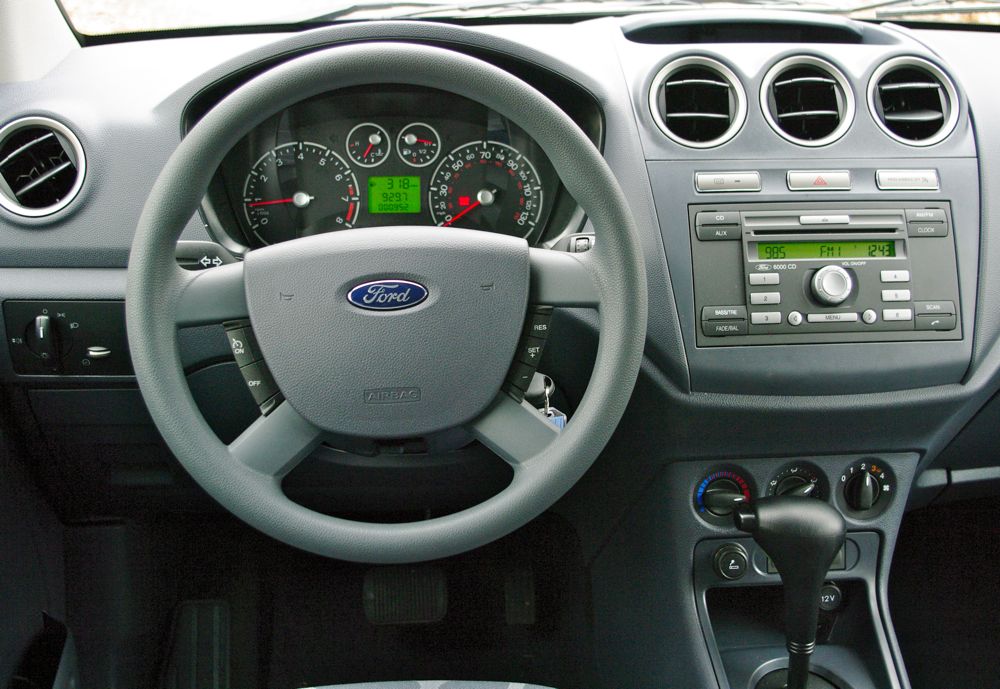
The lone powertrain is a 2-liter Duratec Inline Four with 136 horsepower, with is mated to a 4-speed Automatic transmission. Basic stuff, and certainly no dragster (0-60 in about 11.4 seconds), but it gets the job done around town just fine and delivered 24.7 MPG in mixed driving. I loved this thing. The moment you sit in it you see a Spartan yet nicely done Mobile Rolling Box Environment (MRBE), and I immediately looked around and started thinking about how a contractor could totally have their way with this vehicle and configure it to be the ultimate, fuel-efficient working companion. While you can’t quite stand up in the back of it, it does load an unload easily (two conventional doors in back, and a sliding door on both sides). Provided reliability is decent, I could see very low operating costs and considering it gets 10 MPG (or more) better mileage than most full-size pickups and has a lot of locking storage capability (even the hood opens only with a key-great for urban street parking security), it could be a very smart choice for many independent working folks. The question is, why did it take until 2011 for such an obviously useful vehicle so show up here?

 RollingProse