The V in the Prii

Prius_v_a

The Toyota Prius has been a pretty amazing automobile, what with the fact that it has delivered superb gas mileage, low emissions, and excellent reliability for well over a decade all over the globe. Interestingly, it has also been a target for people who apparently hate the idea of superb gas mileage, low emissions and excellent reliability. Either that, or they’re just a certain type of individual who apparently ties their man/womanhood to the size of their carbon footprint, ultimately making the quantity of the resources they consume and the waste they spew an expression of their “rugged individualism.” You know the type. They’d be laughable, if not for the fact that their lifestyle choice has a negative impact on pretty much everything around them. They also like to ridicule people who try to be responsible, and accuse them of being smug and arrogant. Some green types may indeed be a tad self-righteous, but in my experience they are a miniscule minority and even these people are ultimately doing something of benefit for everybody (even their detractors). Waste and inefficiency are things to be avoided, and why this is somehow controversial is more of a measure of sociopathic neurosis than a desire to advance some sort of rational “alternative” strategies.
Prius_v_int

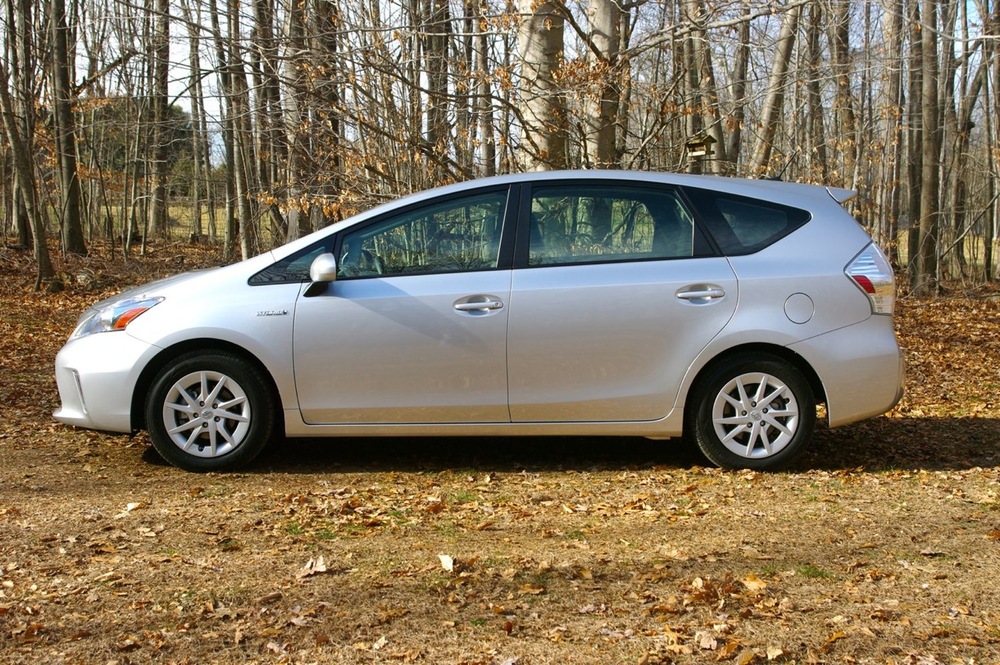
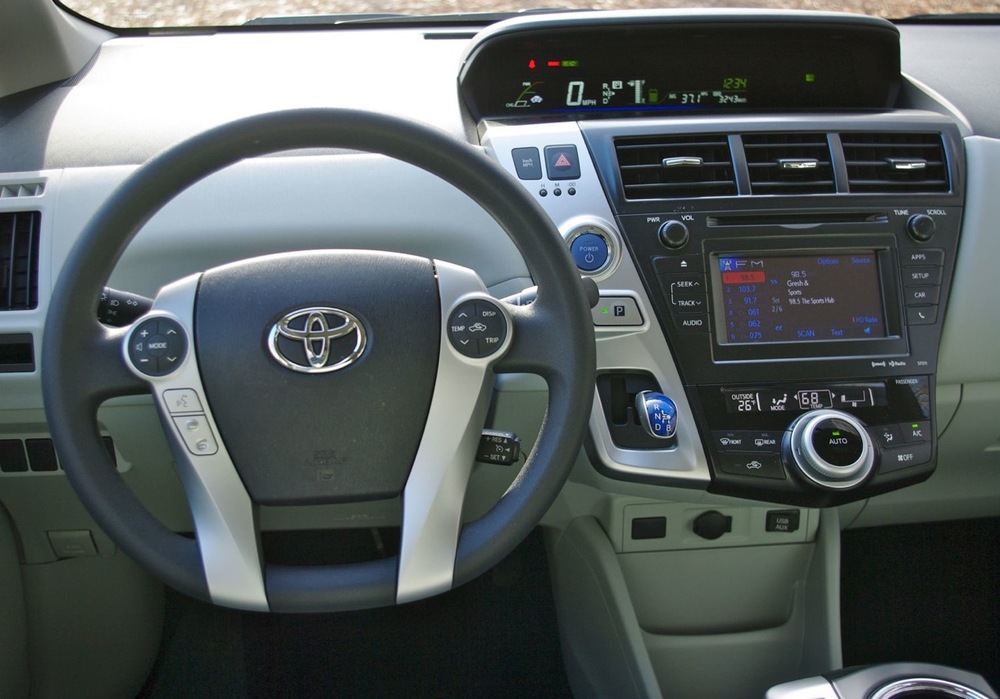
But the conflicted sociology of the pros and cons of environmentally conscious living is another topic for another time, as this entry aims to welcome the latest member of the ever-growing Prius family to the market. The Prius v is a wagon version of the 3rd generation Prius 5-door hatchback sedan, and it’s not just a modification of the body to include a bigger cargo area but also a substantial makeover of the chassis to accommodate this new capacity. Allow me to quote from the Book Of The New Prii: “Because the Prius v is a larger vehicle more likely to carry loads and passengers, front and rear suspension components have been redesigned to improve handling and ride quality. Front coil-over spring and damper capacities have been significantly increased and a new upper support has been designed. The steering gear has been attached to the front suspension member, and the stabilizer bar repositioned for more responsive steering feel and enhanced ride comfort.”

This reengineering also includes what the company calls Pitch and Bounce Control that, “uses the torque of the hybrid motor to enhance ride comfort and control. The system, working with wheel-speed sensors and in tune with the suspension, helps suppress bounce and toss motions to improve comfort for occupants. Because it helps control the balance and posture of the vehicle as a whole, it also functions to improve handling response.”
Prius_v_b

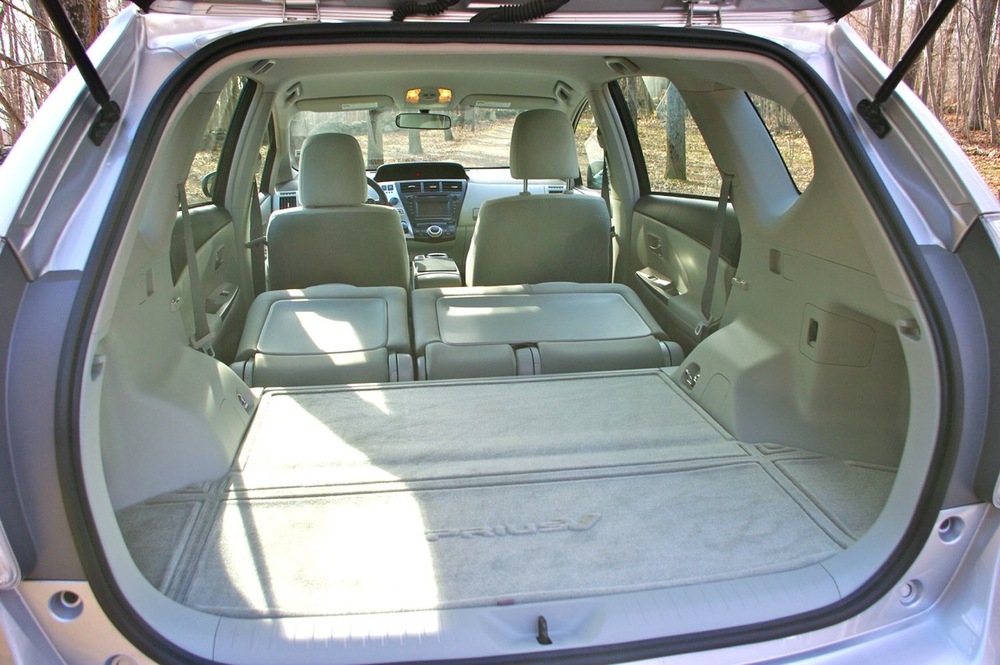
Neat, huh? Does it work? Hell if I know. I will say the car feels great to drive, very solid, planted, and steering is responsive and tight. The car doesn’t really feel bigger than a regular Prius, but it does feel more substantial even though I never had a problem with the structural solidarity of any Prius (and in the interests of full disclosure I should point out we own a 2008 model). The new v is indeed a roomy thing, with abundant rear seat passenger room and when you fold forward the seatbacks cargo capacity swells to 67.3 cubic feet. Even with the seat deployed you have 34.3 cubic feet of luggage-swallowing capacity, making this new bus a great choice for road trips.
Prius_v_engine

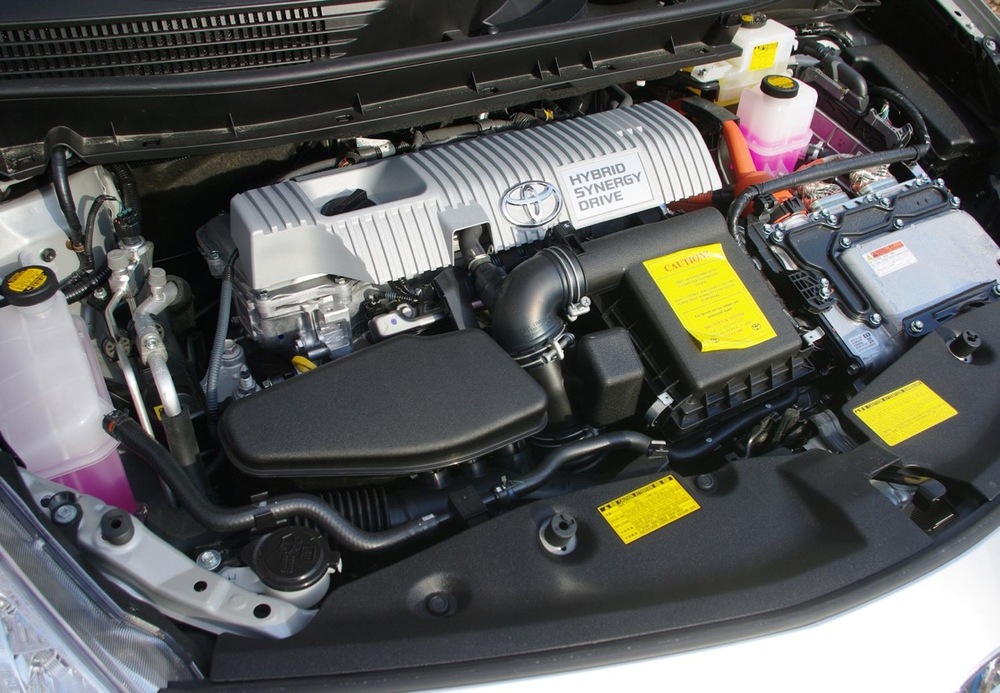
As for the performance of the Hybrid Synergy Drive, it’s basically the same drivetrain as in the current Prius sedan and has a total system horsepower rating of 134. This four-mode propulsion unit (Normal, Sport, Eco and EV) got me to 60 MPH in about 10.8 seconds in the Normal setting, so it’s no McLaren but it can merge with traffic just fine. There’s a lot of very cool technology in this system, including the ability to run further and at higher speeds on electric-only power compared with previous generations. The battery pack is still a nickel-metal-hydride unit as opposed to lithium-ion, and I’m totally in approval of this decision as these batteries have proved pretty bulletproof in this application. I still think the lithiums are a tad unperfected (although they’re certainly getting there); therefore by choosing the more-proven battery technology Toyota is insuring excellent reliability and long component life.

Speaking of which, this latest generation 1.8-liter Atkinson Cycle gas engine has no belts to replace (even the water pump is electric), further lowering the Prius v’s maintenance requirements. In concert with the electric motor, the EPA ratings are 44 MPG city/40 highway and I’ve been getting in the low 40s in mixed winter driving. I think that’s excellent, especially considering in cold weather absolutely everything gets lousier mileage than when the mercury is in the higher realms of the thermometer. That said, it should be noted that Toyota has imbued the Prius drivetrain with many clever tricks (like really innovative Exhaust Gas Recirculation plumbing) to maintain engine heat and therefore minimize cold weather mileage deterioration.
Prius_v_rear

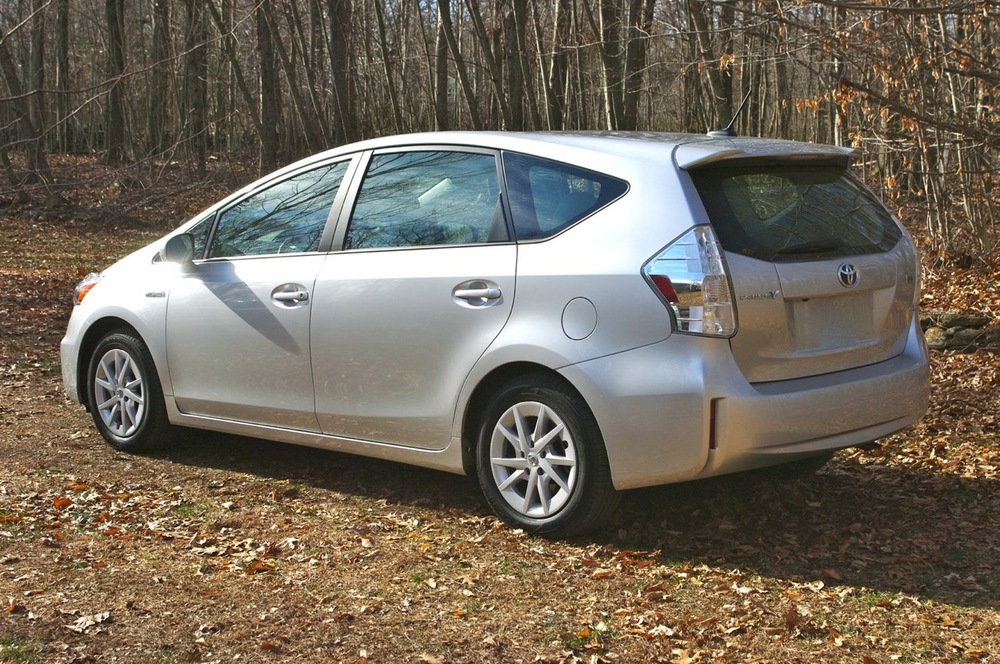
The mileage is also great considering how much space the v is packing, which is pretty substantial. I’ll be really interested in how the wagon sells, as I think it could easily become really popular especially with growing families, musicians, sales people, tradesmen, and especially musicians, sales people and tradesmen with growing families. Our well-equipped Three model (which included Navigation and Toyota’s new Entune infotainment interface) had a sticker of $28,150. As the wagon-master said to his caravan: “Hybrids. . . Ho!”
A Pad for the Pony

Ipad_posterous

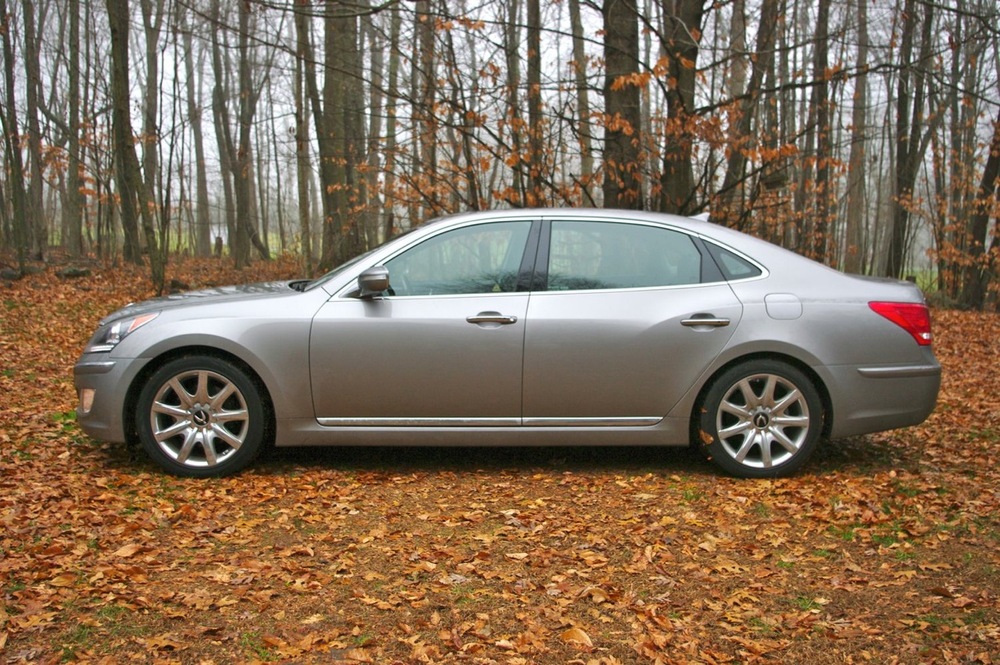
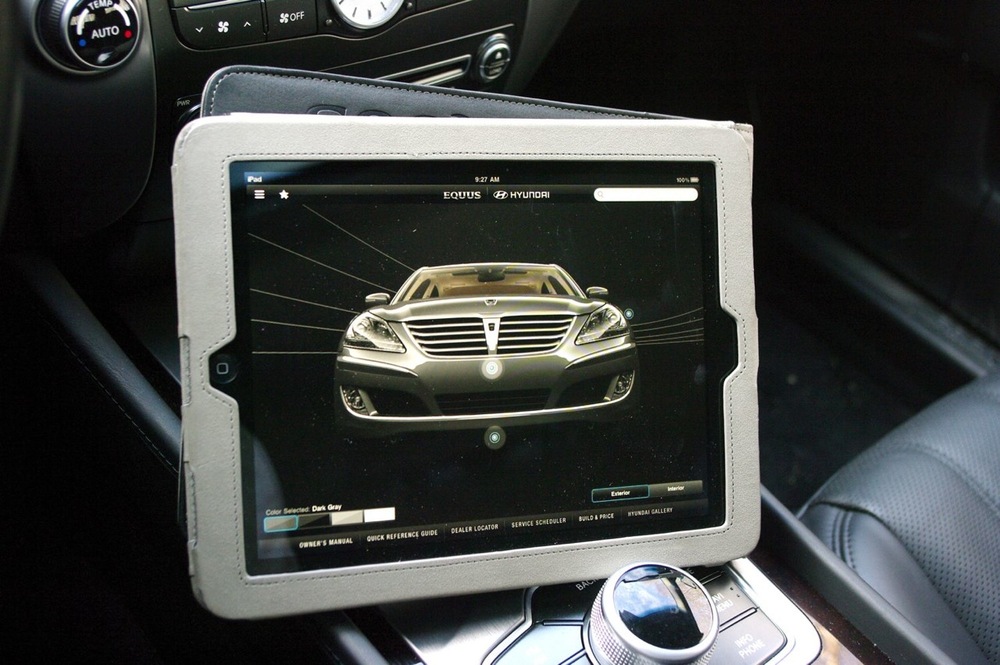
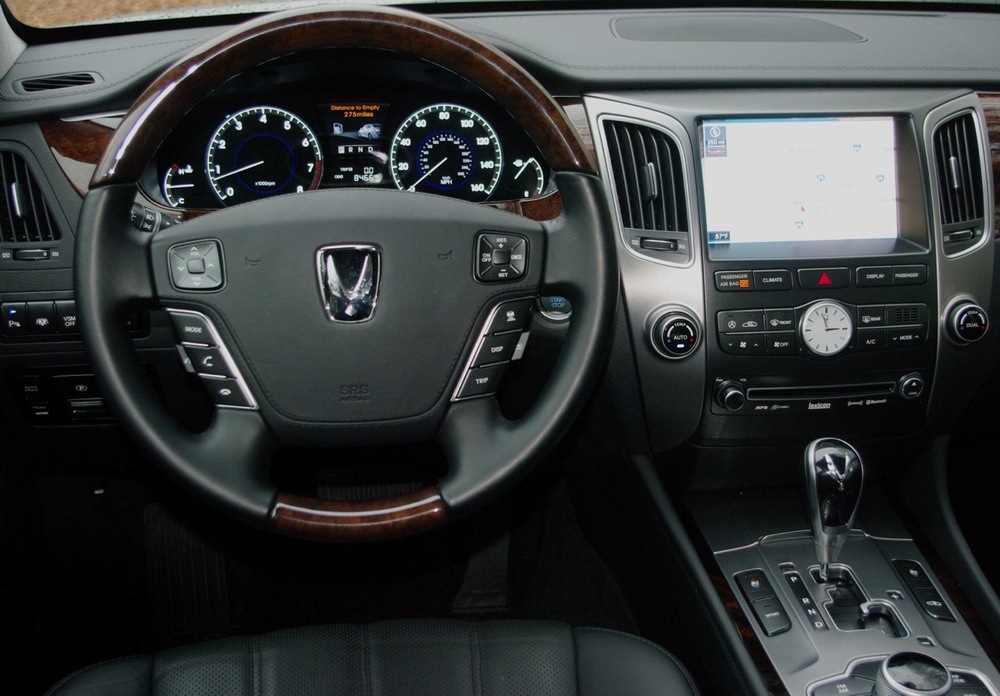
As I think so much of the new touchscreen integration (and voice, for that matter) popping up on new cars is more shite than Shinola, when I do encounter what I consider to be good use of the technology I need to deliver the appropriate kudos. The Hyundai Equus is a very nice full-size, especially in terms of its inclusion in a very upscale genre of cars for thousands of less than the competition. In addition to a regular owner’s manual (which are getting pretty enormous these days, thanks to all the new technology don’t cha know), there’s also an iPad that comes with the car and it’s wrapped in a handsome leather case. This is in addition to the Equus itself, which is kind of like an enormous iPad enclosure you can drive coast-to-coast in extreme comfort. The contents of the owner’s manual is also found here, along with some other goodies like features and benefits (with great 3-D style graphics) and other proprietary materials.

Equus_int

Anyway, this is brilliant use of the device, and it is a pleasure to use. It makes great, logical sense to put this information in this format, although you will have to charge it on occasion. As for so many of the other touch screens on the latest autos? Not so much. The rest of the Equus is much more reasonable in this regard (with more conventional controls and interfaces that work better, all though voice recognition stuff is available). Nice job, Hyundai.

Equus_ext

Wheels for a Celebrity Hedgehog

12_sonic_copy

In recent years, GM has had great success with their larger passenger vehicle offerings such as SUVs and pickups. But the subcompact class has been less than solid for the company, largely because the competition has had much better machinery that made the likes of the Chevy Aveo look a bit lacking. Feeble, in fact. Craptacular, some said. OK, that was me. But the esteemed folks at Consumer Reports in their review of the car listed only one high point: turning circle. Sad, really.

So when I heard that GM is replacing the Chevy Aveo with the all-new Sonic, I was curious but not really all that optimistic. I mean, these were the guys that gave us things like the Chevette, Monza, Sprint, etc. and they have been on less than a hot streak when it comes to things without a truck frame underneath. But Dayum, the new Chevy Sonic turned out to be a bit of all right, as they say. Somebody does say that, right? Maybe that’s just Austin Powers. Sad, really.

12_sonic_int_copy

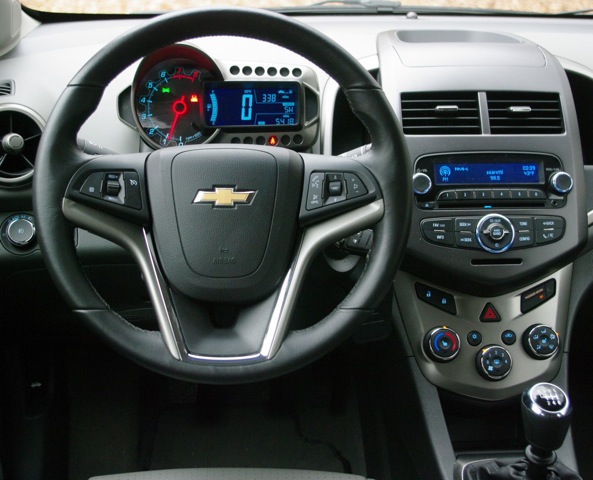
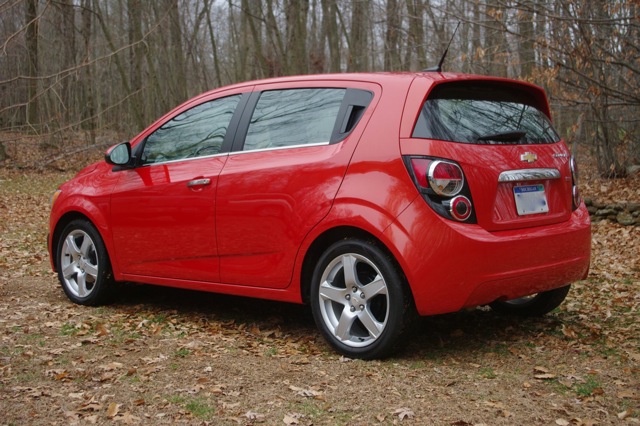
But the Sonic does not bring sadness, or at least the one I sampled didn’t. The 5-door turned out to be my entertaining Inferno Orange friend while I drove it semi-aggressively for a week, and I really liked the little hedgehog (I have now officially finished with the Sega reference, by the way. It has run its course. You’re welcome). There are a couple of reasons why I like GMs new very small car, and one has to do with its overall driving dynamics. It’s a nice, taut package that handles well and is a lot of fun hustling around tight backroads. In this regard it’s much like the Ford Focus, although I liked it more than I liked the 2012 Focus (or the 2011 Fiesta for that matter). It just made me happier, as if every drive was a fiesta, and it somehow seemed a bit more focused.
(Sorry. Couldn’t resist. I know, I should have).

12_sonic_engine_copy

The engine is a real corker in that it revs really cleanly to its 6,500 RPM redline, and as I tested the turbo model it’s important to note something about the boost the engine gets from this tiny turbine. Observe ye specifications of the two engines available for the Sonic: Normally aspirated 1.8-liter Inline Four, 138 horsepower and 125 lb.-ft. of torque. The 1.4-liter Turbo, 138 horsepower, 148 lb.-ft. of torque. Interesting, no? The main advantage the smaller-displacement turbo gives is increased torque, so is this maybe some strange, invisible homage to diesel engine lovers, who constantly claim torque is everything?

Well, no.

But it does make for some sporty response from the little mill, which is accented by a very nice 6-speed manual transmission. Good suspension compliance and that great wheel-at-every-corner architecture that makes so many subcompacts a blast to flick around are things that you can grow to love (especially if you’ve never experienced them before in such an entry-level car). And speaking of its eco status, the Sonic LTZ had a lot of very cool kit on it, including “leatherette” seating surfaces that are much like leather and they were heated, too, which is always a cool thing. Yes, warm is cool, sometimes. The wee auto is full of little amenities like that, and unfortunately some other things like GM’s goofy interface for the trip computer that requires you twist a ring on the turn signal stalk to go through the menu. It’s awkward, man. This little car deserves better.

12_sonic_rear

The five-door hatchback configuration is still one of the most versatile ones around, and rear seat room is pretty decent and if you fold the 80/20 seatbacks forward you boost cargo capacity to 30.7 cubic feet. Some econobox woes remain, like a fair amount of wind and road noise and no back up camera (which would be very useful as rearward visibility is poorish). Also, even though the car is EPA rated 29 MPG city/40 highway I only managed 28 MPG in mixed driving. True, it was cold, and winter, and these things tend to knock the crap out of mileage no matter what you’re driving (even hybrids and electrics). But still, I did expect better.That said, this is a pretty nifty package overall and easily the most fun to drive of any GM subcompact in recent memory. I came away from the week we were together impressed, and if you’re digging around for a car in this class you should definitely take one for a spin. The MSRP of the nicely-equipped tester I hammered was a charming $18,890. B’bye, Aveo. Hello, Sonic. Things are looking up already in 2012.