There is something to be said for being different, and when you enter a crowded field with something that really gets noticed it’s quite an accomplishment. By “crowded field,” in this case I mean the automobile market that has so many shape and sizes of vehicles these days it’s pretty tough to stand out, much less get lots of looks wherever you go. But in the case of Daimler-Benz’s smart car, it’s such an unusually diminutive conveyance that it really gets tons of attention pretty much everywhere you drive (and especially park) it. It’s so unusually tiny that it can be stashed almost anywhere, but has a lot of shortcomings as you can imagine. It’s not very roomy, not very quick and not as fuel efficient as you might think (and likewise not as inexpensive as you might expect) for such a wee auto, either.
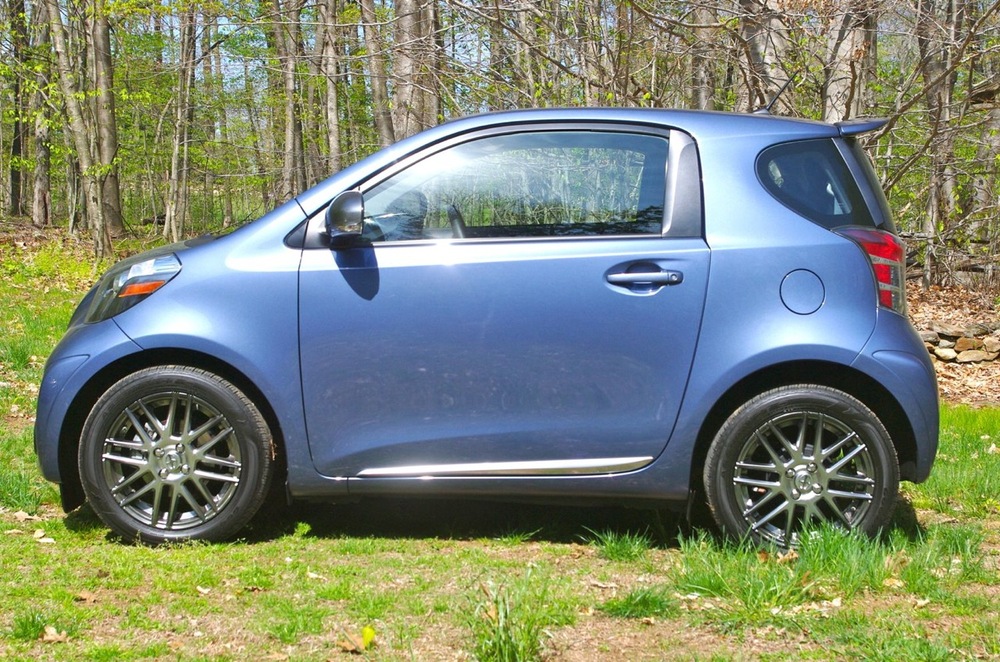
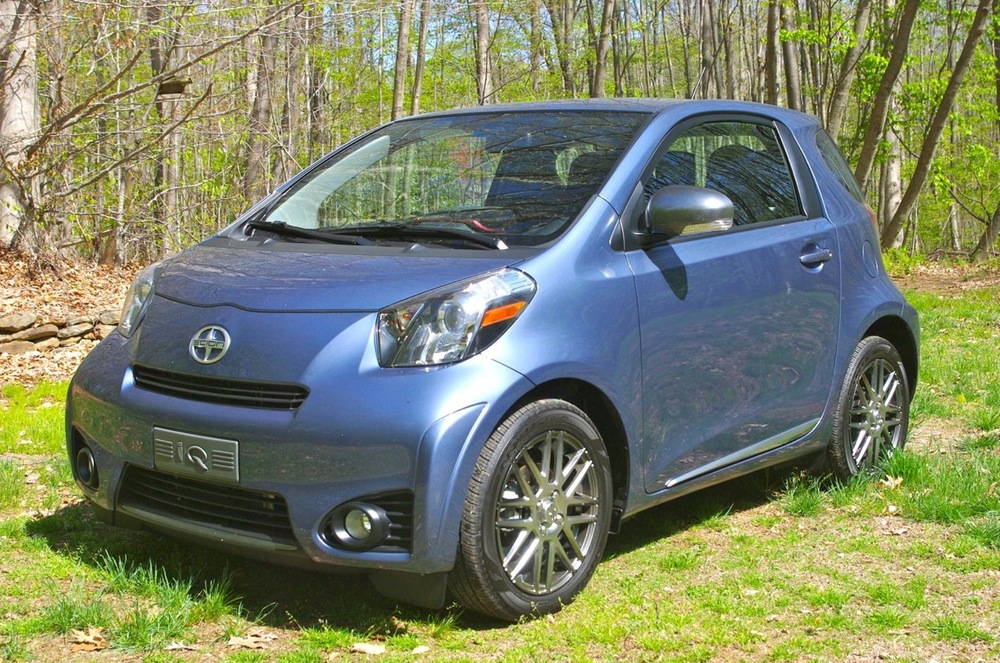
Which brings us to Scion’s new iQ (and yes, you can bluetooth your iPhone into your iQ). It is a microcar along the same lines as the smart, but even though they look quite similar they are as different as they can be when you take to the road with them. While at first glance it’s appears to be same general size as the smart, the iQ is actually a bit bigger and there is one significant difference: the iQ has what Scion calls “3+1” seating which the smart fortwo seats, well, two. The smart one has two seats, designed to accommodate one human at a time.
It should be noted at this juncture that I am personally unaware of any “crazy college kids” trying to see how many bodies they can cram into a smart, or now an iQ for that matter. Not yet, anyway. But stay tuned. They will no doubt use the latest social networking technology to engage in this silly practice any time now, though. Crazy kids.
So anyway, what is 3+1 seating? “The Scion iQ is only 10 feet long yet seats four people, making it the world’s smallest four-seater,” says Scion. But this doesn’t mean four adults, however. If I may further quote Scion, “The ‘3+1’ offset seating arrangement allows one adult to sit behind the front passenger and a child or small package behind the driver.” Interesting, no? Making the most with a little I guess. It’s tight back there, to be sure. But if you fold the seatbacks you have 16.7 cubic feet of cargo room, and that’s a decent amount for two people on a journey.
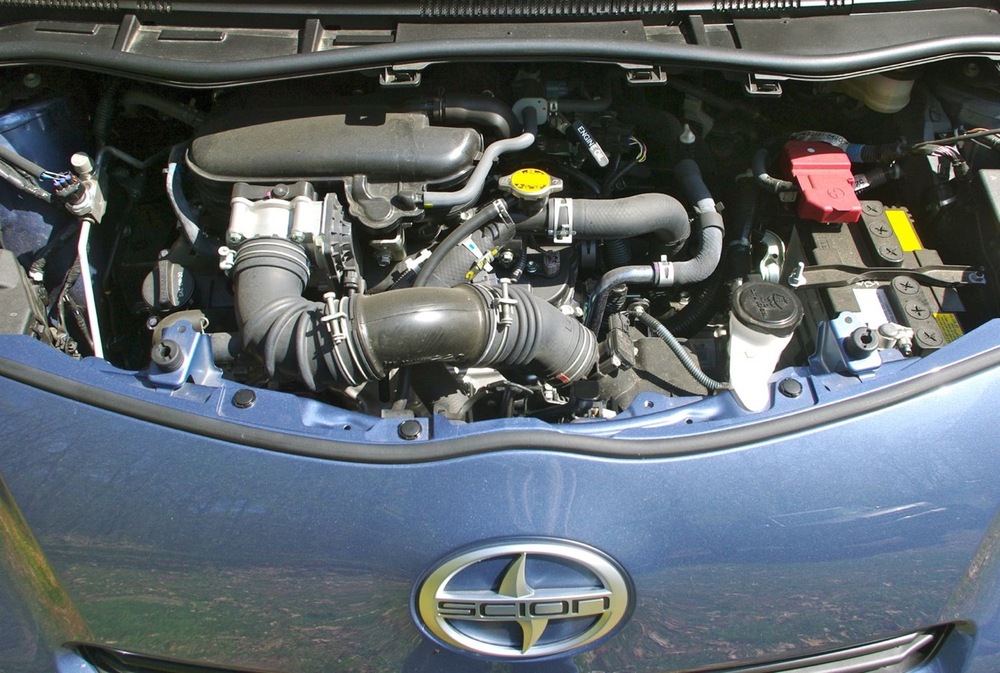
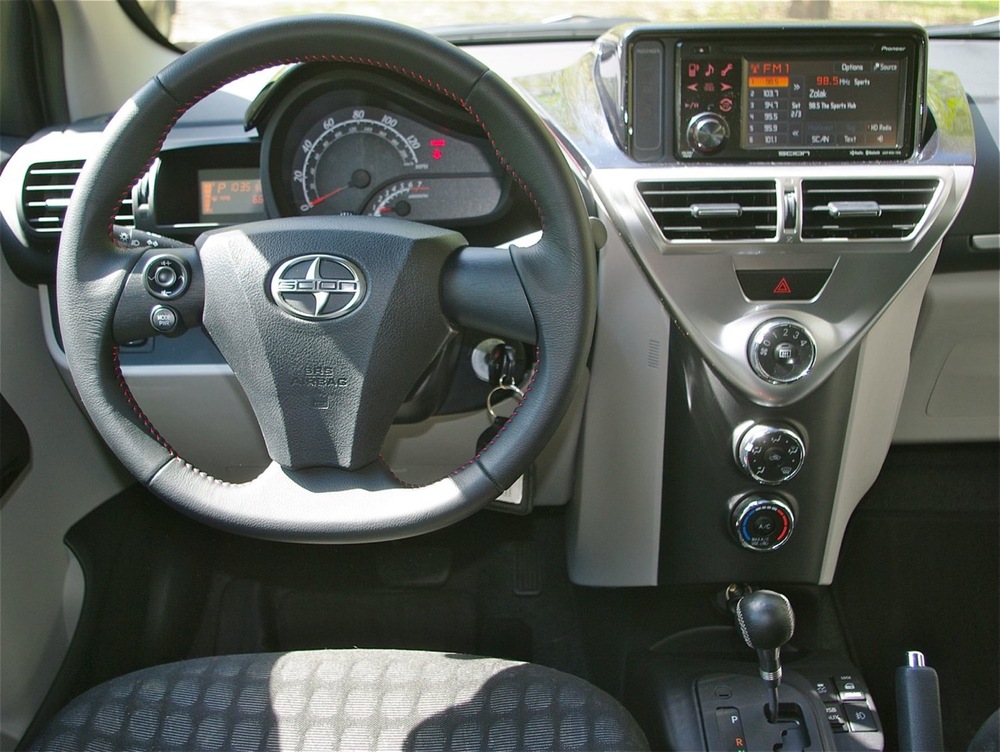
And you wouldn’t hesitate to take this little two-wheeled toaster on a trip, because it drives like it‘s a lot larger than it is. It’s faster and more powerful than the smart (which is a rear-wheel-drive, rear-engine unit as opposed to the front-drive, front-engine iQ) and has a very efficient CVT transmission that seems an ideal fit. A roughly 9-second 0-60 time from its 1.3-liter Inline Four is perfectly acceptable for this type of economy rig, and it is in fact able to get out of its own way. The suspension is firm but not punishing, and the just over 12.9-foot turning radius makes U-turns a doddle just about anywhere. Fun to drive, especially in tight urbane quarters you ask? You betcha. A wide stance helps keep the car stable and when I encountered some fairly wicked crosswinds I discovered the car stayed in its lane quite well.
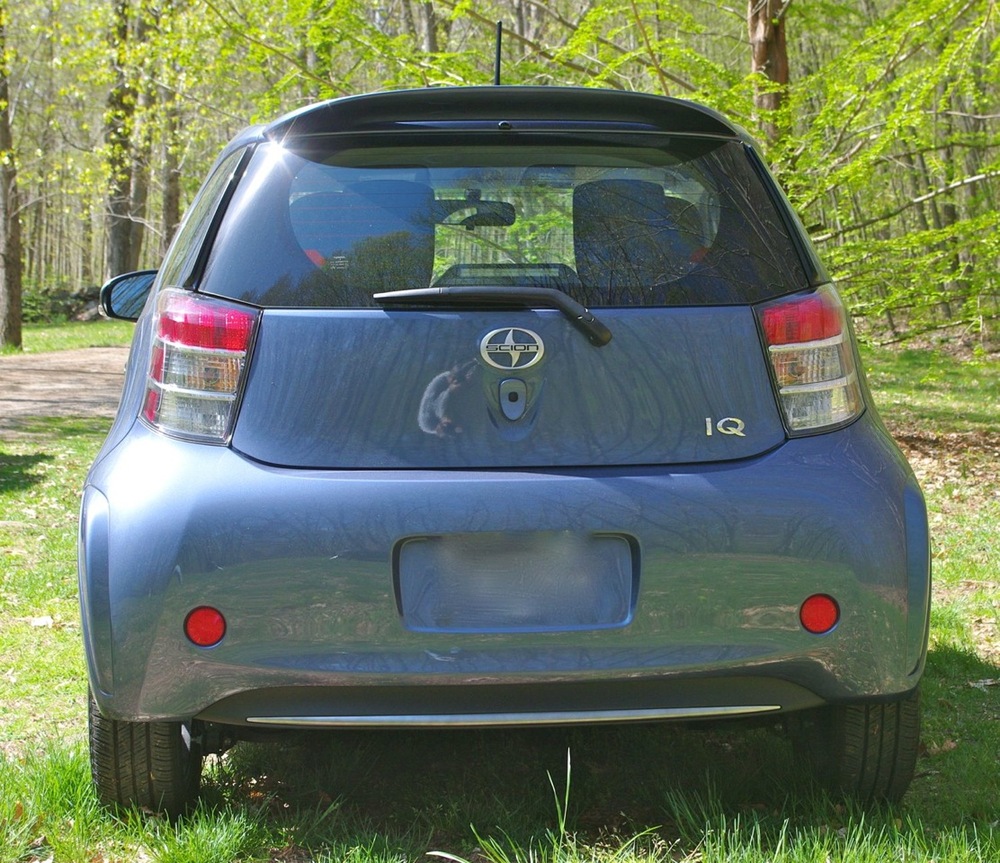
So the inevitable bottom line question is, is it smarter than the smart? I definitely think so. But in averaging 38 MPG in a week of mixed driving and costing about $18K with options (and you can’t get cruise control or a spare tire-just a repair kit is on board) it has a lot of larger, better competition at the price/mileage nexus. However, if the area/environment/cityscape where you need to park this elfin transport is really tight, then the car makes a lot of sense. It is also a great pick if you like a lot of attention, because this is a very distinctive machine that stands out in the world of large cars and SUVs. It really is that different, and when tuners and customizers get their wrenches and paint guns on it, the possibilities are intriguing to say the least.
 RollingProse