One of the things that the silly people who tend to classify things into two categories tend to (for lack of a better term) classify into two categories, is the battle between the two primary rear-drive sports car design philosophies. Or, to put it another way, there are two types of people: the ones that categorize sports car design philosophies into two competing philosophies and the ones that don’t.
My God, what have I done? I have become a silly person. The evidence, sadly, is just above. Dang. I guess I should just live with it.

So, to recap, there are two kinds of rear-drive sports car design philosophies. I created these philosophies myself of course, based on my somewhat cursory observations of sporting machinery over the years usually from behind the wheel of said sports machines. These observations took place sporadically when I wasn’t doing other things (see my collected works, if you dare), and therefore may be quite suspect. However, let me share them anyway because they play a part in why I like the Scion FR-S so much. One philosophy for the sporting ride consists of brute strength, where you take a big, stout chassis, drop in a huge V8, add heavy duty suspension components and conquer the road like a knight with a broadsword. In bumpy corners this engineering approach seemed to be to smash the bumps flat rather than float over them. This is the Pony Car way of doing things, although it could be argued that this type of hoop is more like a draft horse than an equine compact.
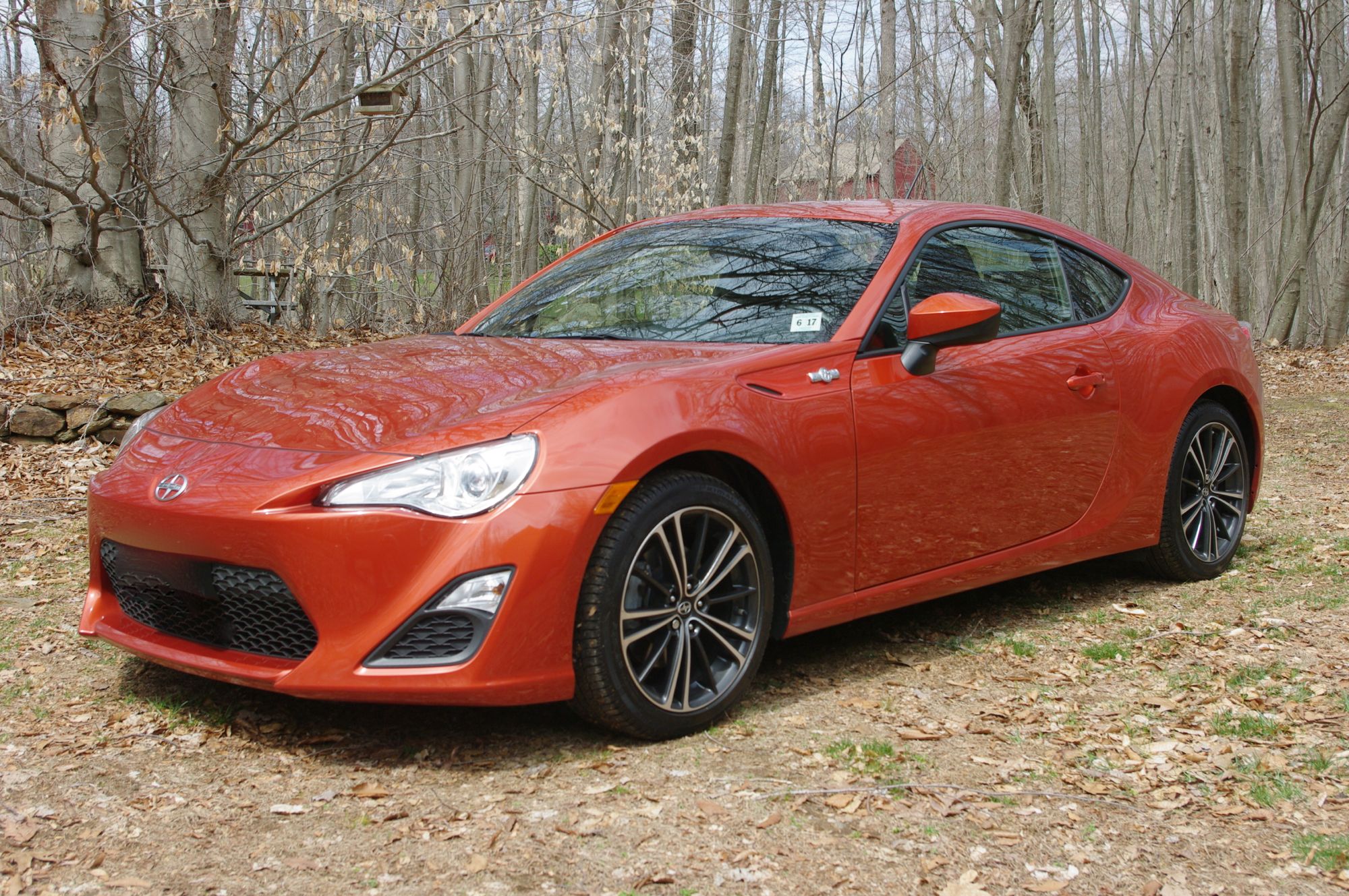
The other design philosophy is very different, and in this approach you built a stiff but lightweight chassis, install a potent but compact engine and employ suspension components designed to dance lithely over bumps rather than crush them. Ultimately the idea is to cling to curvy tarmac through balance and finesse, rather than rely on sheer mass and massive rubber. Over the years this type of sporting platform has largely been pushed aside by the more expensive, heavy GT/Pony Car approach, but there have been occasional bright spots (like the Nissan 350Z, Mazda Miata, etc.) for those who think light is the way to go. And now, thanks to both Scion and Subaru who have joined forces to create a true featherweight sports coupe, you now have the ability to score a purist’s dream: a brand-new driver’s car (and you can pick either nameplate as the cars are nearly identical). Better yet, these coupes are as affordable as they are entertaining, too. I recently spent a week with the Scion version, and the FR-S is the kind of car that has such perfect styling and proportions that you almost think there’s no way driving it can live up to the seductive allure of the exterior. You will be disappointed if you want a tire-shredding hellbeast of a car, but if you fancy a really fun ride with near flawless balance and a very reasonable price tag, look nay further. In fact, you will be dazzled by the fine road manners and driving dynamics of the FR-S, which feels more engaged with the road than most of its more porcine competition.
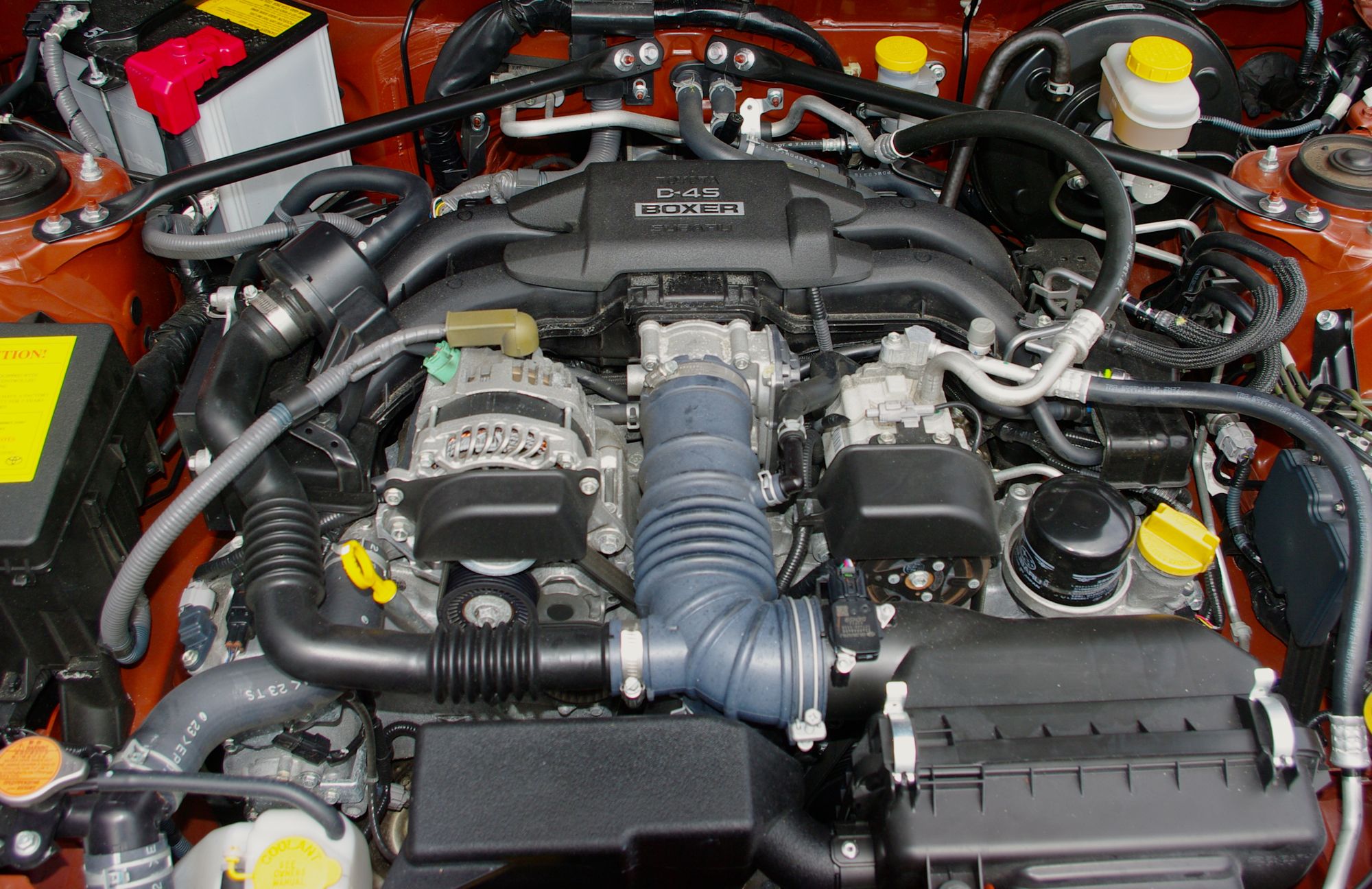
Weighing in at 2,758 lbs. with the 6-speed manual (a 6-speed automatic is also available), the FR-S is powered by a 200-horsepower 2-liter Boxer Four that thanks to its compact, flat profile helps both mass centralization and the establishment of a low center of gravity. While there’s not boatloads of low-end torque the engine fits the car perfectly and will no doubt be the object of many tuning mavens who will squeeze more muscle out of it. But for enjoying a serpentine drive home, this is a really balanced approach that flat-out works. One friend at Toyota suggested that unlike most sports coupes you need not run away from the idea of getting the automatic transmission, because the Magic Box o’ Slush optimizes shift points really well and has paddle shifters for use in manual mode.

As for my test mule, I really loved the manual as the ratios and ergonomics of the shifter worked perfectly for me. The rear-drive architecture and surprisingly responsive electronic steering make handling naturally intuitive, and a Torsen limited-slip differential makes sliding drives out of corners completely predictable and user-friendly. The suspension does a fine job of handling road irregularities without harshness, and the brakes are excellent. The twin sport buckets offer excellent support and comfort, and the interior has a good mix of utilitarian aesthetics and the latest in electronic entertainment. The rear seats are (as the Road Gods intended) mere parcel shelves as opposed to actual seats, which is fine. This is a two-seater in my view, for lightweight intimacy is a private matter best appreciated with a lone passenger.

Which brings us to other great things about the FR-S, such as even though (as my notebook confirms) I was not being nice I still managed nearly 30 MPG. Nicely equipped the sticker came to $25K, which makes this a genuine bargain. Throw in the fact that considering its lineage it should be reliable, and it has that great Subaru oil filter placement on top of the engine for easy maintenance. But all this is just icing on the peacock compared to the great overall engineering of this car. Light weight, perfect balance, excellent composure, generous feedback and a great cockpit to enjoy it in make this is true pleasure unit that is even economical daily transportation. Take that, bloated pony cars.
 RollingProse