Ghosts in the Machine

The march of the computer machines to take over the entire planet (and eventually the known universe) is proceeding apace, which will no doubt please all the geeks waiting patiently to Assimilate into the Collective. This is not to say that all computers and associated technologies are bad, of course, and in fact most are doing great things especially on the automotive front. Far be it from me to attack all the wondrous changes happening in the cockpits of automobiles, but the point I’m trying to make is there’s so much of it (and it’s happening so fast) that I can’t help but wonder how much is here to stay or just passing through. A great example of this is all the magic beans found in Audi’s formidable S6 sedan, which is a pretty fascinating car on all fronts but especially in the loaded-with-the-latest bells/whistles/lasers/radar/infrared/surveillance/speakers/it nearly drives itself/wow department. It’s also an impressive sports sedan with a potent drivetrain and chassis, as well as a heaping helping of creature comforts.
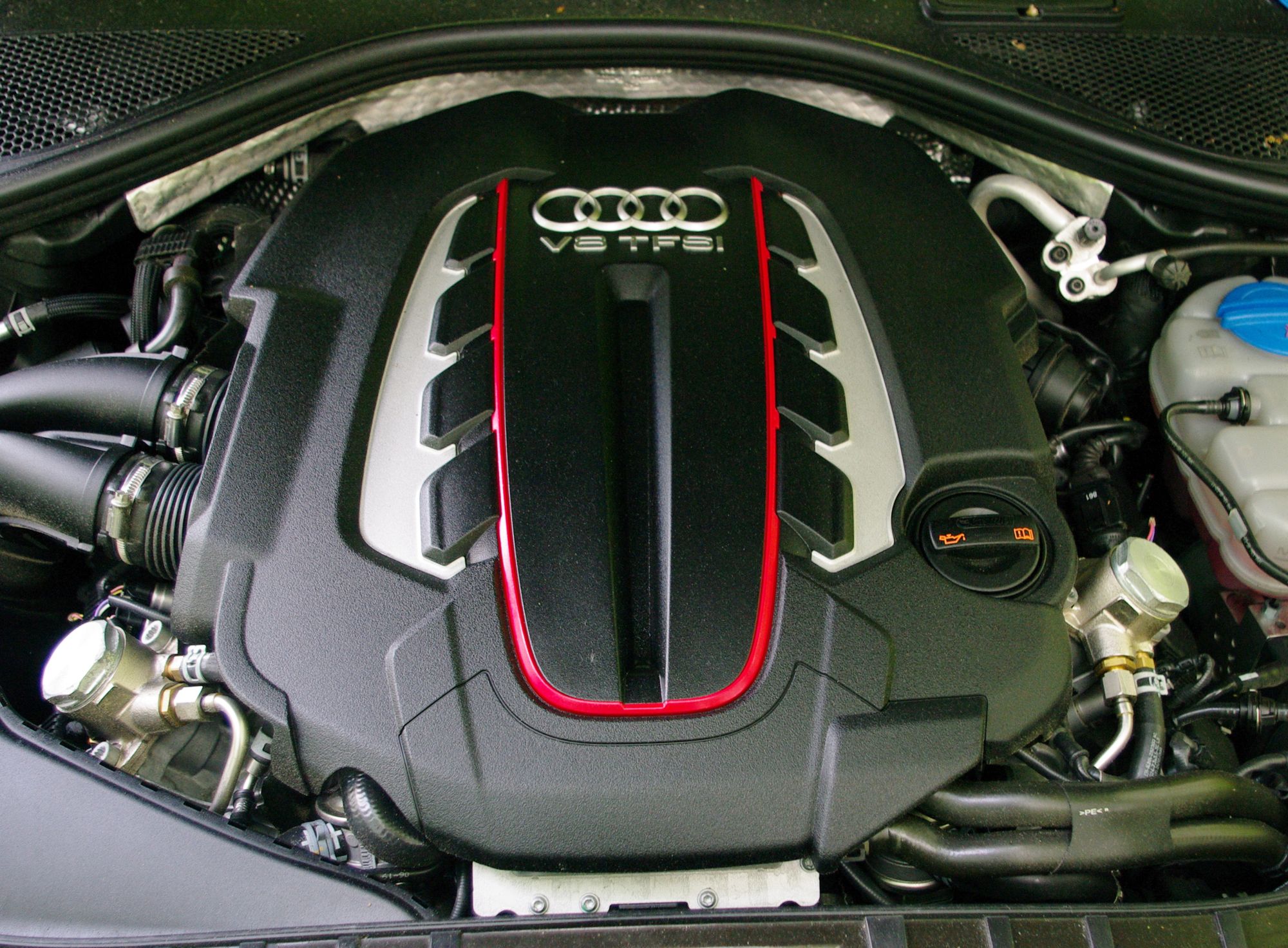
The mere mechanical car stuff includes a 420 horsepower Twin-Turbocharged V8, mated to a 7-speed Automatic transmission and Audi’s Quattro All Wheel Drive. It’s a bit of a rocket as you would imagine a midsized sedan with a fire-breathing inferno under the hood would be, and it is a gas to thunder around on your favorite twisty tarmac. Handling is sound, although ride quality deteriorates a bit over broken pavement as it’s definitely on the sporting side of the sport/luxury equation. Oh, and there’s a lot of road noise, which seems odd on a car like this. But then there’s excellent steering, and the brakes are massive beasts with rotors you could bake pizzas on and they haul the car down in short order. Great stuff, right? Of Course.
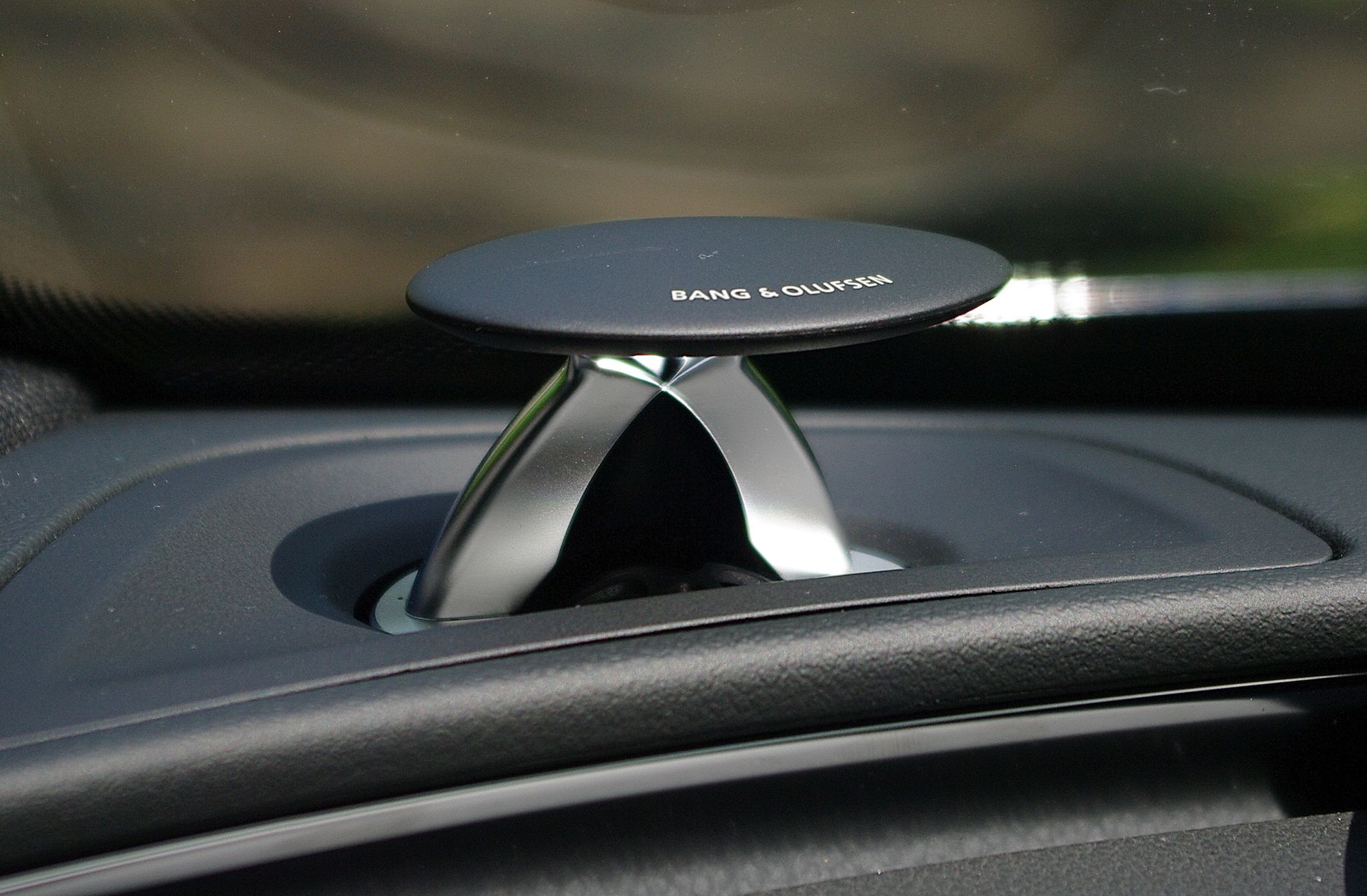
But this is just nuts and bolts and other hardware. Almost as if this car crashed into a Radio Shack there are enough wiring looms, electronics and microchips scattered throughout the car to build a server farm. This starts right when you hit the starter button (found on the right side of the center console, oddly enough). Like a small flying saucer invasion, a brace of tweeters for the optional $5,900 Bang & Olufsen sound system rises out of the corners of the dashboard as if to announce that the audio is active. Wild, and yes, the sound quality is excellent. But as cool as this is, the real fun starts with the Innovation Package. Yeegods, this $5650 option could also be called “The Future is Now” package, for it includes Audi Adaptive Cruise Control with Stop and Go function, Active Lane Assist and Side Assist, Head(s)-up Display, Topview Camera System and Night Vision Assistant.
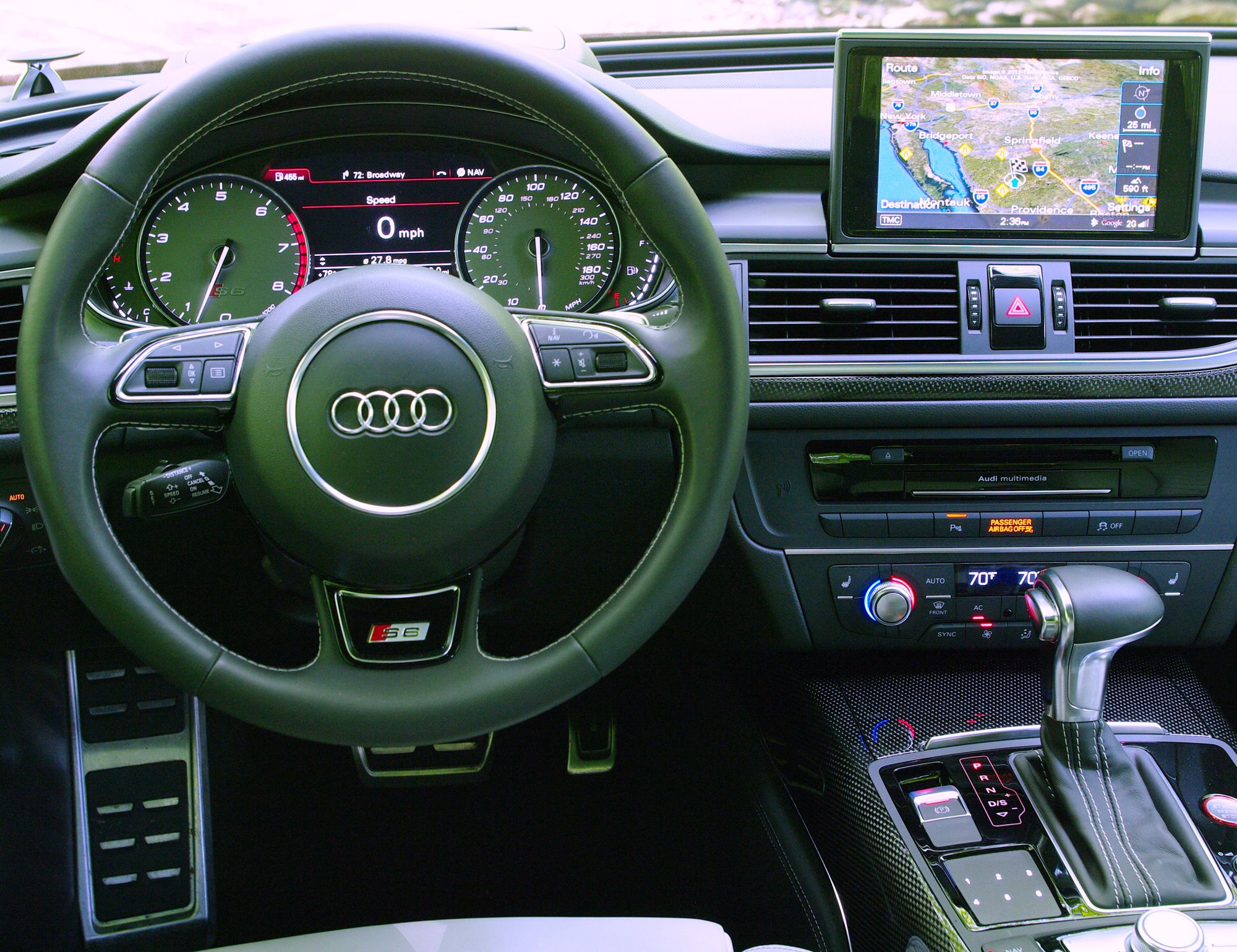
Let’s look at these one a time, eh? The Adaptive Cruise control can deal even with compressed traffic events that mean crawling along slowly. Seems to respond pretty well, too, although like all adaptive systems it doesn’t see traffic as well as most humans do in situations such as sharp curves or the dual lane scenario when a car slows to turn left in the lane next to you. Active Lane Assist is a real trip, as it actually keeps the car in the lane (including ghost-like steering wheel takeover and course correction if you start straying out of your lane). The car knows when your hands are off the wheel and it’s having to intervene too much, and prompts you to quit texting, eating or building a small wooden ship and steer the damn thing. The Head-Up Display (I still say Heads-up, but whatever) can be switched on to project the car’s speed (or other info you can set on a menu deep within the car’s interface) on the windshield, where you can see it as you drive. This type of visual enhancement has been around for quite some time, and I personally am not thrilled by it. In theory it makes sense, but it just doesn’t really help me keep my eyes on the road any better. Maybe it’s because I don’t monitor the car’s speed instrumentation much as I tend to use feedback from the road and other factors to help keep an eye on velocity. My response may be a motorcycle thing, and naturally your results may vary.

Next: the TopView camera system. There are small video cameras located at the front, back and both sides of the car, which give you an excellent view around the car as you crumple the bodywork on all those Teslas taking up two spaces. It’s actually a great feature to see all around the car when maneuvering about, as you could spot far more precious objects than just machines.
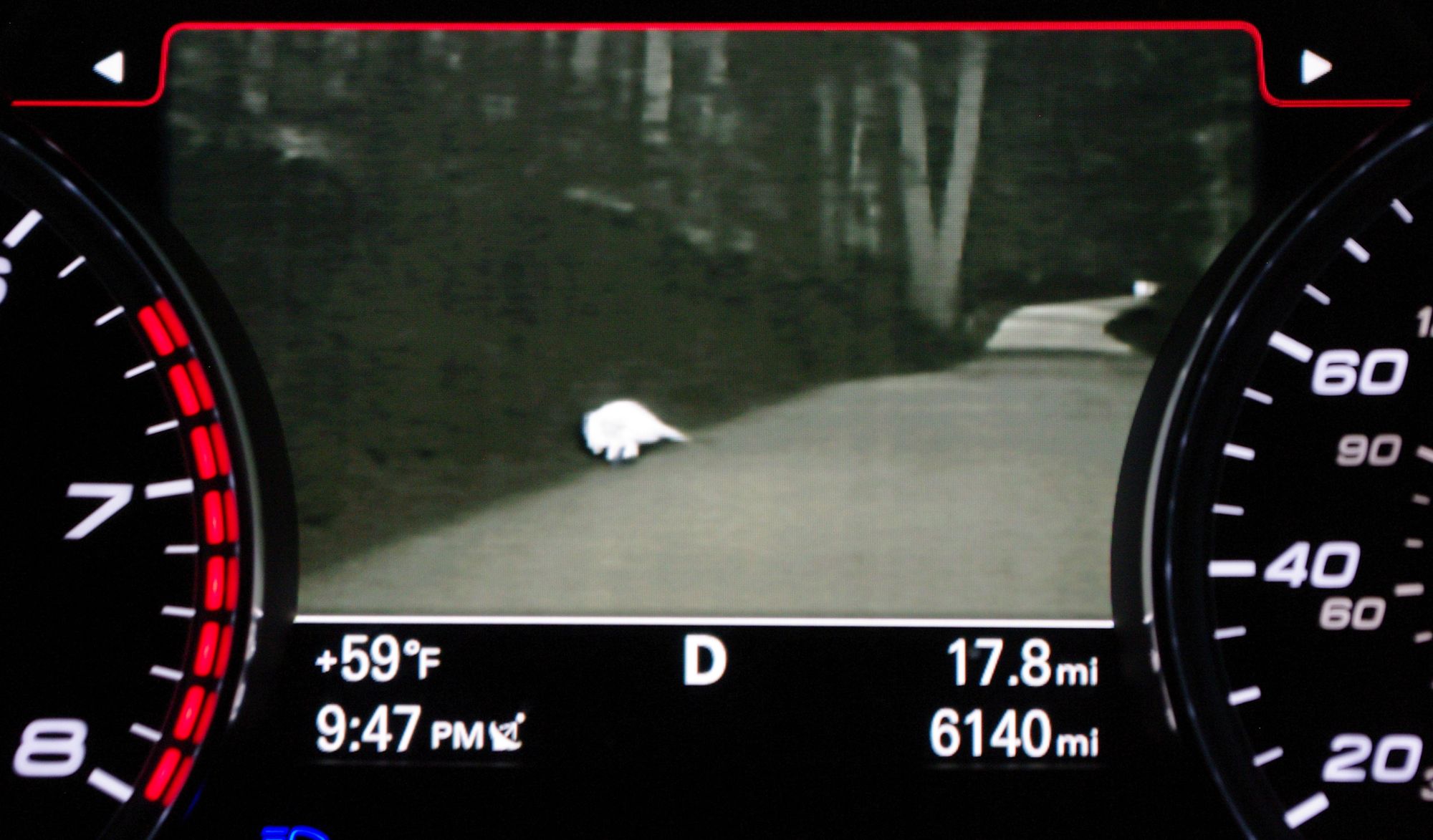
Which brings me to my favorite gadget on an already entertaining car: the Night Vision Assistant. A few years ago I reviewed a Cadillac DeVille (I believe it was) that had a similar infrared night camera. At the time I spoke with somebody in the know at Cadillac, who mentioned a “certain” European manufacturer was also working on such a system. I don’t remember if there was a relationship involving licensing, etc. with Cadillac but now the system has disappeared from GM and is now on the Audi. Other manufacturers have had a go at their own versions of the system, and it’s primary goal is to prevent hitting pedestrians in the dark. The problem I have with it is, through no fault of its own, it is an incredibly interesting thing to gaze at as it sits in the center of the instrument cluster. As it detects heat and renders warmer things brighter, it’s downright educational. Things like electrical transformers, the underside of passing cars, even the road itself is higher in temperature than the surrounding forest and is a displayed with a white hue. The software in this system can even locate a likely pedestrian and highlight it in yellow to help get your attention. While I didn’t encounter any humans, I did come face to infrared with a opossum that thought they could throw me off the track by actually acting alive and walking around. Good fun, actually. He/she wandered off but not before I was able to take a picture for your viewing pleasure.

Of course, there are even more wonders on the S6 like a Navigation screen that folds into the dash when you don’t need it (although you need it for a lot of things besides Navigation). It uses Google maps if you want to overlay a satellite image that can even display your house, which I find creepy. A track pad located next to the shifter and adjacent to Audi’s Multi Media Interface (MMI) knob lets you write some types of data entry, as Audi explains: “Just like drawing in the sand, your index finger allows you to enter navigation destinations and telephone numbers by simply “writing” with your finger on the touchpad.” Wild. I’m still not a fan of MMI or BMW’s iDrive, or Lexus’ whatever it’s called. These nods to computer mice and trackballs basically do nothing for me in these applications, but rather just make operations that were simple more complex. Yes, you can use voice commands if you desire, but again it takes longer to use the interface (with very rare exceptions) than most operations used to via well-engineered buttons and the like. But that’s me. I’m old enough to remember cars and motorcycles that didn’t even have airbags, ABS, fuel injection or across-the-board power windows, although they did have ashtrays. We could have used the latest electronics, too, to help avoid all the dinosaur poop on the roadways as we fire up another Winston.

What is most interesting about the S6 is not just its driving dynamics, which are impressive (and fun) on their own, or even the fantastic materials and workmanship that are found all over the vehicle. What really amazed me is how much electronic wildness is integrated into the car, and touches pretty much every aspect of it. With a price as equipped of $87,720 you pay for it, too. But I doubt anyone will take issue with the cost for this is clearly a very complex machine, with countless hours of R&D to make it such a contemporary ride. The night may be Dark and Full of Terrors, but at least you can see the Others and run them down.

The Bearable Being of Lightness

One of the things that the silly people who tend to classify things into two categories tend to (for lack of a better term) classify into two categories, is the battle between the two primary rear-drive sports car design philosophies. Or, to put it another way, there are two types of people: the ones that categorize sports car design philosophies into two competing philosophies and the ones that don’t.

My God, what have I done? I have become a silly person. The evidence, sadly, is just above. Dang. I guess I should just live with it.
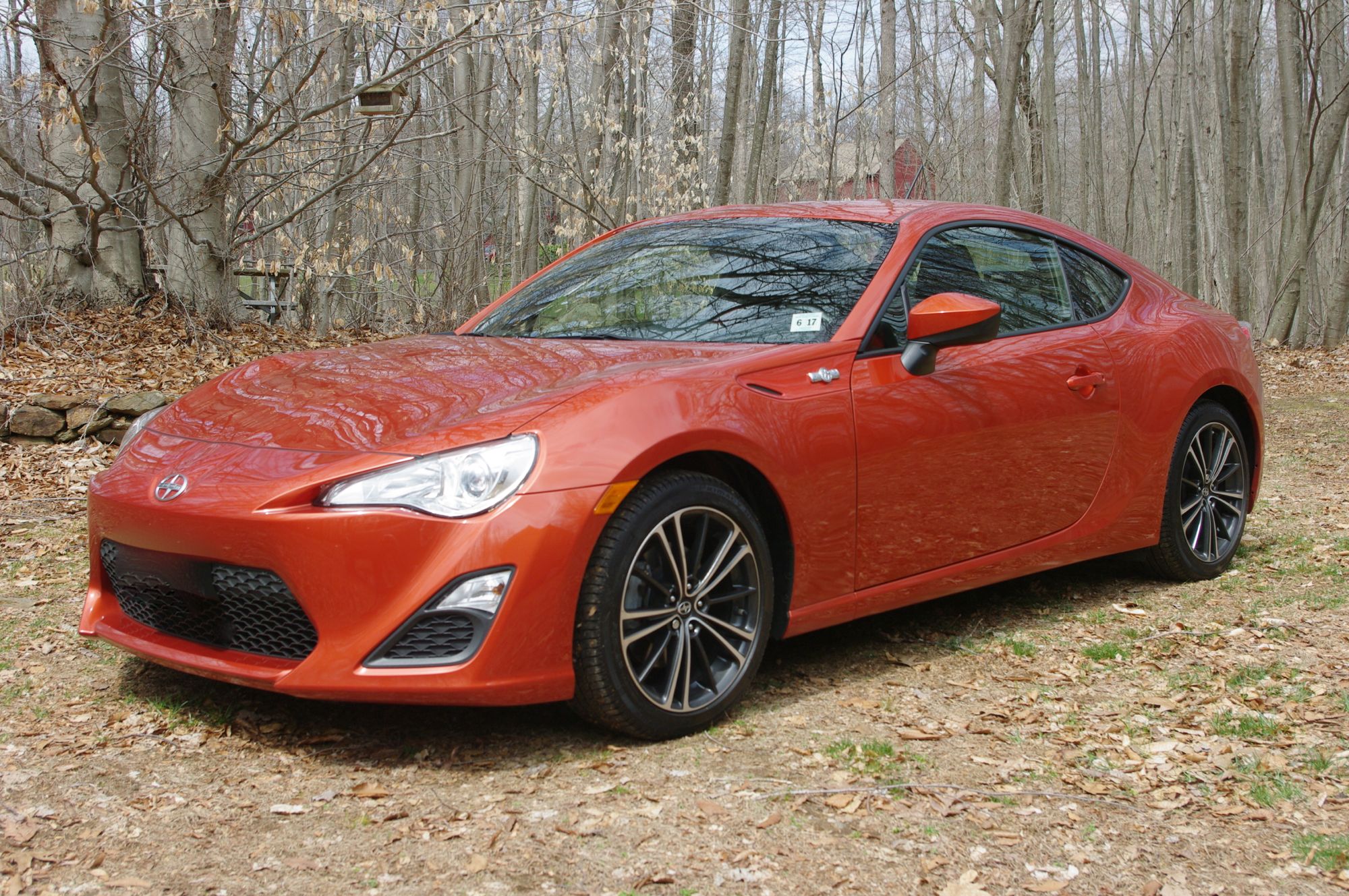
So, to recap, there are two kinds of rear-drive sports car design philosophies. I created these philosophies myself of course, based on my somewhat cursory observations of sporting machinery over the years usually from behind the wheel of said sports machines. These observations took place sporadically when I wasn’t doing other things (see my collected works, if you dare), and therefore may be quite suspect. However, let me share them anyway because they play a part in why I like the Scion FR-S so much. One philosophy for the sporting ride consists of brute strength, where you take a big, stout chassis, drop in a huge V8, add heavy duty suspension components and conquer the road like a knight with a broadsword. In bumpy corners this engineering approach seemed to be to smash the bumps flat rather than float over them. This is the Pony Car way of doing things, although it could be argued that this type of hoop is more like a draft horse than an equine compact.

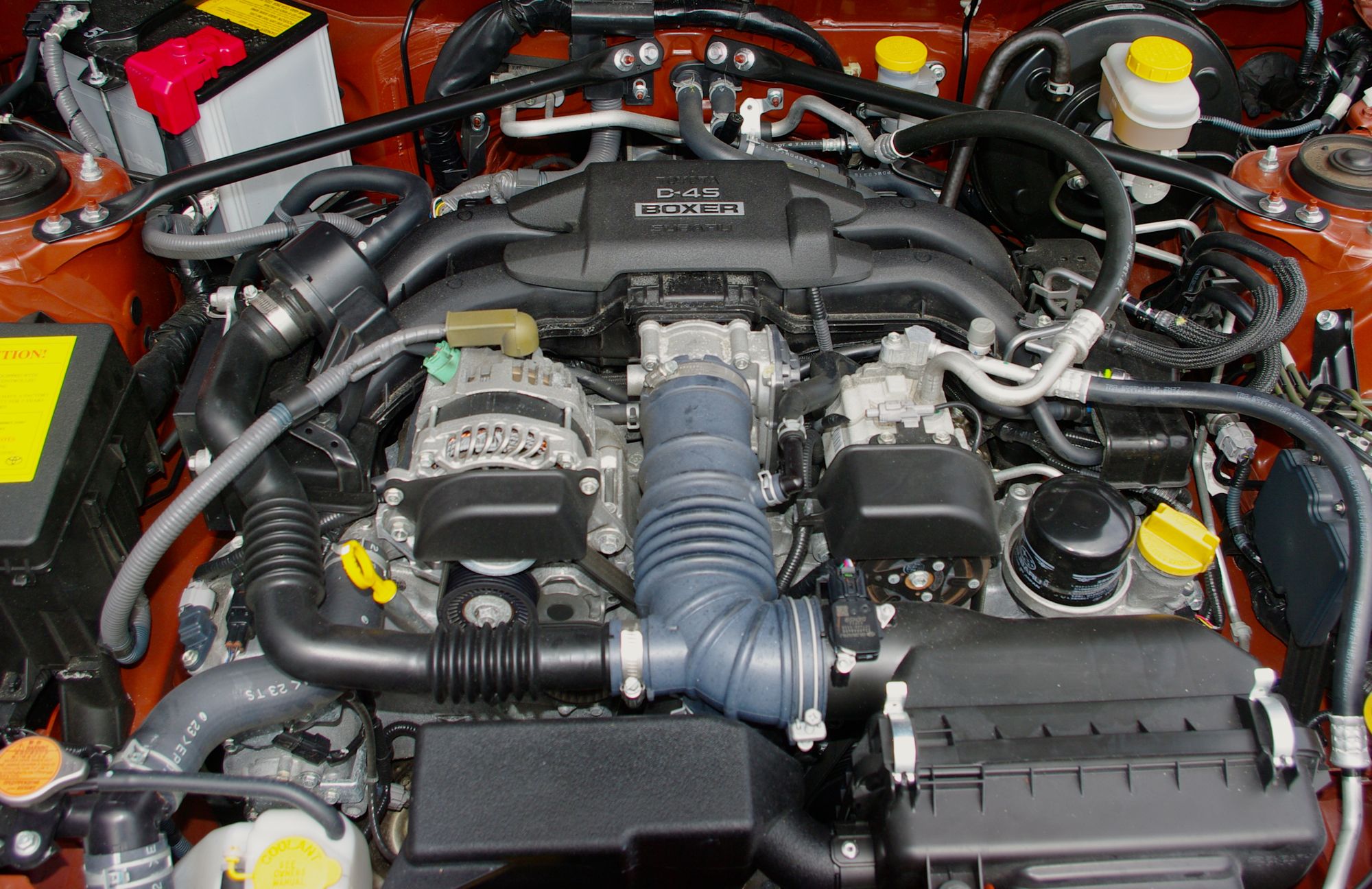
The other design philosophy is very different, and in this approach you built a stiff but lightweight chassis, install a potent but compact engine and employ suspension components designed to dance lithely over bumps rather than crush them. Ultimately the idea is to cling to curvy tarmac through balance and finesse, rather than rely on sheer mass and massive rubber. Over the years this type of sporting platform has largely been pushed aside by the more expensive, heavy GT/Pony Car approach, but there have been occasional bright spots (like the Nissan 350Z, Mazda Miata, etc.) for those who think light is the way to go. And now, thanks to both Scion and Subaru who have joined forces to create a true featherweight sports coupe, you now have the ability to score a purist’s dream: a brand-new driver’s car (and you can pick either nameplate as the cars are nearly identical). Better yet, these coupes are as affordable as they are entertaining, too. I recently spent a week with the Scion version, and the FR-S is the kind of car that has such perfect styling and proportions that you almost think there’s no way driving it can live up to the seductive allure of the exterior. You will be disappointed if you want a tire-shredding hellbeast of a car, but if you fancy a really fun ride with near flawless balance and a very reasonable price tag, look nay further. In fact, you will be dazzled by the fine road manners and driving dynamics of the FR-S, which feels more engaged with the road than most of its more porcine competition.

Weighing in at 2,758 lbs. with the 6-speed manual (a 6-speed automatic is also available), the FR-S is powered by a 200-horsepower 2-liter Boxer Four that thanks to its compact, flat profile helps both mass centralization and the establishment of a low center of gravity. While there’s not boatloads of low-end torque the engine fits the car perfectly and will no doubt be the object of many tuning mavens who will squeeze more muscle out of it. But for enjoying a serpentine drive home, this is a really balanced approach that flat-out works. One friend at Toyota suggested that unlike most sports coupes you need not run away from the idea of getting the automatic transmission, because the Magic Box o’ Slush optimizes shift points really well and has paddle shifters for use in manual mode.

As for my test mule, I really loved the manual as the ratios and ergonomics of the shifter worked perfectly for me. The rear-drive architecture and surprisingly responsive electronic steering make handling naturally intuitive, and a Torsen limited-slip differential makes sliding drives out of corners completely predictable and user-friendly. The suspension does a fine job of handling road irregularities without harshness, and the brakes are excellent. The twin sport buckets offer excellent support and comfort, and the interior has a good mix of utilitarian aesthetics and the latest in electronic entertainment. The rear seats are (as the Road Gods intended) mere parcel shelves as opposed to actual seats, which is fine. This is a two-seater in my view, for lightweight intimacy is a private matter best appreciated with a lone passenger.

Which brings us to other great things about the FR-S, such as even though (as my notebook confirms) I was not being nice I still managed nearly 30 MPG. Nicely equipped the sticker came to $25K, which makes this a genuine bargain. Throw in the fact that considering its lineage it should be reliable, and it has that great Subaru oil filter placement on top of the engine for easy maintenance. But all this is just icing on the peacock compared to the great overall engineering of this car. Light weight, perfect balance, excellent composure, generous feedback and a great cockpit to enjoy it in make this is true pleasure unit that is even economical daily transportation. Take that, bloated pony cars.

A Wee Battle Royal


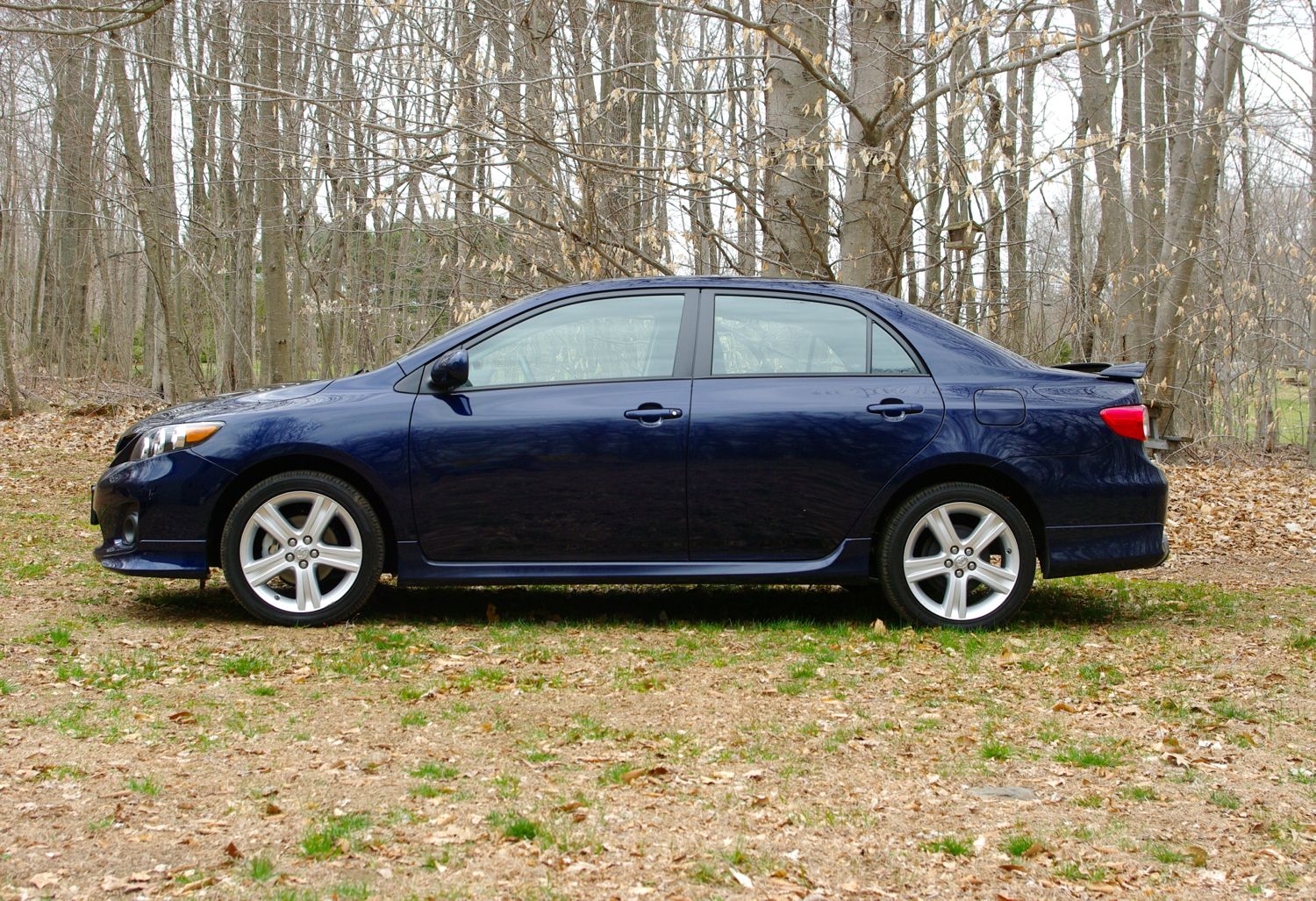
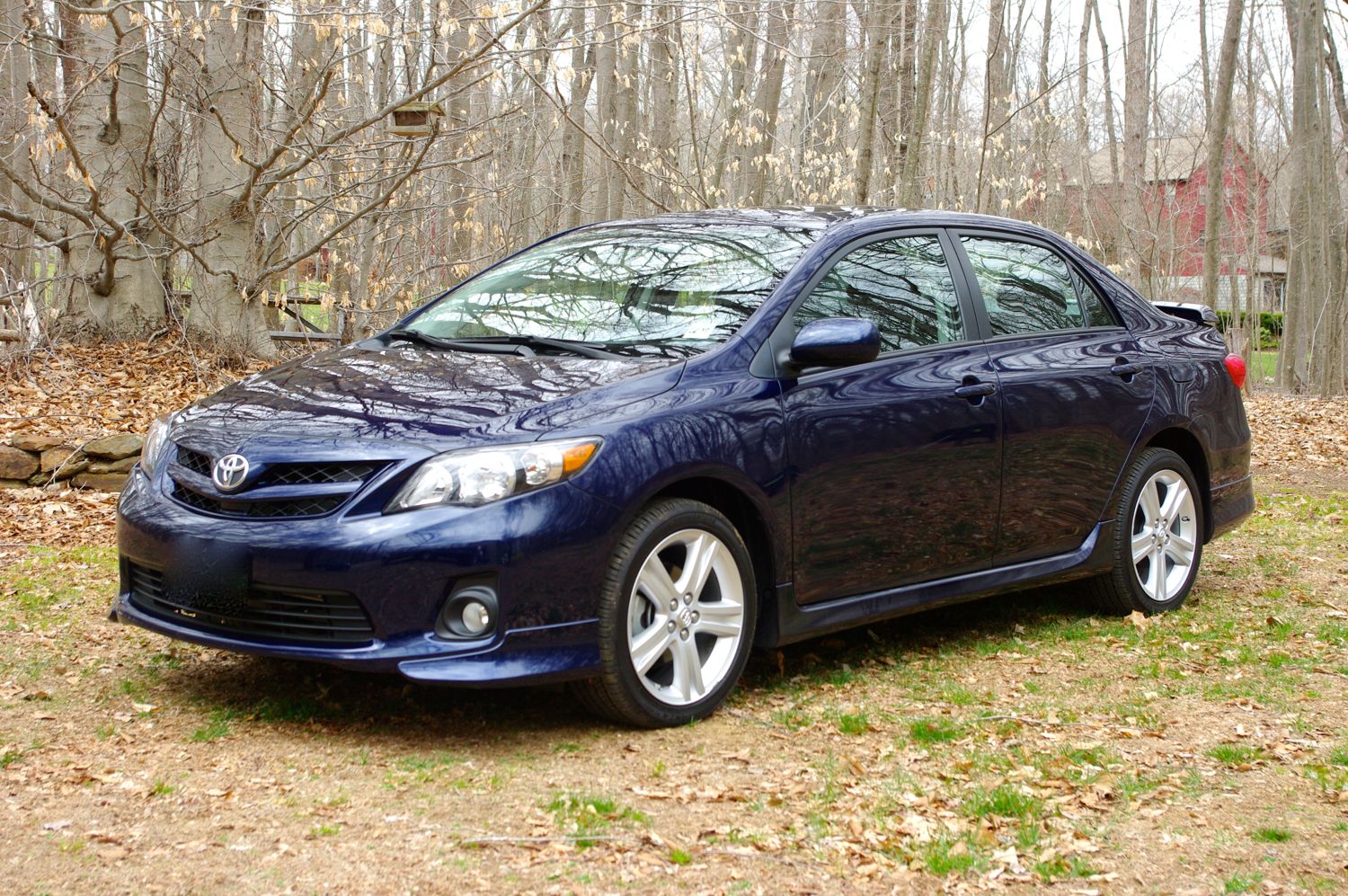
2013 Toyota Corolla S


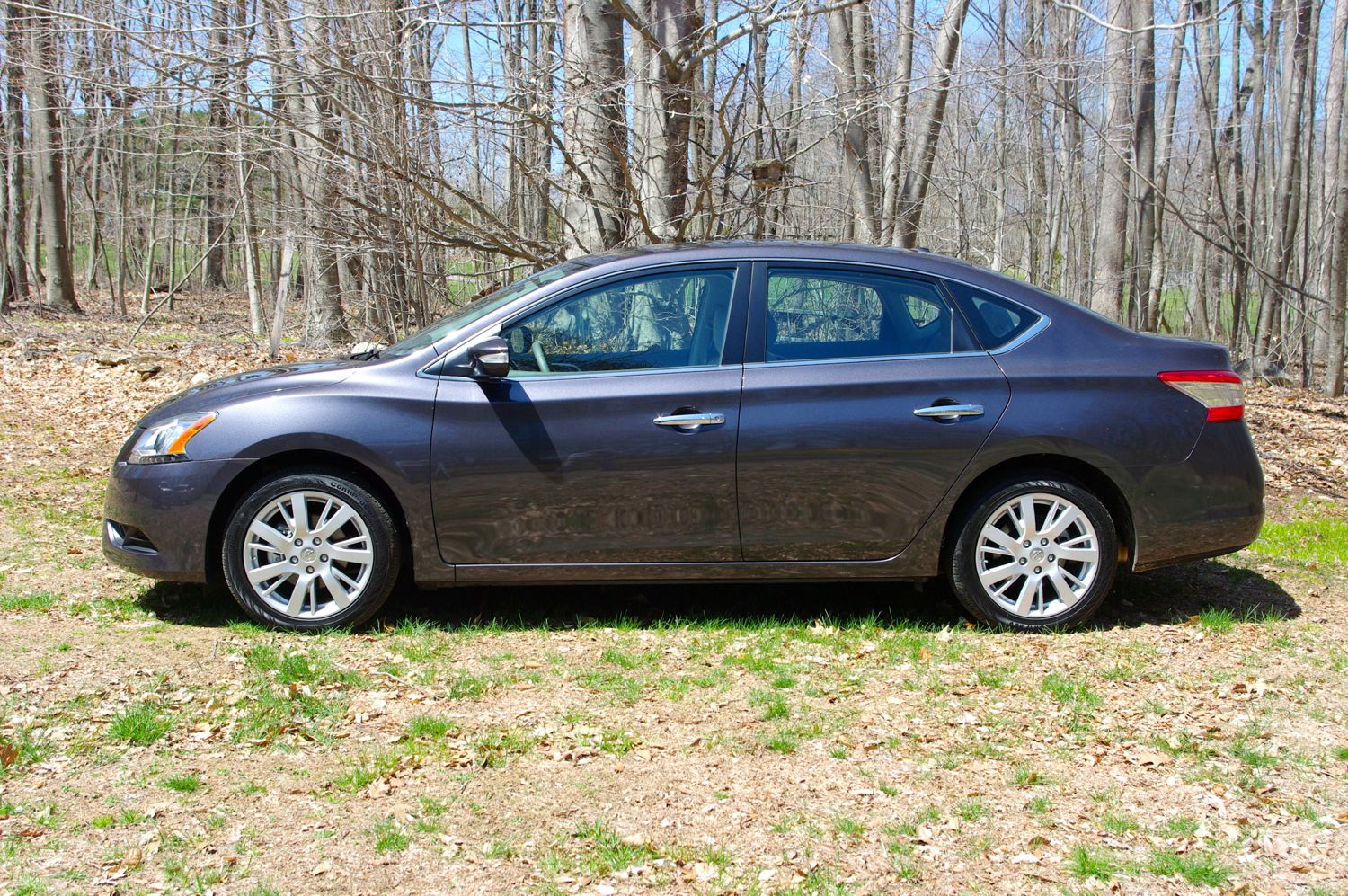
2013 Nissan Sentra SL

It has been a grudge match that has spanned generations. And by generations, I of course mean generations in an automotive sense because these two really haven’t been fighting all that long when you compare long battles like England and France, snakes and mongooses, politicians and reality and Donald Trump and his hair. That said, 30 years is a pretty long time and while this is no epic Ford vs. Chevy struggle it has been a huge motivator for improving the quality of compact sedans, and a number of manufacturers are now in the scrum. As is an integral part of Best Practices interweb commentary these days (which is to say pile it higher and deeper at every opportunity), I’m exaggerating the fight between the Toyota Corolla and Nissan Sentra for no good reason, except to point out that by competing with each other to build the best compact sedan for the money they’ve both fashioned pretty decent rides that are actually very different in personality. This ultimately means that it really does come down to your individual tastes (big tip-this is true for when you shop for most cars these days), and in the case of these two they should last as long as you take decent care of them. But will you outgrow them in a couple of years? Read on.

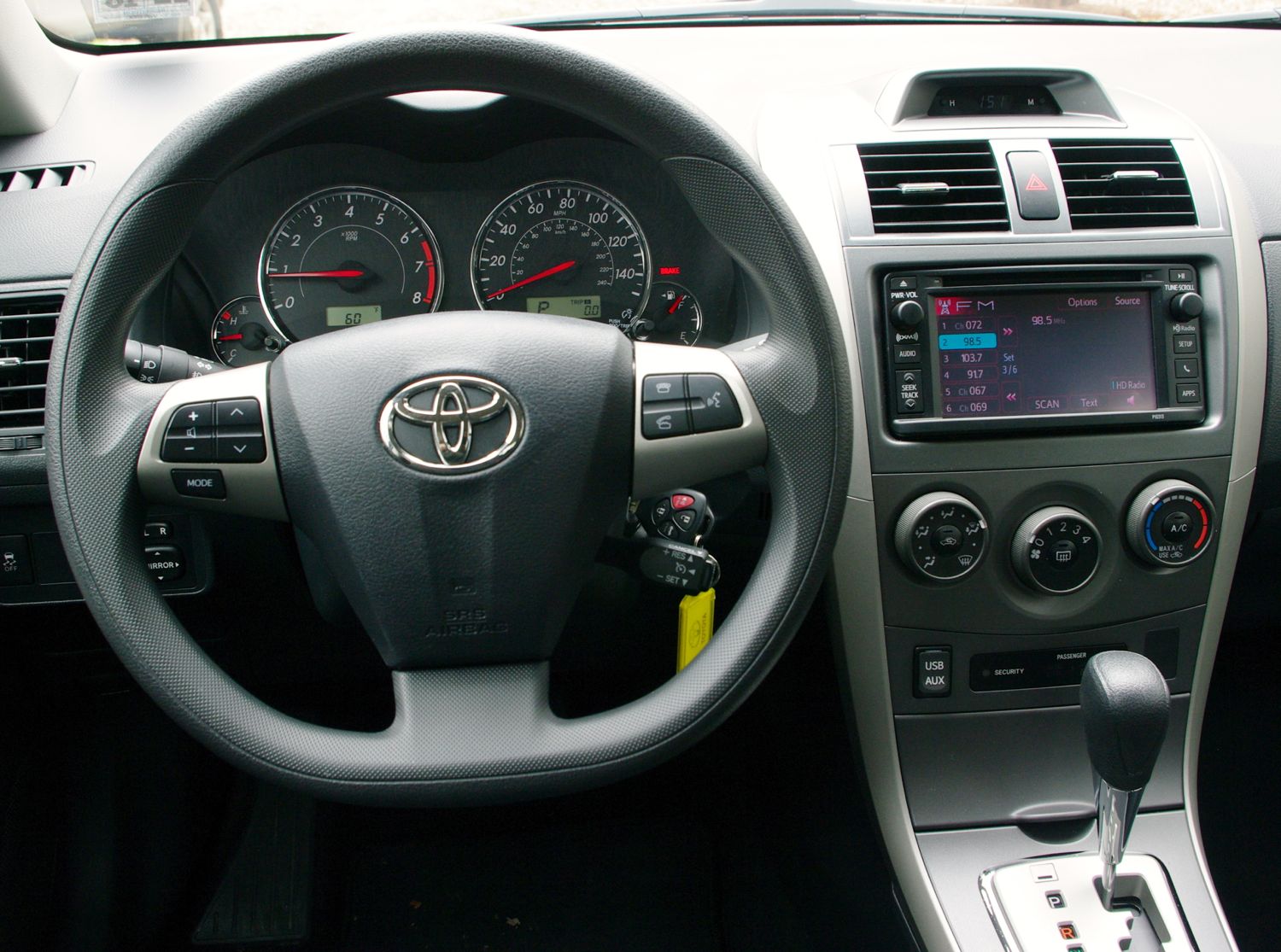
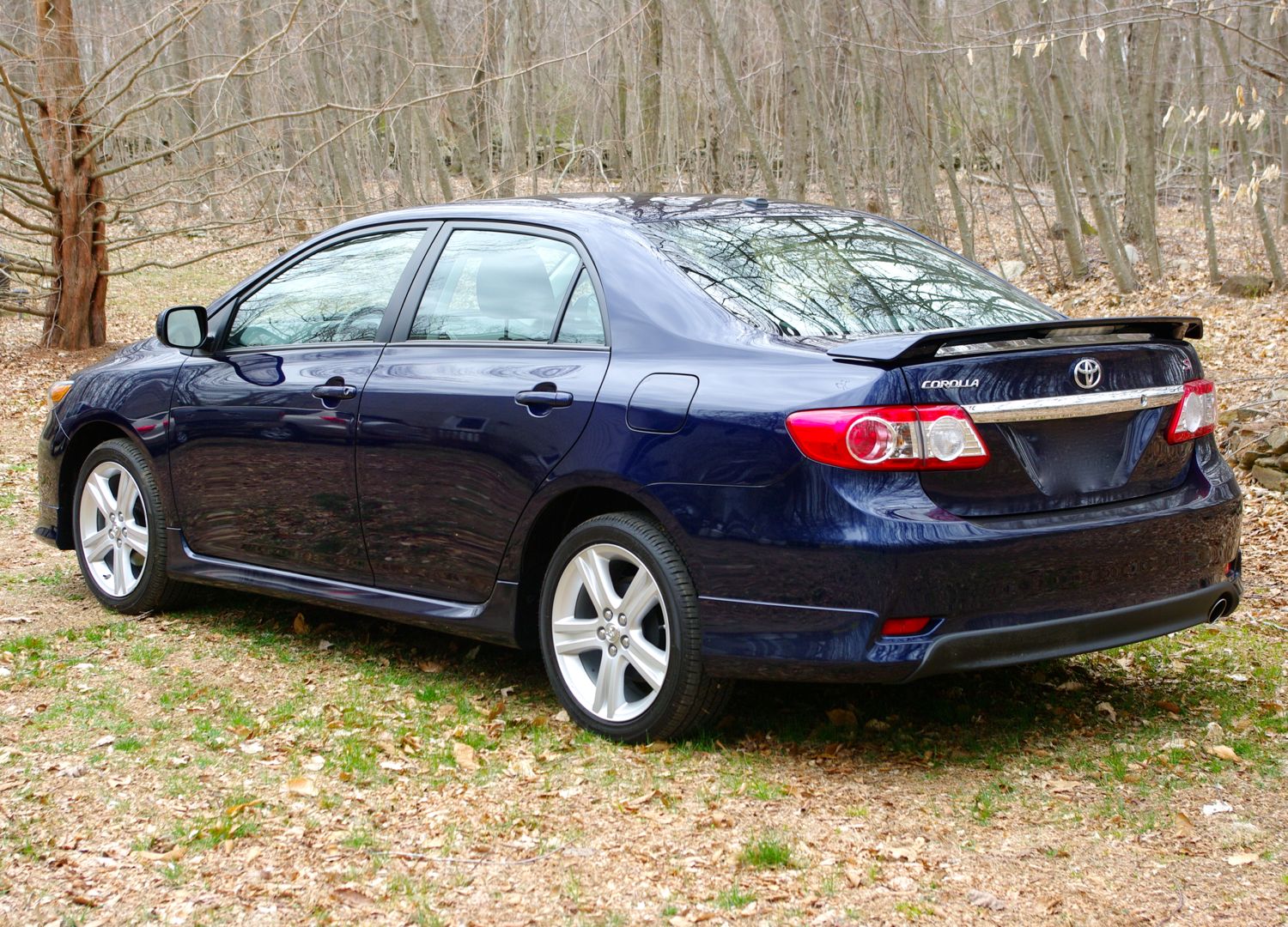
The Toyota Corolla has been a part of the American landscape since the 60s, and while the 2013 version is bigger and dramatically more refined that the early versions it still shares an important attribute in common: it’s still a solid, reliable compact automobile that’s inexpensive to operate. The price of everything had climbed steeply since the Corolla arrived on these shores and the car is a lot more expensive than it used to be in terms of unadjusted base price. The thing is, though, the level of standard equipment, as well as the fact that the car is so much quieter, more comfortable and loaded with the latest in state-of-the-art safety stuff makes it less of the tin box of old and more of a satisfying driver. The Corolla S in these photos was powered by a 1.8-liter Inline Four with its plucky 132 horsepower when teamed with the classic 4-speed automatic transmission gets the job done just fine, while delivering 32 MPG in my week of controlled thrashing. A 5-speed manual is also available, and yes, 6-speed units are becoming de riguer in both manual and automagic gearboxes yet these transmissions are a very good fit in this front-drive transport. It’s a good mix of performance and economy, and while the electronic power steering is a tad on the light side (OK, very light), it still manages enough feedback to be reasonably fun to whip around. I don’t know how it does this; it just does. Ride quality is firmish but still compliant enough to badly spank the compact sedans of the past in terms of overall comfort.

The interior is a very interesting mix of traditional and new, and I’m thankful that while Toyota has seen its way clear to install the seemingly mandatory touch-screen interface in their Entune system, it still has enough knobs and functionality about it to make it useful. The seating in the S is of stout fabric with good, firm support for the driver that doesn’t lose its charm as the day’s miles rack up. The rear seat is surprisingly commodious for a car with a 102.4-inch wheelbase, and the flat floor just adds to the overall room. There’s 60/40 seat back-folding access to the trunk to increase cargo versatility, and with 12.4 cubic feet of space in the trunk it’s no bathtub but perfectly usable.

What we ultimately have here is a very practical, functional car with more room than you would expect that’s actually fun to drive and feels built for the long haul. In this way it’s just like previous Corollas, only more so. With options the sticker on my test mule came to $21,729.

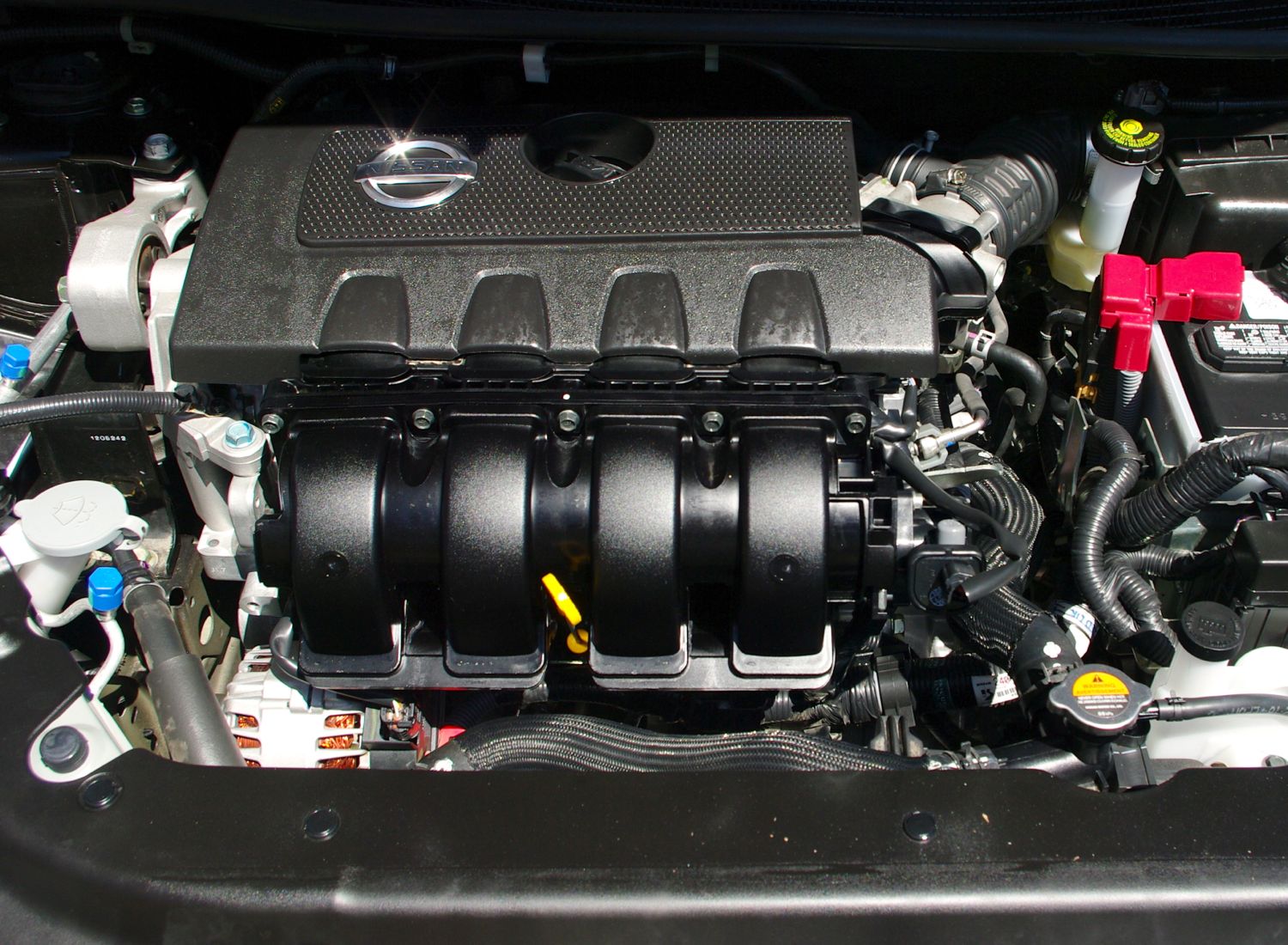
Given their identical missions, is the Sentra basically a Corolla from Nissan in terms of overall feel, or is it actually different despite the similarities? On the similar front, in the Sentra SL we have a 1.8-liter Inline Four with 130 horsepower, and the gearbox was an automatic but this time of the Continuously Variable (CVT) variety. This transmission was louder than the Corolla’s and overall the 0-60 times were in he same ballpark, yet it only delivered 28 MPG in this trim level compared with the Toyota’s 32. The general feeling with the Sentra is more relaxed as opposed to athletic, as the ride is smooth enough but not as well-controlled as the Corolla S and there’s noticeably more body lean during hard cornering. There is a Sport button that you can use to sharpen engine/transmission response with a slight penalty in fuel economy. The steering does offer better feel than the Corolla, and both cars had excellent brakes.

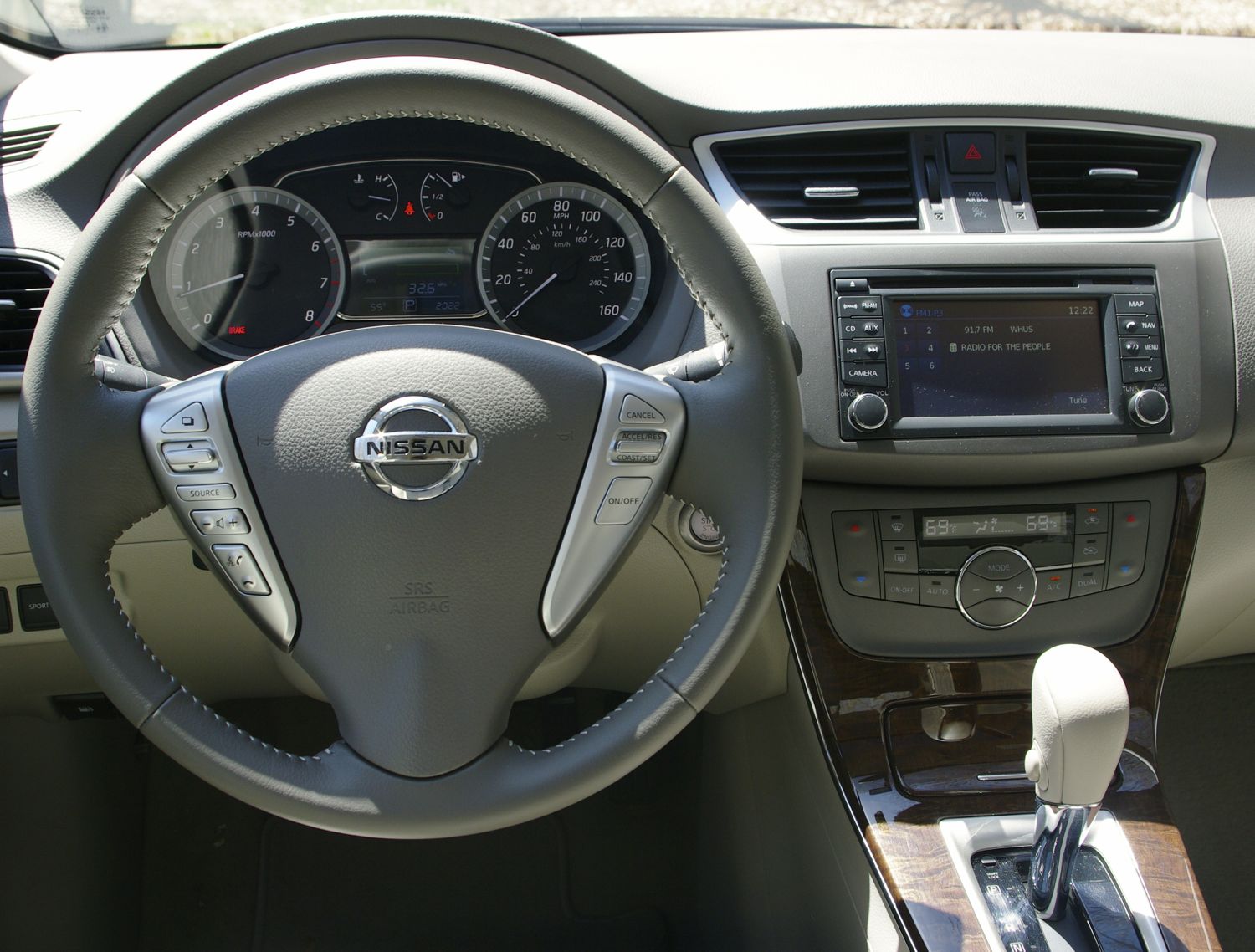
The top-of-the-range Sentra SL Sentra is a feature-rich environment with refreshingly logical controls for the most part and a bevy of electronic options including the NissanConnect package that has some of the latest hands-free technology. Seating in the SL I sampled was sheathed in excellent leather, although the driver’s perch was a bit on the flat side. The back seat was nearly as roomy as the Corolla’s and compromised only by a floor that wasn’t as flat as its Toyota nemesis. Otherwise the rear seat support was better than the front seats, and all in all a roomy, comfortable place to hang out. At 15 cubic feet the Sentra’s trunk is larger than the Corolla boot and very well-finished. Loaded to the rafters with goodies, the Sentra SL I enjoyed came to $23,655.

Two great compacts, that with a modicum of care should last for many miles and be economical to operate. The cool thing is, they’re both well-appointed cars that have many of the bells and whistles as much more expensive vehicles. Herein is the beauty of the modern compact, and the other offerings from Honda, Hyundai, Ford, Chevy, Dodge, Kia et al share this as well: these rides have never offered more as a class, especially for the price. Most improved genre of cars over the last decade perhaps? You betcha.

MeThinks this may be a Very Important Car

So, a funny thing happened on the way to the golf course. Me and Bengy and Throckmorton were considering a round with a new mashie to the victor, when. . .

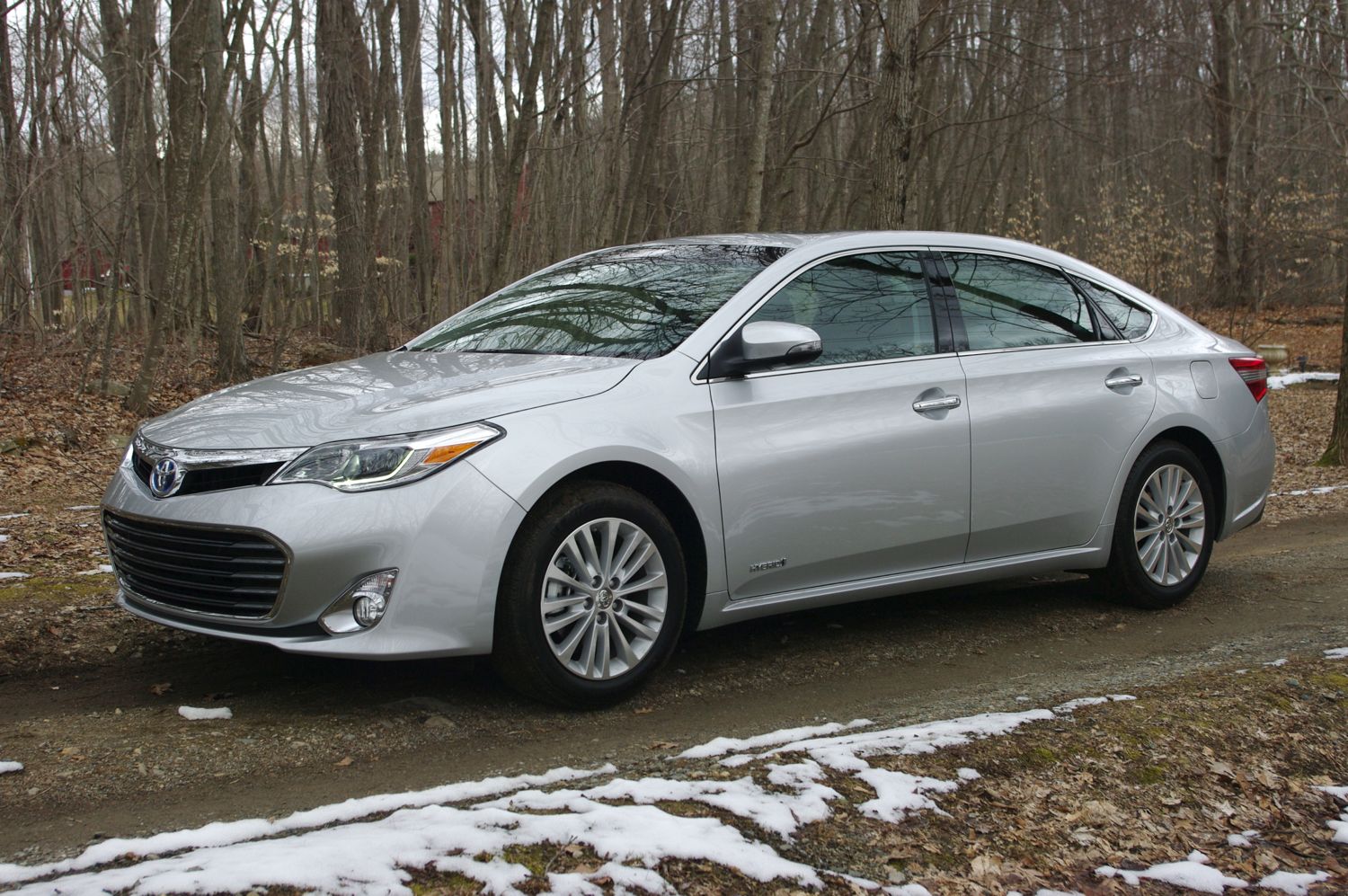
I have no idea why this piece has gotten off to this odd start. Perhaps it has something to do with the kind of automobile the Toyota Avalon used to represent, at least in the narrow confines of my perception when it comes to huge, lumbering sedans. The Avalon used to be a very large car (still is), very popular with the older set as it is very easy to get in and out of, and just a very reliable, user-friendly taxi that is more butler than teenager in personality. The ride was soft, not quite lumbering but pillowy nevertheless, and it was all in all a very nondescript vehicle.

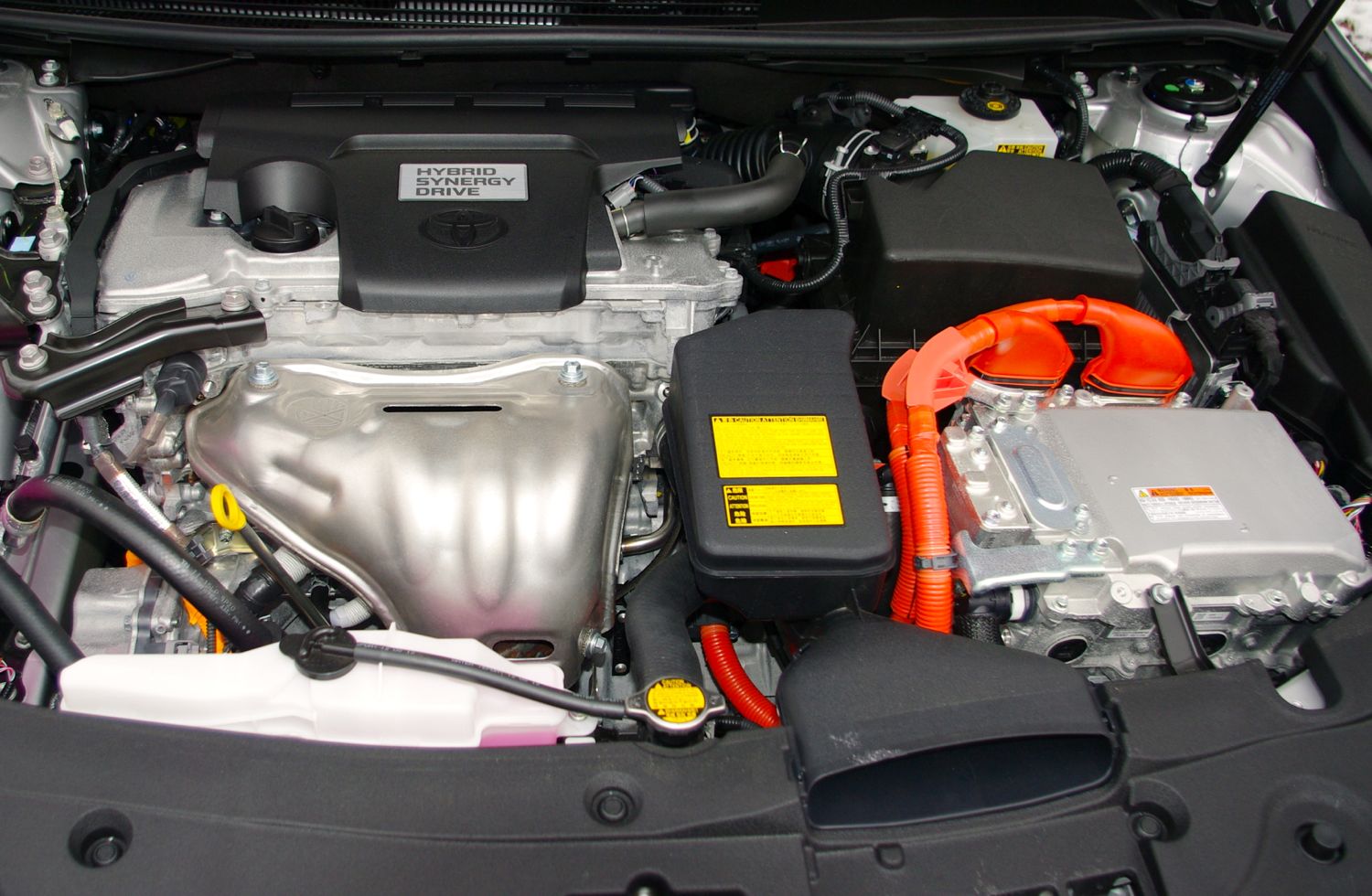
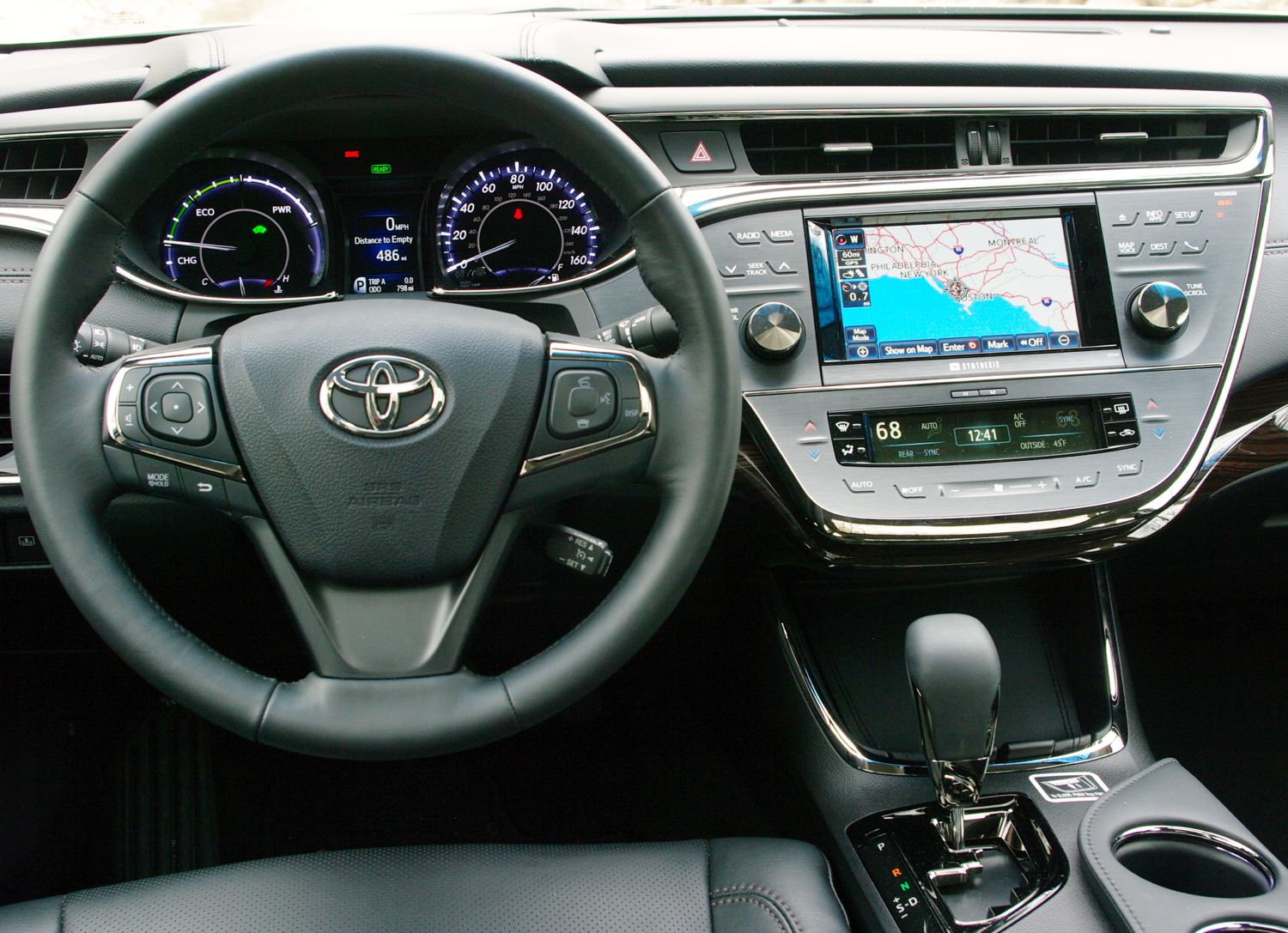
So why do I think the new Avalon is possibly going to become a VIC? In the Hybrid version, we may see what mainstream big sedans may be evolving into and if so, it’s a very good thing. For starters, the Hybrid drive system (a 2.5-cylinder Four with a 105kW electric motor, powered by tried-and-true Nickel-Metal hydride battery array) delivers 200 horsepower which may not sound like much but works really well in this application. To think that during my tenure with this car I averaged just a tick under 40 MPG while driving in a purely normal manner (I honestly believe if you drive sanely most of the time, there’s absolutely no reason to drive in a special manner when piloting a Hybrid) yet was basically steering a supertanker about is quite remarkable. The suspension is tighter than before, and the Avalon handles well while still returning a composed ride. That’s efficiency that bests some subcompact cars that you could damn near put in the back seat of this thing. It’s a pretty neat accomplishment, and even bests the Hybrid Camry in terms of appeal to drivers that need a roomy limo for their transportation needs.

Naturally all the bells and whistles are available in this beast should you desire them, including great sound and wireless technology. The interior workmanship is excellent, and the car is as quiet and refined as a full-size Toyota would lead you to expect. The trunk is still fairly roomy too, even though some of the space is taken up by the battery pack. There’s even a spare tire, that even though is of the temporary variety is a welcome sight since these essential items are disappearing these days. You can’t depend on an inflator kit or the freakin’ auto club, man! Self-sufficiency rules when you really need to get someway in a limited about of time.

A Very Important Car, then? I think it is, because it may be the benchmark for a the run-of-the-mill big-ass family sedan/retired person’s giant golf cart genre. This means that when you win over this mainstream group of people, it greases the skids for hybrid technology to truly become ubiquitous. Full-size pickups will be next; mark my words. Diesels will have their place, sure, and we will no doubt see more of them as well. But the mating of a gas engine to an electric motor is a gateway powertrain for greater use of electric propulsion down the line. And, they make practical sense today, in almost every driving scenario.

A Great Tire, from Start to Finnish

Entyre_a

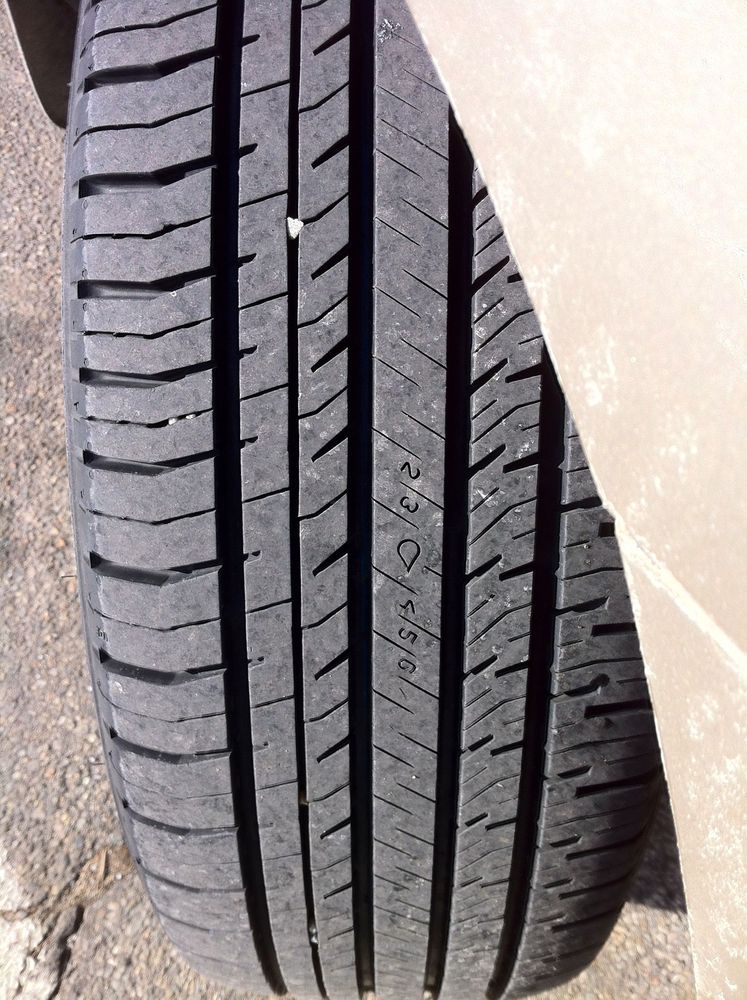
Obviously, whether you roll on one, two, three, four or more wheels, your tires are the most critical of all components when it comes to staying in contact with the road in a manner that helps you control said vehicle. You do everything on them after all, and the better the rubber the better acceleration, ride, handling, braking, and just basic motivation in low traction situations. Without exhaustive testing (which I do not have the resources to accomplish), all I can tell you is I stumbled on some really decent all-season passenger car tires recently that are worth mentioning. They come from Nokian, and the Finnish concern (and I’ll let you ferret out if they’re related to Nokia, the phone builder, or not.) is best known in the US for their excellent snow tires. But they have recently built an all-season tire specifically for the North American market, built in a new state-of-the-art facility in Russia. This is a very interesting hoop indeed, for not only does it have all kinds of performance features it’s designed to be an unusually green tire. 

I first encountered the eNTYRE, as it’s called, by accident when I was inspecting a used compact SUV I ended up purchasing. Naturally one of the things I inspected carefully was the tires, and shod as it was with what looked to be a fresh set of the new Nokians I realized I knew next to nothing about the company and whether or not their products were any good. There are a lot of tire makes out there, which makes buying these days a bit more involved. After I did a little research I was intrigued, and after I purchased the vehicle found them to be pretty impressive performers. They are quiet, deliver good traction in rain, snow and dry conditions and transmit good feedback. They also have a very cool feature that I hadn’t encountered in tires before (although I’m sure there must be more manufacturers that do this), which is a centerline tread wear indicator system that literally tells you how many millimeters of tread you have remaining, including a special water droplet indicator that tells you when, if this symbol is no longer visible, you have lost the tire’s excellent ability to avoid hydroplaning. It’s very simple, yet a really great tool to keep an eye on tire wear. There are a boatload of other features to these tires, but I’ll spare you by not outlining them all now. The bottom line here is there’s a lot here to digest which is pretty amazing considering these are just big rubber things that hold air, like other tires. 

As for the green side, the eNTYRES have low rolling resistance which has seemingly been verified when I purchased additional set for our Hybrid, and it continues to deliver exemplary mileage. Nokian is also proud to point out that these tires are made using purified compounds, or as they put it, “the eNTYRE is manufactured using only low aromatic, purified oils. These purified oils keep Nokian’s tires from polluting the environment as the tire gradually wears down.” 

This endeth my purely unscientific review of these tires. I really like them so far, and when they wear out plan to acquire another set for both vehicles. They have also been affordable; the only problem is they can be tough to find but I’ve got an excellent tire dealer not far from me that carries the entire (or eNTYRE) Nokian line. Very nice shoes, and worth a look. 

The Strange Case of the C-Max Energi

C-max_a

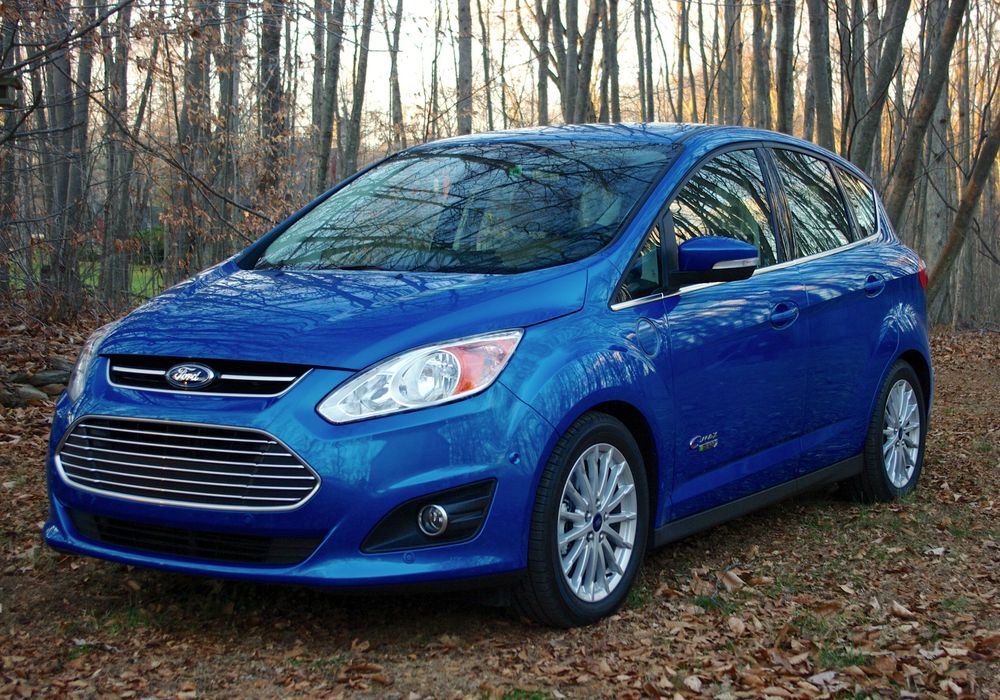
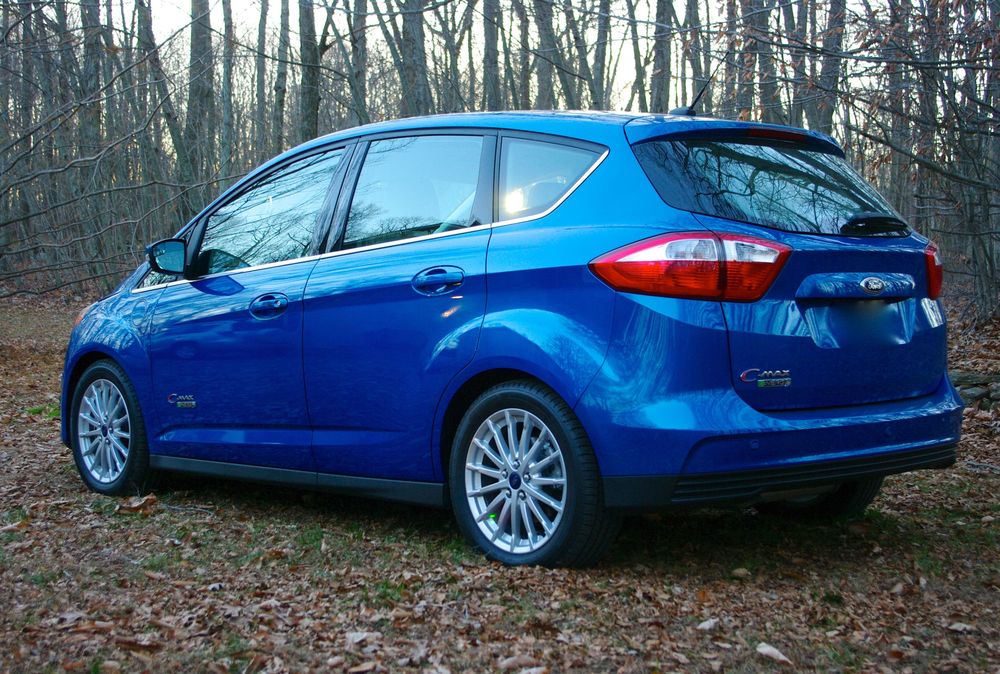
Things are certainly heating up when it comes to domestic automobiles and electric motors. It’s taken awhile, but the Chevy Volt finally made it to the marketplace with excellent results especially in terms of the car’s drivability and customer satisfaction. And now over a decade after the Toyota Prius first appeared in the US market, Ford now has its first “dedicated” hybrid models, which of course are cars that come only in hybrid form (although the car I’m talking about here has had a non-hybrid version on the road already in Europe for years). The Ford C-Max is a compact wagon that comes in a gas/electric Hybrid, as well as a plug-in Hybrid version of the same with a larger capacity lithium-ion battery for extended electric-only operation. I got to sample the latter (called the Energi) for a week and found it to be a very interesting, and perplexing, vehicle. 

C-max_b

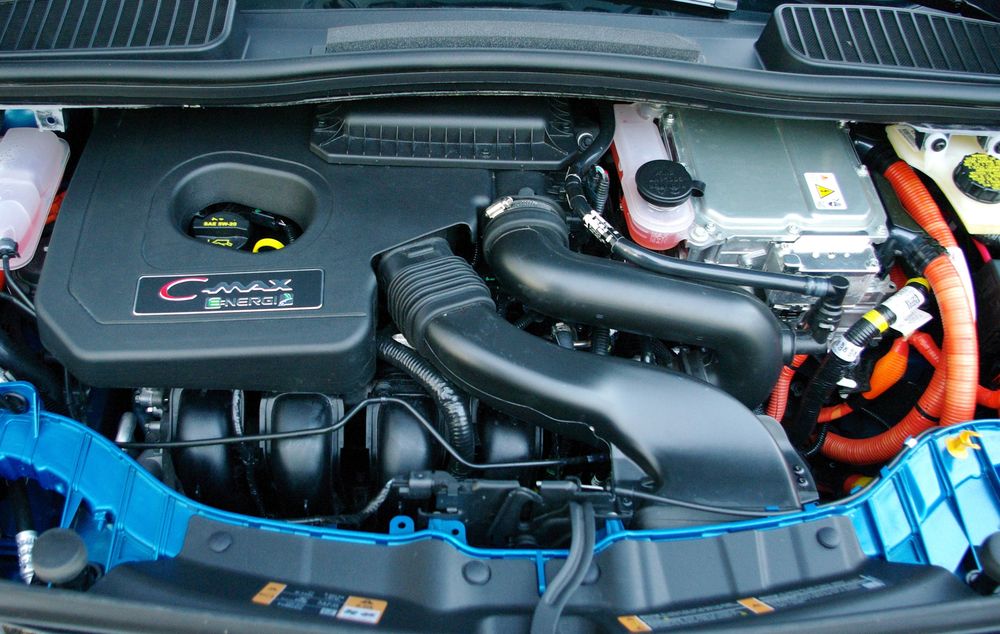
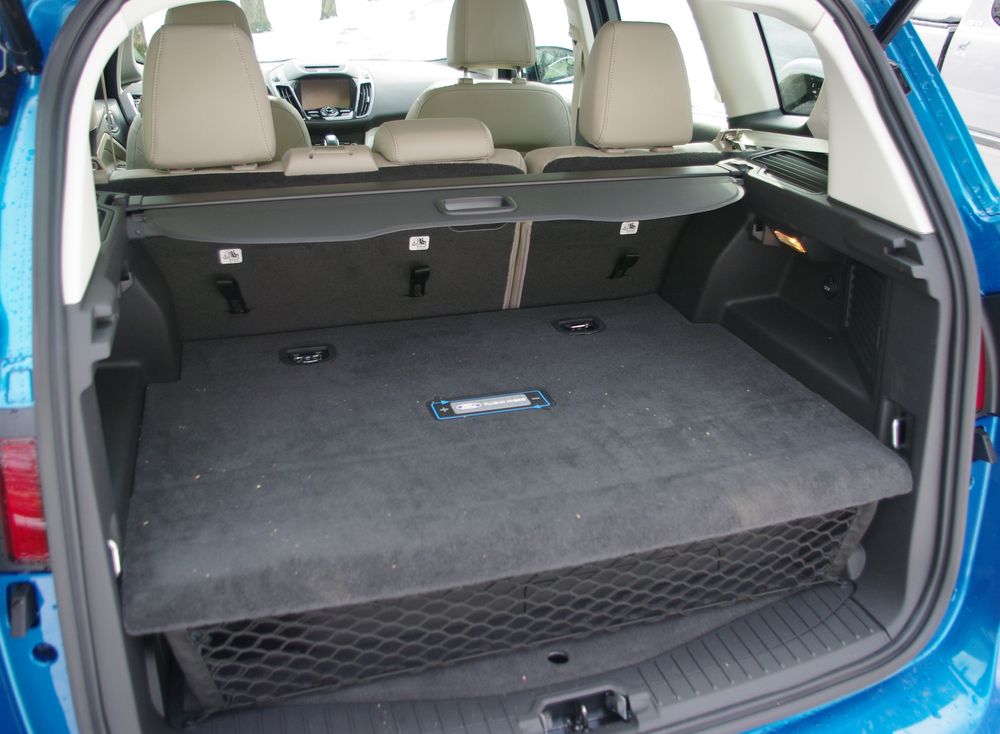
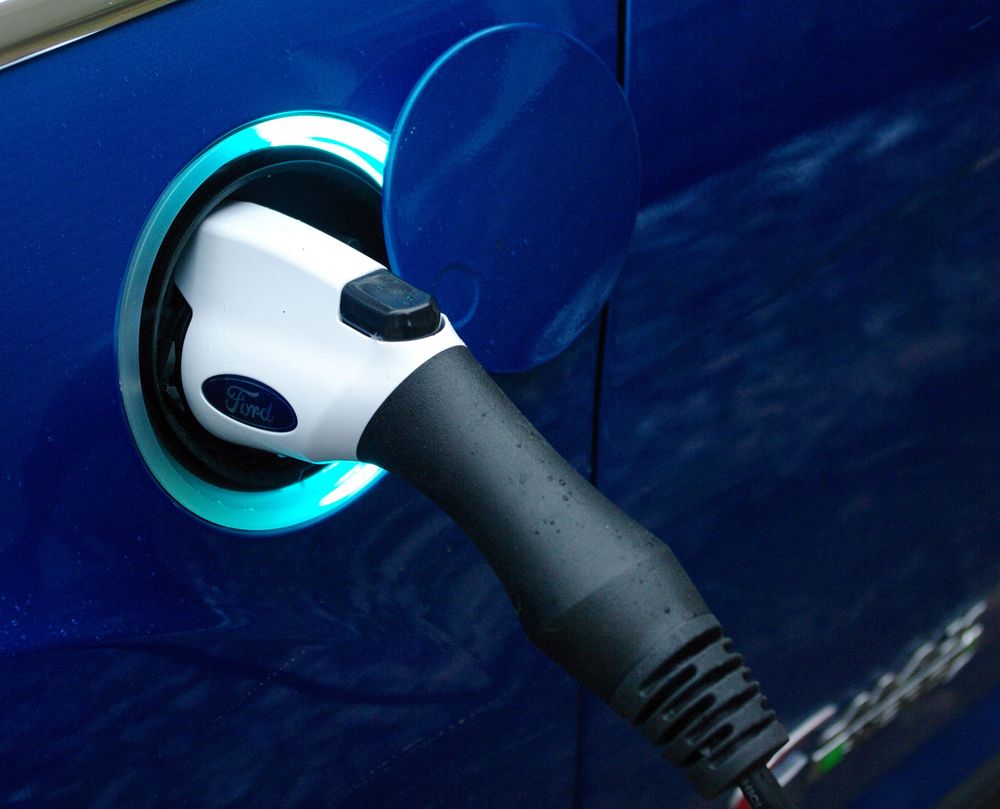
First, the C-Max is being marketed by Ford primarily as not a competitor to the regular 5-Door Prius, but instead the Prius v wagon (which you can read about if you search this site, as well as my take on a pre-production plug-in Prius). If you check the specifications the two vehicle are very similar, although truth be told the Prius v has more cargo room and just felt roomier to me overall. But both of these tallish wagons are superbly practical designs, not only providing a lot of room and versatility but doing so in intelligent, fuel-efficient packages. In the case of the C-Max, they are breaking new ground by launching a conventional gas/electric hybrid and a plug-in version at the same time, using the same basic drivetrain but fortifying the plug-in’s Lithium-Ion battery with a larger unit behind the rear seats that sits in the cargo area. The rest of the drivetrain consists of a 2-liter Inline Four gas engine mated to an electric motor, with a total output of 188 horsepower (projected). The transmission is a Continuously Variable unit, driving the front wheels. The Plug-in receptacle is located just in front of the driver’s door, and using ordinary 110-volt household power took about 6 hours to recharge the battery completely (1300 watts, 12 amps, 7.54 kilowatts used). This enabled about 14-16 miles exclusively on electric propulsion (although cold temperatures meant the gas engine ran frequently to keep things warm, including the interior). 

C-max_d

The driving dynamics of the C-Max are very satisfying, as it demonstrates good acceleration, crisp, solid handling and an overall feeling of quality and careful assembly. The CVT transmission is one of the quietest of this type of gearbox I’ve ever sampled, and the engine/electric motor transitions were very smooth. Occasionally the gas engine’s idle made its presence known but overall it’s a very refined little mill. Regenerative braking (when the electric motor reverses and becomes a generator to charge the Hybrid battery, and the slight drag aids in slowing the car down) is also super smooth in transition, also a laudable accomplishment. 

C-max_c

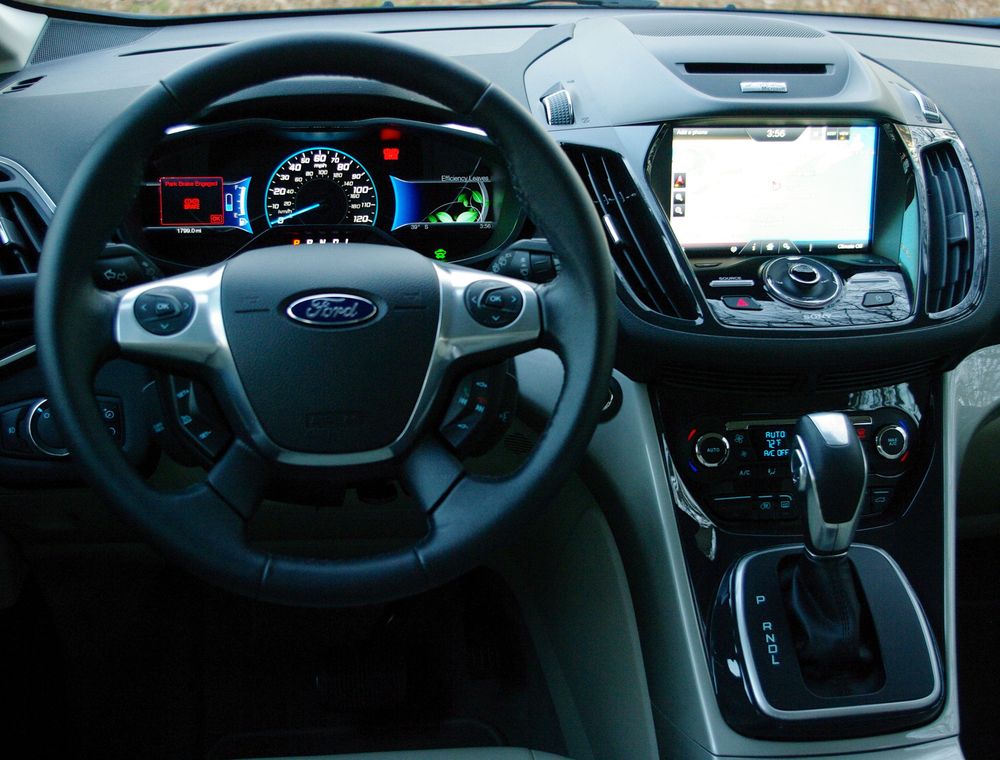
Inside the car is roomy in terms of headroom and legroom, but the battery that takes up so much room in the cargo area also dictates a fairly upright seatback position in the rear seat. Workmanship is a C-Max strong point, with quality materials and reasonable logical controls except for the typical MyFord Touch silliness. Displays are very colorful and clear, although navigating through the menus on the instrument cluster (using buttons on the steering wheel) can be distracting initially. 

C-max_g

So, the car is a very nice driver, and has a solid chassis that gives it a quality feel. The big question is, how’s the fuel economy? Here’s where things get perplexing. The EPA fuel economy rating for the C-Max Energi Plug-in Hybrid is 100 MPG in combined use (meaning you plug it in and drive, and then when this charge is depleted it reverts to regular Hybrid operation), and otherwise 44 MPG city/41 highway. Even after charging the car several times overnight, the best I ever averaged in mixed driving was a bit over 40 MPG, and overall I got 35.4 MPG. Not M1 Abrams Tank territory, mind you, but not exactly stunning. In fact, considering the fact that most people purchase hybrids (both plug-in and conventional) to cut down on the amount of fuel they burn, it seems rather odd that the numbers aren’t more impressive. I’d say that it could have just been my unit, but anecdotal evidence has been expanding on the interwebs that seems to indicate my experience wasn’t exactly unusual. By contrast, the Prius plug-in I tested delivered mileage in the mid-to-upper 50’s, and interestingly both it and the C-Max were tested in cold weather (really cold, in the case of the Prius) when fuel economy is typically at its worst for this type of vehicle. So when in comes to Mr. Max, what gives?

C-max_f

I have no idea. But, we’ll see, as you have to remember these autos have literally just popped out of the oven and will no doubt need a bit of tweaking to get everything up to speed. Otherwise, it’s a nice machine to hustle around. But at this juncture, I would advise those in the market to shop carefully before committing to these all-new platforms. 

C-max_e

A Tale of Two Caddys

I have to hand it it to the designers, engineers, et al at GM’s Cadillac motor division. They are dedicated to serving two masters: the past, and the heritage and loyal following of their customers that has been built over the decades, and master No. 2 that dictates they embrace new technologies. This is not always an easy line to walk, and in two all-new models they’ve managed to show not only how tough the task can be, but how satisfying it can be when you pull it off successfully. In these two sedans we have very different expressions of the modern Cadillac, yet they are clearly part of the same automotive family. They are also very interesting cars for very different reasons. In fact, I found them entertaining because there are things about them that were decidedly unexpected. 

Xts_a

Let’s start with the sedan that has one tire firmly planted in Cadillac’s classic luxury car past. The XTS is a piece of iron that your male ancestors would love, if for no other reason than its vast, cavernous, deep trunk. There are also great expanses of room in the interior of this car, even though it’s not exactly a tugboat in terms of physical size. In this sense the Caddys of old are represented by a coach that offers extreme luxury in an expansive setting, as well as rather over-boosted power steering which is a tad on the numb side (much like the ’62 Cadillac Fleetwood my grandfather owned. Almost). 

Xts_b

But after this traditional feature of room everywhere that was always a Cadillac trademark, the engineers decided embrace modernity, too, by launching every bit of whizz-bang technology they had in their arsenal at the XTS. As a result, the company describes this sedan as “. . . the most technologically advanced production car in the brand’s history.” They can say this because it really is loaded with a veritable plethora of silicon-based electronic devices, as well as advanced hardware such as Cadillac’s Magnetic Ride Control as a standard feature. This chassis magic is aided by rear air springs, HiPer Strut front suspension and Brembo front brakes. An excellent option found on our tester was Caddy’s advanced All Wheel Drive system; developed with Haldex engineering and aided by an electronic rear limited-slip differential. This is the way to go, as the system operates seamlessly and can deliver better overall traction and torque balance than the Front-Drive version. With the exception of the light steering I mentioned earlier, the XTS handles its heft well and is a pleasure to hustle around. It’s no ATS (see below) but it’s no lumbering bovine, either. The self-adjusting rear suspension is especially impressive, should you choose to fill up that massive trunk with wood stove fuel the way I did. Even with 400 lbs. of compressed sawdust on board the car cared not a whit. Hauling was no problem also because the lone engine is a 304-horsepower V6, which is commendable smooth and quick aided by a very efficient 6-speed automatic transmission. 

Xts_d

Of course, the grandest tech excesses are found in the cockpit, starting with a very innovative instrument cluster. What we have here is an LCD screen with virtual analog instruments, and it is of course adjustable. Cadillac describes it thusly: “Available exclusively on the XTS is a 12.3-inch (312 mm) reconfigurable instrument cluster. It features vibrant graphic displays showcased among four driver-selectable themes, ranging from minimal to extensive information.” So it’s like having a small tablet computer for an instrument cluster, like a video game or a Boeing 777’s “glass” cockpit. It’s a true benchmark of where we seem to be heading, in that apparently we’re supposed to see more and more of the world through an LCD screen. They are attractive, these instruments, but they certainly give the car a very different feel from luxury sedans of the past, especially Cadillacs. But, like with e-books, I’ve never been a huge fan of electronic solutions to problems that don’t exist. Of even more fascination is the optional “Safety Seat” on the XTS, which in concert with parking assist, lane departure warnings and other alert systems can buzz your backside (or pulse your posterior) on the side of the seat corresponding to the side of the car that the alert is addressing. For example, if you wander out of your lane on the passenger side the right side of the seat will vibrate to let you know about it. Weird, but interesting. Yes, you can turn it off and/or use a pure audible warning if you desire. There’s boatloads of other e-gizmos in this substantial car, but you get the idea. The XTS has the size and sumptuous accommodations of the Caddies of the past, but also injects additional tech goo from our present including the CUE (Cadillac User Experience) visual/voice control system. This is similar to My Ford Touch, and every bit as counterproductive. It is my hope they will quickly realize these new interface systems are not only an operational mess; they are a huge step backwards in auto safety. But that’s just my opinion. No doubt, like BMW’s hideous iDrive, some people will think these marketing-based blunders are brilliant. 

Xts_c

Something that is legitimately brilliant in my view is the chassis of the new Cadillac ATS. This sedan embraces the new, sporting side of Cadillac and is the car I always hoped the CTS might be (with the exception of the CTS-V, which I love ‘cause of that mighty, marauding mill). The ATS is much less capacious than the XTS but it doesn’t have it’s overly boosted steering, either. It is also a rear-drive platform (All Wheel Drive is an option) and there’s two inline Fours (one turbocharged) and a 3.6 V6 like the XTS, only in this case they’ve managed to eek out nearly 20 more horsepower (up to 321). I sampled this engine with a 6-speed auto, and it was a very nice powerplant indeed with plenty of power to rocket the light, 3,500 lb. (or so) sedan around. This is a lithe, sporting auto that you would never think was a Cadillac, if not for some of the characteristic interior appointments and aforementioned CUE interface system (just to ruin it for me). 

Ats_a

Well, to be honest this iPad-on-wheels approach to basic control operations really can’t ruin this car (or the XTS) completely for me, as both sedans have so many fine qualities that they are still quite desirable. Even the fact that neither car had a spare tire didn’t throw me off completely, but c’mon, man. Have we become such as weenie, call-the-auto-club, spaghetti-armed geek society that we have to summon somebody with callouses on their hands to swap a shoe on our machines? Sad, really.  And run flat tires, like on the ATS? Please. These are both fast cars, and I am in a hurry. If I encounter a puncture, I need to pit and change to the spare with great despatch (see A Christmas Story). 

Ats_c

But, I wander into the bush, off topic. Cadillac continues to build some really intriguing new models, and at the very least are soundingly thumping their cross-town rivals at Lincoln. As for taking on the best in the world and knocking down the door in the performance sedan category, I don’t think they’re there yet but they are certainly tapping politely on the window. That’s something unheard of just a few years ago, and I say well done, House of Cadillac. 

Ats_b

A Week in the Wee Prius

Prius_c_b

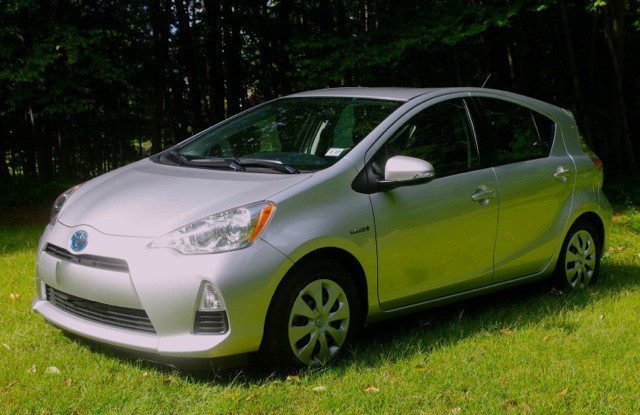
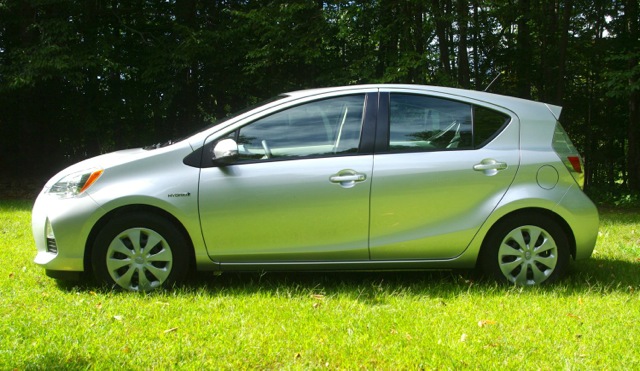
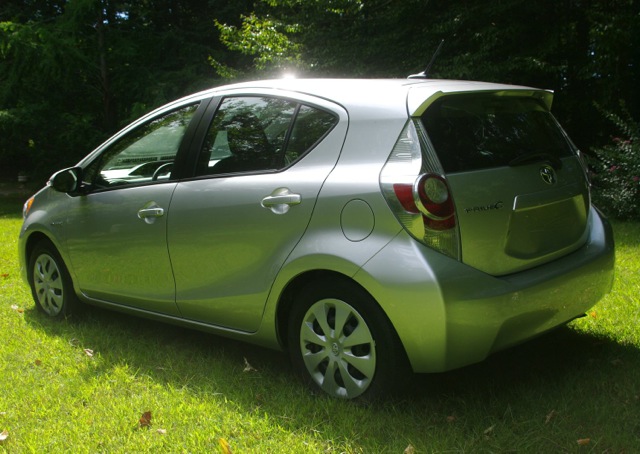
Once Toyota launched the first Prius gas/electric hybrid and the car turned out to be a great success by hitting all its design objectives including exemplary fuel economy, reliability and low operating costs, the company has been going full speed ahead (at a prudent engineering pace of course) with a whole host of hybrids. This year is especially important for the Prius, as the family of cars has now grown to four: the Prius, Prius v (reviewed somewhere on this site), the Prius Plug-In (also discussed on this stunning web-based prattle-fest. Somewhere), and now the latest edition, the Prius c.  C in this case stands for city and thus defines the car‘s urban transport suitability, and this is the smallest, least expensive, and most economical Prius in the line. I think once people get out and drive these things it could become the most most popular, too. The reason is the car actually has decent room in it for the compact class, is actually pleasant to drive and gets better mileage than any of my motorcycles (which is quite impressive). It’s also built by the company that has more experience than anybody with gas-electric hybrid powertrains, and judging from past experience this latest edition should be very reliable and low-maintenance as well. 

Prius_c_e

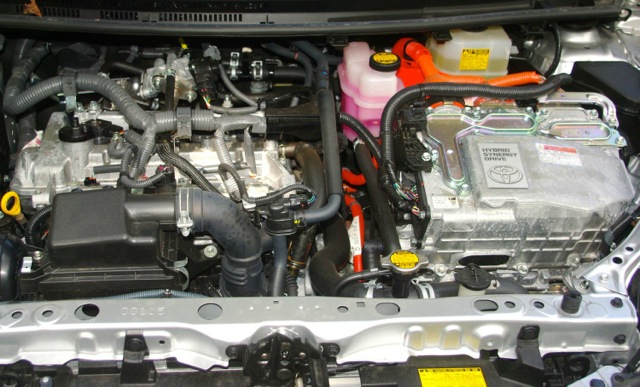
That last bit is helped by the fact there are no belts to fail or replace at regular intervals, as the components they drive on conventional cars are all electrically driven on all new Prius models. The Hybrid Synergy Drive powertrain consists of a 1.5-liter Atkinson cycle Inline Four, that puts out 73 horsepower, and is mated with a 45kW (60 horsepower) electric motor with an overall effective output of around 100 horsepower. As with every Prius (except the Plug-in), the battery pack that powers the motor is a nickel-metal hydride unit hidden under the the rear seat, and the car can be powered on electric power alone, gas and electric power together or the gas engine by itself. Toyota describes the car’s adjustable drive mode system thusly: “Prius c offers three distinct drive modes: Normal, Eco, and EV mode. Eco mode reduces overall energy consumption by governing climate control and throttle to improve vehicle efficiency. Under certain conditions, the EV mode allows the Prius c to be driven solely by electric power for a short distance (under 1 mile) while remaining below 25 mph.” The transmission is a Continuously Variable unit like on all Prii, and works well in this application and is quieter than a lot CVT units out there. 

Prius_c_a

And yes, this Prius Junior will not pin you in the deep recesses of its stout upholstery under hard acceleration, but it has enough giddyup to get you onto traffic just fine. The overall chassis feels  substantial and handling is tight, with a firm but not excessively stiff ride. In this regard it’s on a par with other economy cars in the class, and like I’ve been saying for a while the quality level (and the amount of equipment) you can get on entry-level cars is quite an improvement compared to what was out there even just a few years ago. The cabin isn’t Lexus quiet but neither is it excessively noisy like some compacts. The transitions from the gas engine and electric motor are suitably smooth, and reflect that years of development that have gone into Synergy Drive research. 

Prius_c_d

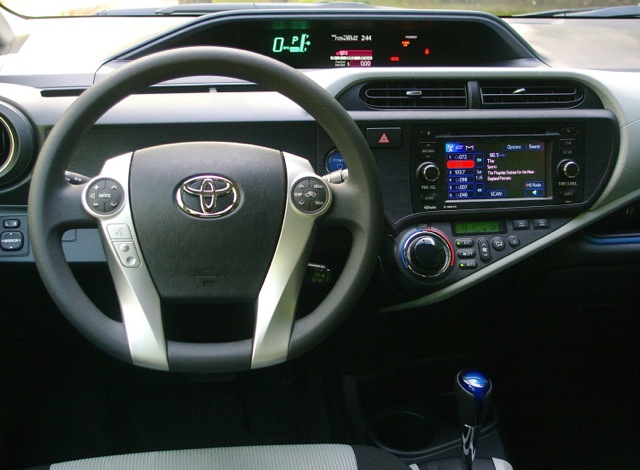
Inside, there’s decent room for four despite the very compact external dimensions, and the centrally-located digital instrument cluster should look familiar to anyone who’s spent quality time in a Prius. Depending on your budget, you can load up the c with all manner of options and our Prius c “Three” model included the usual cruise and auto climate controls, a touch screen radio interface with Navigation and Toyota’s Entune infotainment system, a Smart Key system; all the the latest goodies that are becoming common these days. The upholstery is durable enough, and while there’s a lot of hard plastic in evidence it’s (as I keep saying) at pretty much on the same level as most entry-level compacts. 

Prius_c_c

Which in a way is a slight problem initially for this incredibly frugal little 5-door. People forget this really is a comparatively inexpensive car with a comparatively expensive drivetrain; a hybrid system that delivered 53 MPG during a week of mixed driving in these parts. Apparently some people think it should have the feel and interior materials of its more expensive siblings instead of fittings more fitting for a car on the low end of the vehicle line. I really liked the car, and felt like I was driving a quality piece that gets the best gas mileage available in a highly maneuverable package that can escort three associates comfortably as well as some of their belongings. With options, the Prius c Three sticker came to $22,669. 

Hell Yeah, It’s Super

13_gt-r_copy

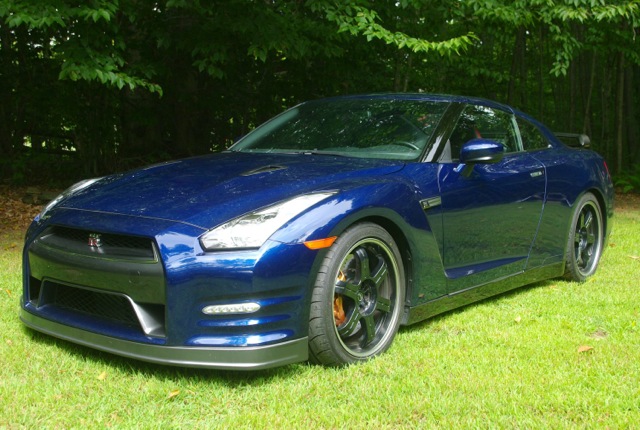
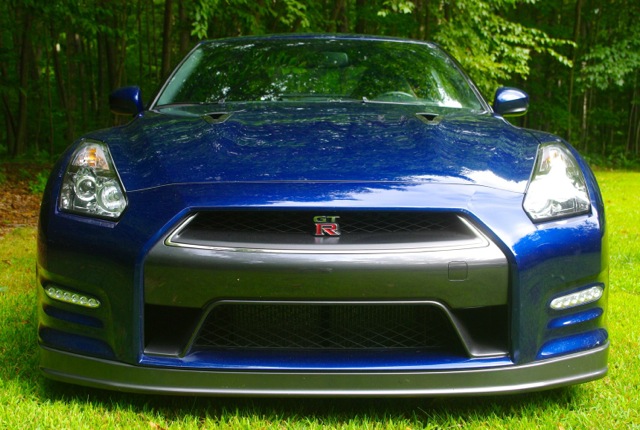
What can $100K buy these days? Such a sum purchases a lot less than it used to, sure, but it can still manage to land a pretty amazing automobile if you know where to look. Now, your nearby Nissan dealer wouldn’t likely be the first place you’d think of to land a bit of exotica. But certain select Nissan Emporiums do indeed have a wicked-fast coupe called the GT-R, and it is a serious, pavement-lighting G-teaser of an automobile. The Black Edition I was lucky enough to sample was that curious mix of “The door sounds like an economy car when you shut it, and yet it costs what?” and, “Oh my God, my internal organs have been shifted and I was just going down the driveway.” It is your basic user-friendly exotic, and very, very entertaining. 

Gt-r_front

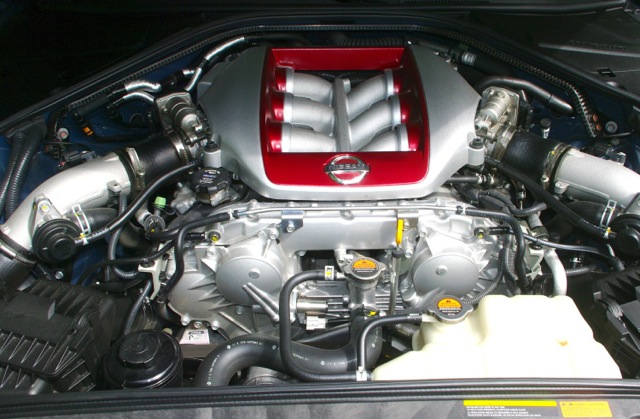
An All-Wheel-Drive coupe like this is so crammed full of complex, state-of-the-art components that it would take a very long time to catalog all the goodies. But I’ll try to hit the key points, such as (obviously) the drivetrain starting with the 3.8-liter V6 engine. This unit is assembled in a clean room (like all serious race shops built their mills) and is blessed with twin turbochargers, and through its highly polished, hyper-engineered internal architecture generates 545 horsepower. This is mated to a rear-mounted transaxle (Nissan calls the balanced architecture Premium Midship) that uses dual-clutch automatic technology with 6 speeds and paddle shifters for manual operation. This in turn goes through a ATTESA E-TS All-Wheel Drive system (also rear mounted) that can vary torque from 100% rear drive to a 50:50 mix front-to-back. There is more computer hardware than NASA used to have, so suffice it to say Nissan’s goal of making this car not only worthy of true Supercar status but a manageable Hulk that even non-expert drivers can enjoy safely is satisfied through very sophisticated stability software. 

Gt-r_eng_copy

And this is a welcome thing, for this is a nasty-fast machine that does inspire one to do potentially mischievous things. The GT-R launches off the line with the urgency of an Olympic sprinter, and in less-than-ideal conditions was able to catapult me to 60 MPH in around 4 seconds. The intake and exhaust orations are the stuff of F1 dreams, yet never excessively booming to get annoying over time during steady-state droning. The steel/aluminum/carbon fiber body shrouds a track-serious suspension (adjustable of course-but even the comfort setting is pretty stiff) and huge monobloc Brembo brakes handle the woah with sufficient urgency. Steering feedback manages to do the right mix of letting the road surface communicate without excessive bump-steer on rougher stretches. The transmission does its direct engagement thing well, and shifts cleanly in manual mode although it can be occasionally abrupt when on full auto at slow speeds. 

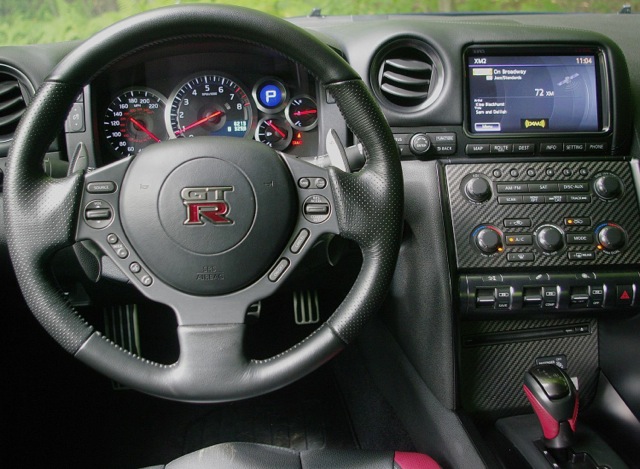
Gt-r_int_copy

The interior is cozy but forms a wonderfully supportive cockpit to conduct the business of driving, with outstanding Recaro leather buckets that should be able to adjust to a broad variety of physiques and fit mine perfectly. You strap into a focused cruise missile like this and become a part of the hardware, and it helps tie you to the chassis like only the best road-going machines can do. It’s stiff, some of the switchgear looks like it was lifted off a Sentra, and it costs a fortune. But the things that make an ultra-high-performance Supercar a lusty commodity are all in full measure, and it ultimately makes for a very unique ride. Others may be sexier, but Nissan deserves credit for getting the bottom line (getting around the paved surface with wicked despatch) right on the money.

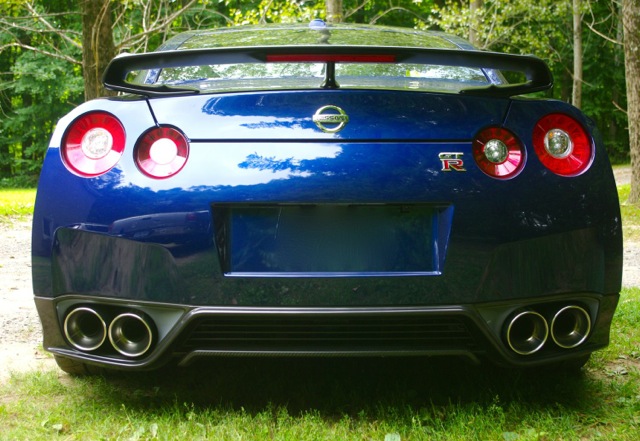
Gt-r_rear

The Fast and the Frugal

You might think, if you were a thinking-type being, that now that gas/electric hybrid cars have a couple of million units on the road (and they’ve been with us well over a decade), they would be a more commonplace item in manufacture’s product lines. But the fact is they’re still fairly uncommon, even though they have shown themselves to be the way to go when you want to save fuel, cut down on emissions and lower operating costs. Despite the rhetoric spouted by many on how hybrids are prohibitively more expensive to buy (not true at all, if you do your homework) and more costly to maintain than conventional drivetrains, the opposite has been shown to be the case. Hybrids have proved to have very low service requirements, excellent reliability, and in the case of Toyota have eliminated things like drive belts which is one less maintenance/reliability issue to deal with. Even brake pad life has been extended thanks to regenerative braking that uses the electric motor as a generator during coasting and braking, and helps slow the vehicle and reduce the load on the brakes. 

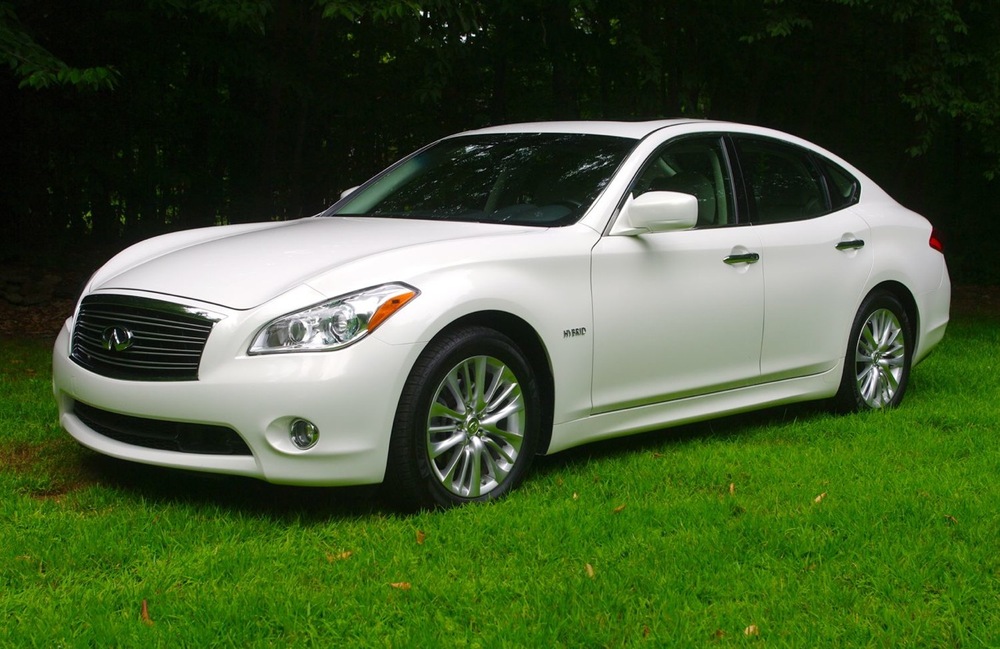
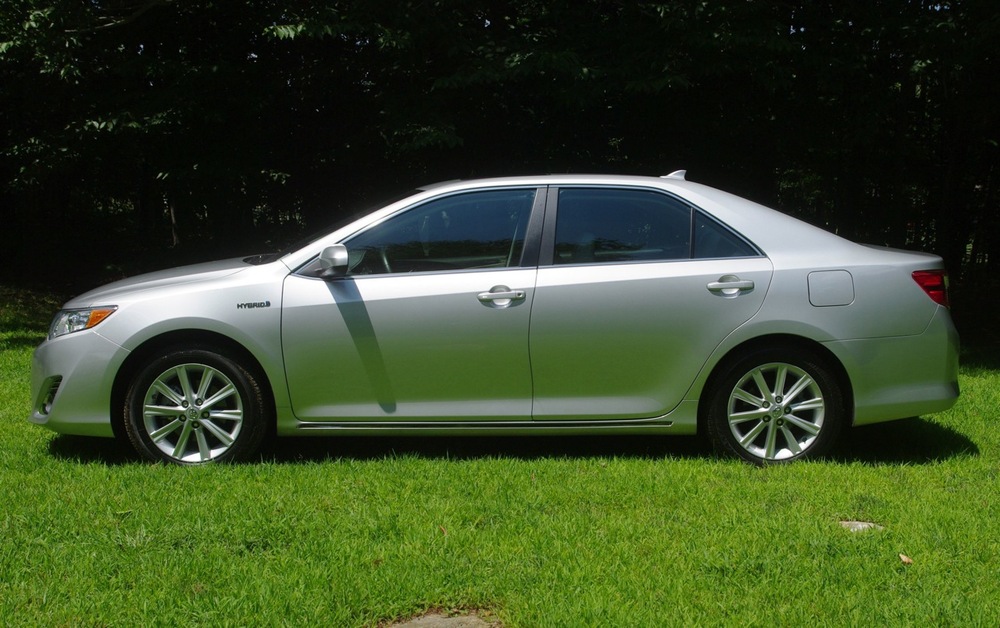
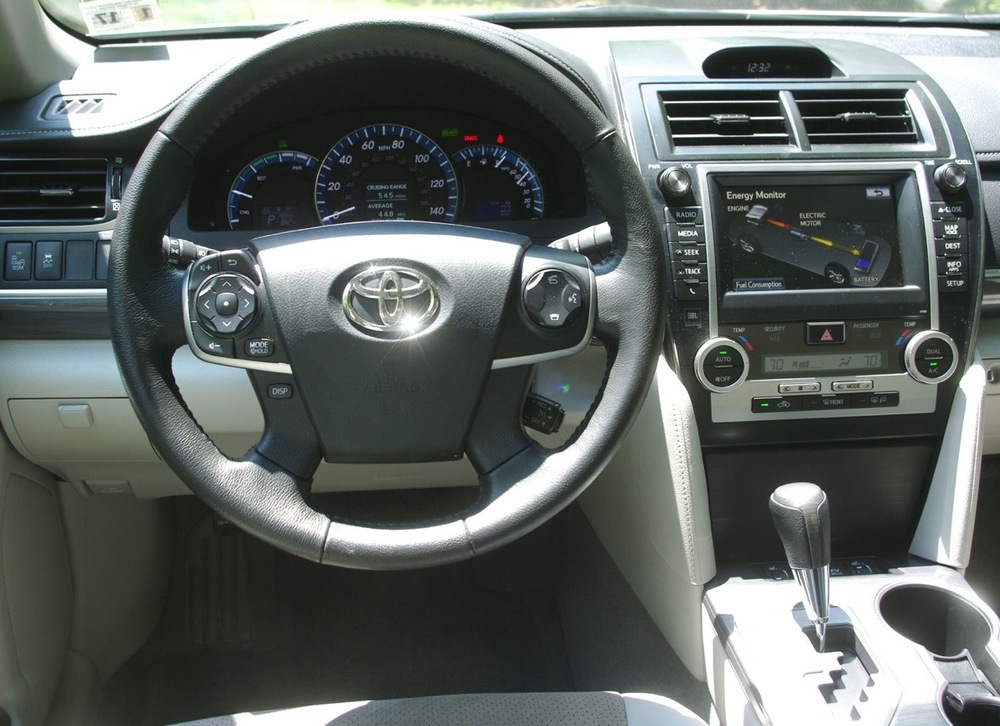
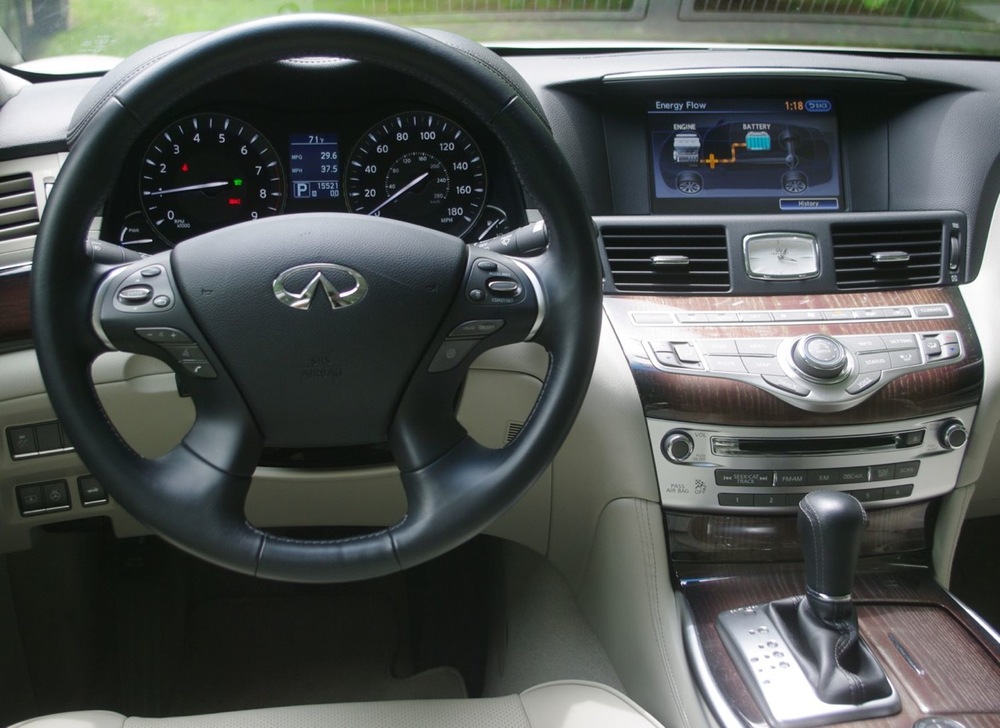
Fortunately, even though hybrid popularity hasn’t exactly exploded there are still manufacturers that move the breed forward, and here’s a couple of very interesting 2012 units that have dramatically different approaches to hybrid powertrain incorporation yet still deliver great fuel economy, low emissions and very satisfying (if very different) driving experiences. These two examples aren’t really direct competitors, but show you how far hybrid drivetrains have come in the variety of applications that designers and engineers have been working on. Today, I give you Toyota’s all-new Camry Hybrid XLE and Infiniti’s M35h Hybrid Sports Sedan. These are both handsome four door sedans, but they’re as different as chalk and some other kind of chalk that is oh so different than the previously mentioned . . . chalk. Some particulars: The Camry is a front driver, while the Infiniti uses rear-drive architecture. The Camry’s four-cylinder gas engine/electric motor is mounted transversely, while the M35h’s V6/electric motor is mounted in a classic longitudinal configuration. Toyota continues to use the tried-and-true nickel-metal-hydride battery for its electric motor needs, while the Infiniti goes with newer Lithium-ion fare. The Camry has a Constantly Variable Transmission (CVT), and the M35h has a 7-speed automatic. 

The Infiniti is a bigger car, with nearly 5 more inches of wheelbase and overall length. That said, the Camry feels roomier and has a bigger trunk (and the M’s trunk is kind of a funky shape). Both cars are comfortable and well-finished, with the Infiniti especially opulent (which you would expect given the prestigious label). The most substantial differences between these two hybrids are in fact the performance, fuel economy and price, and once again these differences underscore the very difference design goals of these two sedans. 

In a nutshell, like its M siblings the M35h is a rocket, launching you to 60 MPH in an observed 6.3 seconds (the Camry managed a more leisurely 9 seconds, but the car certainly feels quicker compared to the Camry Hybrid of before). This is not surprising as the total system horsepower for the Camry is 200 while the M35h is 360 (although the Camry is 688 lbs. lighter). The latest-generation Camry has benefited from an extensive chassis overhaul that has resulted in tauter handling and a firmer ride with more control, but the M is clearly the sport sedan in this pairing with impressive back road manners and true performance credentials. Both cars have excellent brakes, and are fairly quiet although there is some road noise that creeps in on occasion. So while you may be leaping for the keys for the M if you’re performance-minded, be advised that there is a hitch in the car’s giddyup. The on/off transitions of the V6 engine as it powers the car with and without the assistance of the electric motor can be less than fluid. Perhaps it is often so noticeable because the rest of the car is a model of solidarity and refinement, and any imperfection in an otherwise superb drivetrain sticks out like a sore piece of chalk. But these transitions are pretty obvious, especially in contrast to the Camry’s very smooth transitions and overall seamless hybrid drivetrain. When EV (electric vehicle) mode, both cars are eerily smooth. 

Finally, the fuelish bottom line. The performance you get from the M35h is balanced by really impressive fuel economy for the class and in a week of driving I averaged about 29 MPG. This is quite laudable when you experience how well this machine gets off the line, and the only disappointment is the car’s penchant for Premium fuel. If you’re more interested in fuel economy over performance yet like a similar comfort level, the Camry Hybrid is a very slick package that was able to squeeze out 42 MPG with reasonable ease. There’s also a price difference of course, as the Infiniti’s upscale brilliance will set you back $65,395 (as tested), while the Camry Hybrid XLE rings in at $34,596. Two very different sedans, two very different hybrids, both very, very interesting higher-mileage alternatives to the standard fare out there. 

12_camry_hybrid_copyM35hCamry_h_sideM35h_sideCamry_hybrid_int_copyM35h_int12_camry_hybrid_engine_copyM35h_engine