A Touch Too Much?

Explorer_int

“Toucha-toucha-toucha Touch me, I want to be dirty.” 

Ah yes, the immortal words of Janet, who, like her fiancee Brad Majors, was a young, ordinary, healthy kid. And it’s a sad day indeed when a bit of healthy touching is frowned upon, but as I do enjoy playing the role of Old Coot (even though I like to think of myself as a middle-aged Coot) I must criticize a bit of touching going on out there, in some of our latest automobiles no less. As we all know, there’s a horse race taking place in what is euphemistically called the “tech” industry (but is actually just the personal computer industry, which now includes mobile phones) to see who can get the most touch-screen interface products on the market the quickest. This exploded with the arrival of Apple’s first iPhone, which for the first time utilized touch in a way that worked better and more logically than ever before. This was the first true mass-market application of a nearly buttonless and switchless operating system for mobile devices, and it spread like a Texas wildfire. 

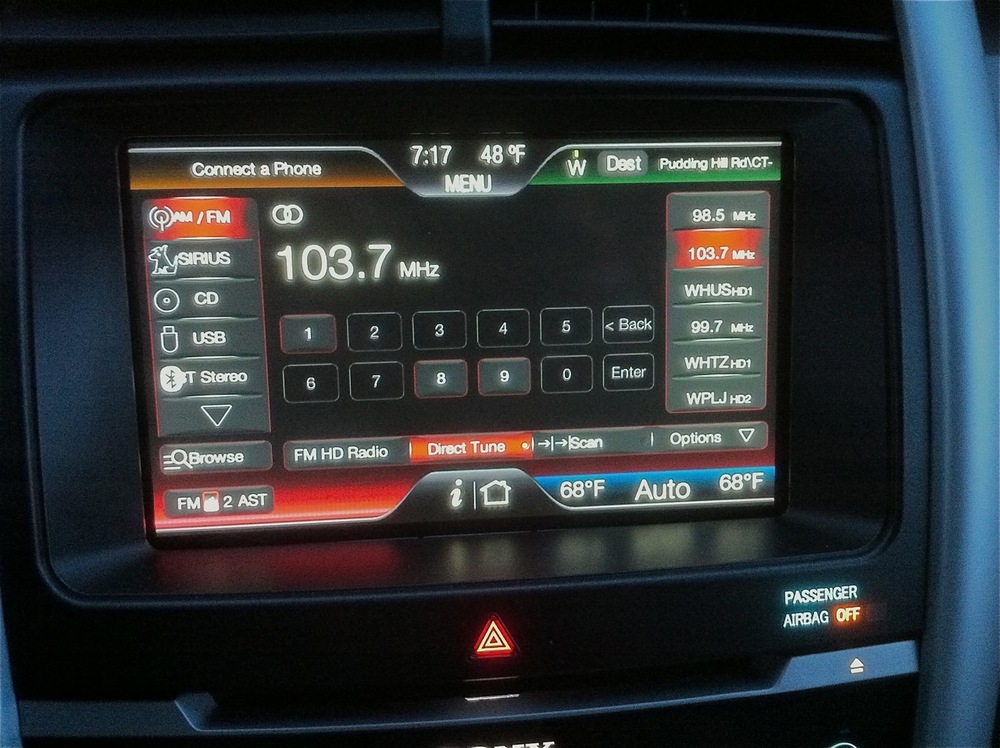
Quicker than you can say “Sync my ride,” the touch screen was off and running in other areas. On the automotive front the limited use of the touchy-feely way of changing audio and HVAC settings was quickly launched, especially with navigation systems (as there was already a screen ready, nay, aching, to be touched). But Ford has really gone after the technology aggressively in an increasingly inclusive arc, with mixed results in my view. But rather that give you a blow-by-blow account of what I like and don’t like about Ford’s new MyFordTouch interface, I’d rather focus on the big conceptual picture instead as I think it’s more important at this stage of the game. With all the new ways we have to operate electronic devices, and by extension, the devices these devices operate, what are our objectives exactly? 

Here’s the thing: what goes on in the tech field regarding things like desktop and laptop computers, tablets and even our phones is pretty amazing, and change is accelerating at a staggering pace. This technology is having an effect on everything around us, and when it comes to automobiles the introduction of the latest in e-interfaces is being introduced in a slightly more incremental fashion, true, but nevertheless it’s happening quickly compared to the way things have typically been done in the past. But the important question is, is this inclusion of this revolutionary way of operating things going to make our cars work better and more intuitively, or just insure that touch expands into (and permeates) every last corner of our lives? Is the way we control our phones, pads, desktops, laptops, etc. really the way to go when it comes to the cockpits of our cars (which are, after all, the ultimate mobile devices)? True, one of the reasons the iPad is such a smash success is its simplicity in terms of user interface. But is what works for a tablet PC the best form factor for automotive operation? 

Here’s another way of looking at this situation that I find equally perplexing, and even troubling (I’ll call it trouplexing). Right now, PBS is running a Ken Burn’s documentary on Prohibition, and while I haven’t seen any of this program (although I’m sure it’s probably very interesting), taking this history as precedent are we seeing a new type of struggle to regulate something very powerful in the form of bringing the tech communication world into our cars? Here in CT it’s been against the law to use your mobile phone in your car without a hands free device for years, yet just from my own observations it looks like more drivers have their phones planted on the side of their heads than ever before. Much like the masses insisted on drinking alcohol in the USA which killed Prohibition; banning cell phone use in cars w/o the prescribed headsets apparently isn’t going to work, either. So, arguably, there is a certain logic in saying, look, people are going to use their phones, text, use navigation systems, stream from their portable devices, etc. from now on and there’s nothing you can do to stop them. Therefore, we need to use technology to allow drivers to use their technology safely. Right? 

Of course. Such is today’s conventional wisdom.
Mft

To address this, we now have technology like Ford’s Sync, MyFordTouch, and all the other competing (primarily bluetooth/voice recognition) systems out there that aim to keep your hands on the wheel while you dictate everything, therefore keeping you focused on the road. It makes sense in theory, but then there’s the dark side that I observe especially when I’m riding a motorcycle in the same environment as people driving their highly teched-out cars. In a way, I see all these miraculous developments as enablers of distraction and see people doing stupid things on a daily basis. Hey, their Ride may be Synced, but their attention is still elsewhere and driving in a safe, responsible manner on the public roadways is suffering for it. 

Here’s an intrigue: remember the extraordinary brouhaha over Toyotas suddenly accelerating by themselves? I smelled a rat from the get-go, especially since the reporting on the alleged phenomena was incredibly one-sided.  As we now know, with the exception of floor mats becoming lodged under accelerator pedals (because said mats weren’t properly installed, BTW), there was nothing seriously wrong with the cars at all. So why was it happening? Funny thing: the time frame information that traced the increasing number of these “unintended acceleration” cases fit nicely on a graph of increasing popularity of cell phones, yet I never saw anybody make this connection in a major media expose´.  And when somebody plowed into another car because they were dialing, taking, texting, eating, fornicating, etc. it was much more convenient to just blame the car. This looked familiar to me, as whenever somebody turns left in front of a motorcycle and causes an accident, they claim they never saw the motorcycle. They are no more likely to admit they saw the bike but pulled out anyway than they are to admit they were dialing their cell phone when they rear-ended some nuns in a van, or took out the front window of a Dunkin’ Donuts because they mistook the accelerator for the brake pedal because they weren’t paying freakin’ attention to what they were doing.

Of course, to help counteract this new phenomena we have more technology thanks to collision avoidance systems (that will activate your brakes when you won’t because you’re updating your status) and even cars that monitor us and tell us when we’re not paying attention and/or falling asleep. Google, a company you may adore but I avoid interacting with as much as possible, is even pushing autonomous cars. They say it’s for safety reasons; I say it’s because they don’t want to have to pay and insure people to drive street-view camera cars. They really are pure Evil, by the way. You have been warned. 

But I digress.

The bottom line here is, the light-speed thunderbolt mega zoomdragon that is today’s rate of technological advancement is a runaway train that is messing with us more than we realize. Everybody’s trying to keep up, and I think the engineers in the auto realm are some of the brightest and hardest-working out there. They are also hip-deep in change trying to wade through how we interact with the world of ever-changing instrumentalities, and find the Way Forward.  But I think they need to slow down and ask some very basic questions. Most important is this: are the changes they are making to the human/control interface making the car easier and simpler to operate, or more complex and more difficult? Are we safer as a result, or just more detached while operating our cars? Funny thing: good mass transit solves an incredible number of these problems, and can let you use your gadgets to your heart’s content. Yet here in the USA . . .  

Well, you get the picture. Now pull over if you want to text it to somebody, OK? 

You Must Go To Gort. You Must Say These Words. . .

Gort_man

Yes, for those of you that may recognize the dialogue in the title of this piece I’m a big fan of the film The Day the Earth Stood Still. I’m referring to the original, not that lame remake with Keanu Reeves. Although the latter was an interesting movie, it just wasn’t even in the ballpark of the original and shouldn’t have had the title because it was such a different beast. But in both films, there was a very imposing robot named Gort who had a very unique look. I have just spent quality time with a vehicle that really reminds me of the original Gort, in that weird way that something visually somehow reminds you of something you’ve seen before.

The Gort-like vehicle that is currently being a silent sentinel out in the driveway is the Infiniti QX56, which is your basic velvet tank that is as massive and powerful as it is decadently luxurious. The styling is very Gortish, and yet the smooth lines also work on another level as it look as if it was carved from a solid block of some rare metal and the quality of the Mountain Sage paint finish is extraordinary. It’s as big as a house, and built on the Nissan Titan’s robust truck frame (with some significant differences, like an independent rear suspension along with other more civilized components). The engine room has a lovely 400-horsepower V8, and this along with a (count ‘em) seven-speed automatic transmission and a 4WD system that includes an Auto mode facilitates your guiding this universal law-enforcement robot bus damn near anywhere it will physically fit. This is a very expensive unit (loaded as ours was it tops $72K), but I have to admit it really feels like a lot of expense and time went into the thing.

Gorst_b

We had the optional Hydraulic Body Motion Control system that (in Infiniti-speak) works like this: “Suspension travel is automatically controlled by hydraulic chambers integrated into each shock absorber. The chambers are cross-linked with piping, allowing for the transfer of hydraulic fluid, managed seamlessly by nitrogen-charged accumulators, from one side of the vehicle to the other. This enables the system to vary suspension travel independently on either side of the vehicle, thereby counteracting body lean and creating a luxurious, flat ride previously unavailable to drivers in this segment.”

This helps what should be a big, ungainly walrus of a vehicle get around in a much more competent fashion, and along with the splendid job they’ve done with suspension isolation the QX flattens road irregularities (and the odd, slow-moving Smart Car) with nary a shudder or rattle in the cabin. It really does feel like the upscale premium SUV it is, and certainly wouldn’t be out of place taking a sheik to dinner in Dubai or ferrying a Royal to examine the moors for stranded ponies. From the crisp acceleration to the surprisingly good brakes there is a lot here to appreciate, and what really surprised me was not just the overall level of quality (including the solid craftsmanship evident all over the cabin) but the fact that I even saw 17 MPG which is actually not bad for a small village on wheels.

Gort_d

So, the QX56 is a pretty successful attempt at being what it’s supposed to be. That is actually not always the case with autos, even when you get to the upper echelons of the pricing pyramid. Yet, the thing that made my day about this rig was the how much it reminded me so much of one of my all-time favorite robots, from one of my favorite films. This is pretty weird when you think about it, but such is the world of the machines we trust with our lives in all kinds of situations. Gort the Infiniti will not only warn you if you stray from your lane, he will apply the brakes on one side to try and keep you inside the lines. The adaptive cruise control actually works well (this technology has been pretty hit and miss for years), and will apply the brakes to help keep you from rear-ending the car in front of you. There’s lots of other black box stuff to help protect you from yourself and others, which means this Gort (in addition to a certain similar visual presence) has a lot in common with the robot version in terms of stopping violence in your own personal universe. Lest you don’t understand the similarity, its a good excuse to watch a really excellent film.

Gort_c

Here’s a Shock: The Volt is GM’s Best Ride in Ages

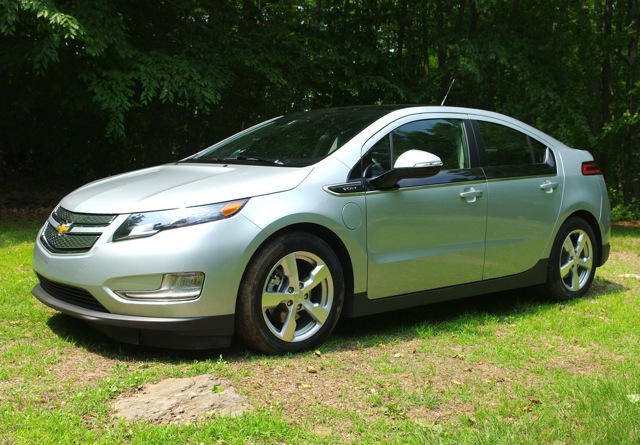
Volt

Oh sure, I was a big-time naysayer. The Chevy Volt was vaporware for quite awhile, and yet, ironically, was being rushed to market with blinding speed. This is quite a juggling act, if you ponder it for a second. When you also consider that Toyota and Honda had hybrids on the road nearly a decade before GM even started to adopt the technology (and Ford was also part of the party with the Escape Hybrid), then the Chevrolet Division’s decision to just leapfrog everybody with a futuristic plug-in was certainly grounds for skepticism. To top it off, I quickly grew tired of all the company-generated hype including social network campaigns and some truly tedious “Town Hall” meetings at auto shows. 

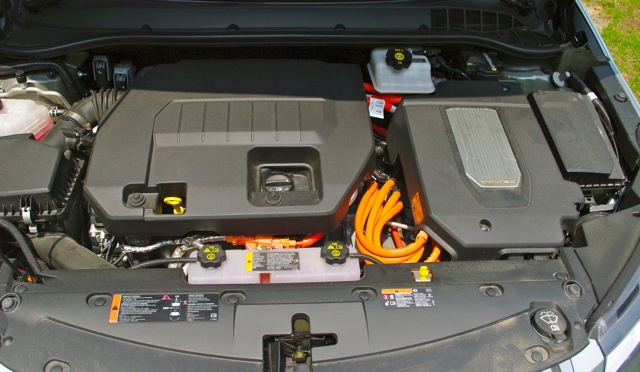
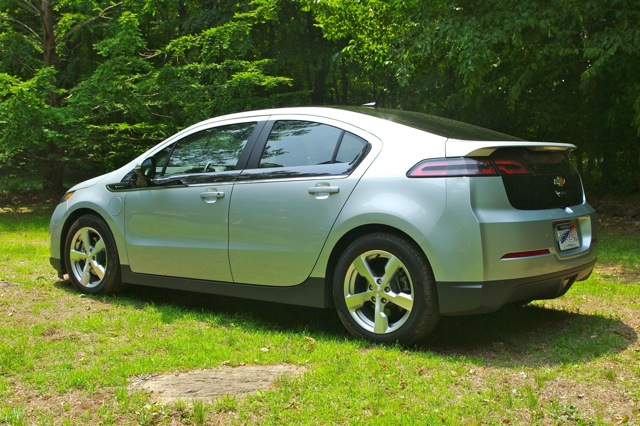
But danged if the General didn’t focus like a laser and develop some serious engineering solutions. Danged if they didn’t manage to build some prototypes that evolved into production models, and double danged if I didn’t just spend a rather entertaining week with this all-new extended-range electric vehicle. To recap what the Volt is, it’s a true electric vehicle that you plug in to fully charge (about 10 hours at 110V; roughly half that at 220V), with a huge lithium ion battery pack that powers the electric drive unit that turns the front wheels. Once this battery is depleted, you don’t have to go commando with an extension cord and steal juice from some unsuspecting residence or convenience store. Under the hood where you usually find an engine there is in fact . . . an engine; in this case a 1.4-liter Inline Four that functions as a generator. This is the “extended-range” part, and with a 9.8-gallon fuel tank you can keep right on going for an overall range of well over 350 miles. 

Volt_engine

I tested a Prius Plug-In hybrid a few months ago (see the post located somewhere in this thrilling collection of prose), and while this is the closest soon-to-be competitor to the Volt they are still very different beasts. The Prius is a plug-in evolution of the science of Priusology, where the already excellent hybrid engineering gets a new twist with lithium-ion batteries instead of the tried-and-true nickel-metal-hydrides. Armed with these more-powerful laptop renegades, you can plug-in the car for about three hours (at 110V) and get 18 or so miles of pure EV range. After that, this SuperPrius becomes Clark Kent once again and operates much like all the other (over a million or so) Prii around the globe. This means it runs on the engine, the electric motor or both until you plug it back in and start over. It’s a plug-in take on an already proven platform, so one big quality in its favor is literally over a decade and millions of miles of real-world durability.

The Volt is a whole different kettle of tech, and a boatload of brand-new engineering from stem to stern. It’s an electric vehicle all the time, for the engine is really just there to charge the batteries when they become depleted so you can keep on rollin’. Another difference is you can taxi your backside down to a Chevy dealer and buy one, for even if you might have to wait a bit they are available right now. It will be spring 2012 for the plug-in Prius is at dealers, so GM actually beat Toyota the market this time. 

So now we have a couple of different approaches to cars that, even though there are internal combustion bits under their respective hoods, require you to plug them in like giant vegetable steamers to achieve full low-emission, high-mileage greatness. This seems odd at first, but in the case of the Volt I got into a routine where it was really not a big deal. The thing is, you need a full ten hour nap at a normal 110V outlet to top off an exhausted battery array which might be an issue for some people. But for most drivers, especially those with a round-trip commute of 40 miles or less, this might work out just fine as charging times would be a bit less because the battery may have some charge left when you plug it in. What you get in return is about $2 added to your electric bill per full charge (that’s here in CT. Your e-bill will likely be less), and more importantly a car that cruises along quite nicely on all-electric power while making little noise and soiling the air with no real emissions to speak of. Repeated 0-60 MPH runs came in at just under 9 seconds, so the Volt moves out just fine without gas engine assistance. It’s also fun to drive with sound handling, excellent brakes and comfortable seating for four because a tunnel filled with batteries relegates the seating to 2+2 status, but there’s decent room at all four perches (a car like this makes me want to call them “seating stations” instead, though). This is basically a Chevy Cruze chassis, but for some reason I liked it a lot more in the Volt application that the plain ol’ Cruze version.

Volt_int

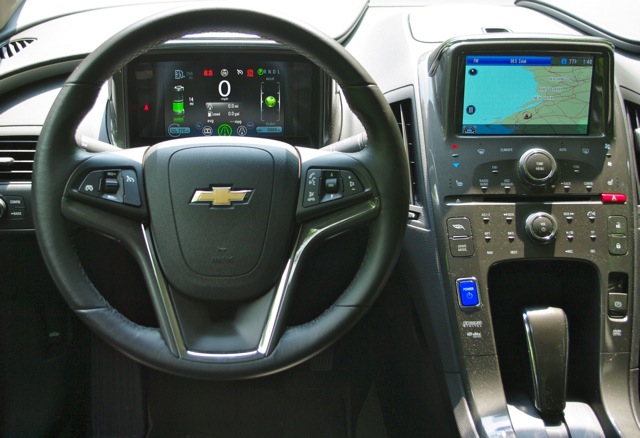
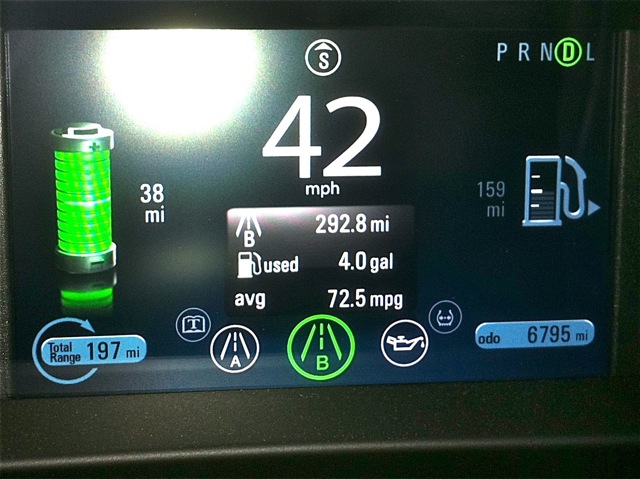
One of the more gutsy (and completely appropriate, in my view) design choices with the Volt involves the driver and control interfaces, for they decided to celebrate the fact that this is a very different kind of car rather than disguise it. I think this is bold because the Chevy brand has always been associated with more conventional U.S. car styling values, and has therefore been tad on the bland side in order to appeal to a huge swath of mainstream America. The Volt gets all touchy-screeney (with touch even on surfaces that aren’t actually screens) to handle all the conventional car operations, and you’ll either love it or think it’s over the top. The driver’s display consists of a 7” LCD screen that gives you an excellent snapshot of the state of your electric and gas-powered devices. It also adapts itself depending on what is happening, such as when you make the transition from full battery electric to engine-generated electricity. Even though the heavy work is going on under the hood, magical things happen right before your eyes. The fuel gauge which is grayed out lights up and becomes a prominent part of the display when you switch over to generator juice, and keeps you apprised on your range. Incidentally, when the engine kicks on it’s fortunately not a wheezy, loud generator like you may be familiar with in the industrial world (with the exception of the big 700kW gennies on the back of the tractors used in the film business-those things are amazingly quiet). This is a contemporary, reasonably-refined mill that seems quite normal and familiar, with one notable (and strangely interesting) RPM characteristic: the engine sometimes revs to increase generator output when you’re not accelerating. This creates a weird auditory/tactile incongruity compared with conventional automobiles, but you soon get accustomed to it. Overall the GM engineers have done an excellent job of keeping the generator’s presence as unobtrusive as possible. 

Volt_dash_a

Ah yes, back to the display/control interface experience. There is a touch screen in the center stack of course thus giving us two LCD screens, but in addition to this there’s touch stuff in the stack itself that deal with Audio, HVAC, etc. I had some trouble with this in that I really had to take my eyes off of everything else to find the switch in question, and found it too easy to engage the wrong touch interface by mistake. Not a huge deal, but something I hope they’ll tweak a bit down the road. 

Volt_cargo

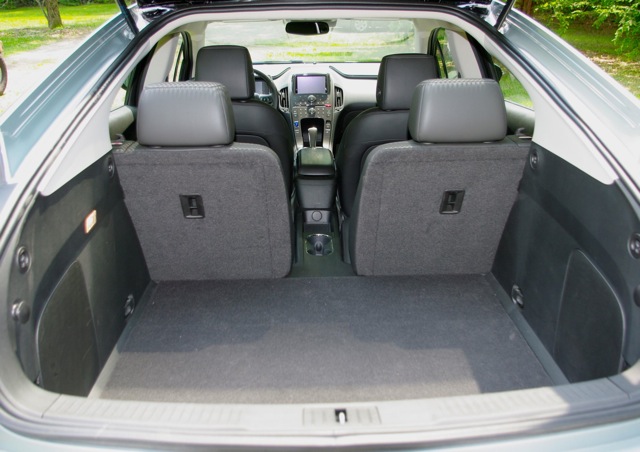
Finally, one of may favorite surprises with the Volt was usable space in terms of cargo. The charging unit and its associated cord are stored in a nice bin under the floor, and there was no spare tire on our unit but instead some flat fixing goo and a small air compressor. With the seats occupied you have 10 cubic feet of cargo space under the hatch; fold down the seatbacks and that swells to. . . something larger. I can’t find the spec, but it’s pretty dang roomy. All in all space utilization is quite good, making this car satisfyingly versatile even though the battery tunnel means you have two buckets in the back seat. 

Now we come to the Big Question: is the Volt a good fit you the likes of you? This really does depend more on your driving habits and where you live. I’m not sure how the Volt would do in the dead of winter when you really need a lot of heat in the cabin, for without the engine generating heat all the time like with a conventional car it would become a battery-stressing business to keep you toasty. On one cool morning the front seat heaters actually came on by themselves to try and warm things up (this is tweakable in the climate settings) which for some reason didn’t really work for me. I also don’t know what really cold temperatures might do to charging and battery life, either. Another concern is charging in a big city situations, such as when you have to leave the car on the street with the complications that running the power cord between the garbage cans and over the sidewalk would entail. 

But none of this really detracts from how well the Volt does its thing of delivering low fuel consumption and low emissions, and how good the overall package really is. During a week of driving about 50 miles a day and charging the car fully overnight, I got about 72 MPG. I’ve been skeptical of using lithium ion batteries in cars as opposed to the nickel-metal hydrides (which have proved to be near bulletproof) that have been the staple of hybrids until now. Maybe my prejudice revolves around early experiences with laptop batteries losing their juice after a year or so, but shoot, the MacBook Pro I’m writing this on is a year and a half old and still gives me about 5 hours every night so obviously there has been considerable improvement. The Volt has an 8 year, 100,000 mile warranty on the hybrid battery and who knows? It might prove bulletproof as well. If the hard parts on this car live up to the overall build quality on the one I tested, Chevy has a real special car for sale. The (very well equipped) $43K asking price is made more palatable by a $7,500 tax credit, so it’s not exactly excessively priced either. We’ll see how Toyota ultimately prices the plug-in Prius next year, and the Hybrid Cord Wars will truly be On. Oh, and Chevy, please put a wiper on the rear hatch window. I really missed having one in the rain. 

Volt_r34

I Find Your Lack of Torque Disturbing

“Don’t try to frighten usssss with your Sorcerer’ssss waysss, Lord Vader.”

-Imperial Dude w/ Snake-Like Imperial Lisp

In times of great personal challenge and uncertainty, we often find ourselves asking ourselves, “What would Vader Do?” Yes, the Dark Lord of the Sith does seem to have a handle on things during times of crisis (in his universe, anyway). And today (while I wasn’t even in crisis mode) the question was answered before I had the chance to ask it, which is a special bit of kismet when it happens.

The answer was this here Caddy CTS-V Sport Wagon, and the (slightly altered) question was, “What Would Vader Drive?” Naturally, he’d go for this fine, insanely powerful Millennium Caddy, with its 6.2-liter Supercharged V8 that puts out 556 rebel-chasing horses and 551 lb.-ft. of planet-crushing torque. It’s much like the CTS-V sedan I mumbled about in an earlier post, and has all kinds of wicked goodness such as Brembo brakes, Caddy’s Magnetic Ride Control and a Bose sound system that is a fine medium for John Williams’ soundtracks. Oh, and best of all it’s black. Very black. They call the premium finish Black Diamond, which almost puts Mr. V’s lovely obsidian raiment to shame. Almost.

But while I’m on the subject, can you actually shame a Dark Lord, anyway? Nah. But you can say, “Kudos, Sith Master,” for this crate puts the hyper in hyperdrive. It’s every bit as fun as the sedan, yet you can haul far more light sabers, nuclear nunchuks and even an extra helmet or two. It’s almost enough to go over to the Side that is Dark. Almost.

Vader_aVader_bVader_c

The New York International Auto Show is Not Depraved

The title of Hunter Thompson’s groundbreaking magazine piece that launched his career as the father of gonzo journalism was, if memory serves, “The Kentucky Derby is Decadent and Depraved.” Now, I’m not implying that the New York International Auto Show is in any way, shape or form like the violent, puke-filled orgy of weird that was, and I hear still is, the Derby. In my experience New York’s annual Metal Mashup doesn’t even rate on the same scale in the D &D department, and is arguably a more benevolent gathering (and almost completely free of galloping horses and gambling. I think. I have never expected every last nook and cranny, though).

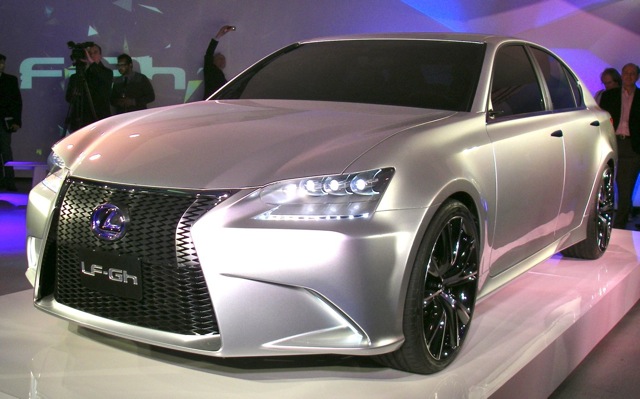
But this soiree is an eye-opening experience especially if you don’t live the dynamic auto journalist/trade associate lifestyle where events like this are all part of a typical week on the job (and you therefore become desensitized). I’m my entire staff and am usually booked here at my undisclosed location driving new cars, riding new motorcycles and testing all kinds of gear, and as a result I don’t make it to many industry functions purely due to logistics. When I can get away, though, it’s a vast, fascinating experience that really drives home what a world unto itself the automotive sphere is. And while I rarely wade into the sea of suits that runs these corporate giants, there is one affair that I always try to make fit into the schedule. The New York International Auto Show media days (there are two, and I typically manage one of them) beckons me into Gotham’s massive Javits Center, and at this famous venue the OEMs really go all-out to drum up some excitement over their latest offerings. A lot of dealer folks are usually present at the media previews too, so some of the stagecraft is clearly aimed at them as well. And man, it can be a heavy-duty theatrical production when a company (literally) rolls a new vehicle out on the public stage. This year certainly had its share of fanfare, including the launch of a new Lexus concept vehicle that was conducted off-site the night before, complete with an art gallery full of trendy New Yorkers and appetizers prepared by an Iron Chef. Neat stuff all around, and the car is not only fetchingly exotic but a hybrid to boot.

Back at the event proper on the first press day, Hyundai’s more conventional launch had fuel consumption frugality as its main theme, and taunted their considerable supply of models that get 40 MPG or better on the highway. VW also talked of miserly appetites especially with their clean diesels, and Chevy is very proud of the mileage numbers with their all-new 2013 Malibus. These things won’t go on sale for well over a year (about two, actually), but here they were nonetheless. On the other hand, a car that for ages was vaporware is now at dealers, and Chevy Volts were well-represented in the massive GM wing of the show, which I thought was a positive statement. It was clear that easing the pain at the pump was on the front burner of their latest offerings, and I’ll be testing one of their innovative new hybrids in a few weeks. While it’s a bit too early to tell, they may just have delivered a car that’s very close to what they’ve been promising for over two years. We’ll see.

Then there was Jeep and Chrysler. Weird, man. The flagship Jeep presentation involved first a Wrangler Unlimited Sahara, which is so much larger than the original Jeep that first appeared 70 years ago that it begs the question if anybody in the design department understands why the original article was so useful. This was followed by their belle of the ball: the new Grand Cherokee SRT-8 with something like 465 horsepower in its 6.4-liter HEMI V8 and great performance numbers at the track. This is just what the public wants, what with $4 a gallon gas, right? Of course. Clearly it’s aimed at the wealthy, luxury SUV set, but will these types wander over from Range Rover, Mercedes, BMW and Lexus in sufficient numbers to help the ailing company?

Likewise, the ’12 Chrysler 300 SRT-8 with another 6.4-liter V8 was a star on their stage, and looked great. But is this where they need to be to get their groove on? They only have one shot, according to the Eminem tune they are using as their new theme. This latest permutation of the company is hooked up with Fiat, and they do have Fiat 500s arriving in showrooms that are fuel-stingy and cute as a button, but I don’t think this car will be viewed as a triumph for Detroit if it does well. Another odd thing: with both Jeep and Chrysler, the focus was squarely on American Heritage and the pride that will bring Detroit back from the ashes. Yet both presenters, starting with Jeep’s Mike Manley, President and CEO of Jeep Brand, and later Olivier Francois, President and CEO of Chrysler Brand and Lead Executive for Marketing, had accents that sounded like they woke up a long way from Michigan.

Now, I have nothing against either the heritage of these gentlemen nor their countries of origin; in fact I embrace these things. But I found it odd with all the “America’s back” and “Jeep is an American Icon” stuff to hear such distant voices, as Mr. Francois hails from France and Mr. Manley is from England. Don’t get me wrong, here, but given the thematic context created by the divisions I was expecting Jeep to have a former army veteran from Iowa at the helm, and Chrysler to be run by a 3rd-generation grassroots assembly line worker who climbed up the corporate ladder. Their voices just didn’t fit the narrative, you know? Probably just me.

Something else that seemed an odd fit initially, but turned out to be pretty hilarious, was Audi’s “special celebrity guest” at their press conference. We knew it would be somebody currently quite popular, and I really didn’t have a clue as to who would be a good fit for the company. As it turned out, it was Stephen Colbert and Audi is sponsoring his sailboat in the Charleston-Bermuda race, where he will of course serve as Morale Officer. “If you’re going to win a race, you want to be in an Audi,” Colbert explained to the crowd of surprised journalists. “I tried bolting a mast and sail to my S5 Cabriolet and took her for spin on the harbor, and the results were . . . moist! So I decided if I couldn’t sail an Audi, I would ask them to sponsor my boat.”

Colbert was in character and in fine form. Audi of America President Johan de Nysschen presented him with a gift composed of traditional lifesavers assembled together to form the Audi ring logo, and I have to give props to the prop department for a job well done.

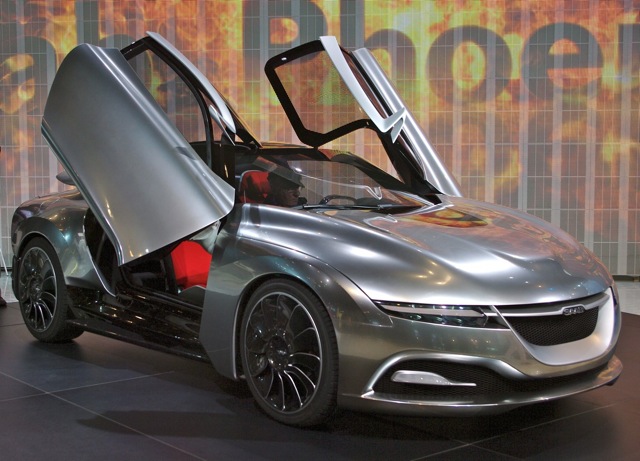
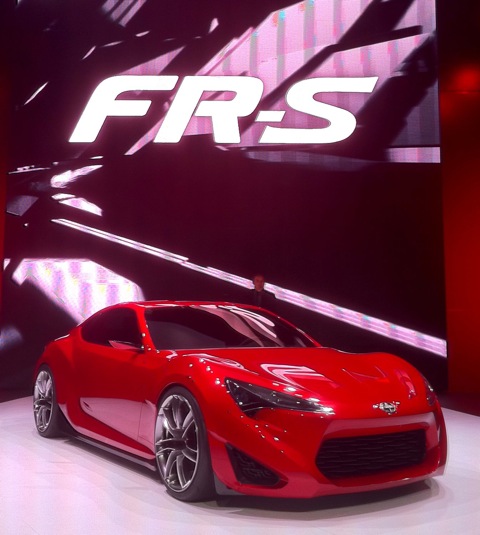
Scion had what I thought was the most interesting concept car of the show (although the Saab Phoenix is quite striking), because it looks like it’s almost ready for production and reminds me of the glorious days where a certain minimalist engineering discipline spawned the likes of the Datsun 240Z and Toyota 2000GT decades ago (only updated for the 21st Century). In his introduction of the car, Scion Vice-President Jack Hollis mentioned this is truly an enthusiasts car; a race-on-Sunday, drive-on-Monday kind of hoop that was really inspired by the AE86 Corolla (known by hard-core autocross-types as the “hachi-roku”). Hollis explained: “The AE86 didn’t rely on brute horsepower, but instead a remarkable combination of a lightweight design, manageable power and great balance. It made its way into almost every genre of racing from grip to drift-and from the circuit to mountain roads.”

So a quarter-century later Toyota has embraced the gung-ho (on a budget) fun of that Road Warrior Corolla and presented the FR-S concept. Many times they don’t tell us much about what’s under the hood of concept cars; indeed at the Lexus soiree the beautiful LF-Gh concept’s engine was described just as Lexus Hybrid Drive. With the FR-S, they eagerly announced it’s powered by a Flat Four Boxer engine (remember, Toyota owes a chunk of Subaru which has boxes and boxes of Boxers) and rear wheel drive, as well as a bitchin’ hot body, man. Light weight allows for a smaller engine (and the flat architecture allows for optimum placement and mass centralization), and ultimately better handling and braking. It’s a concept, but like I said I think this coupe may show up very soon as a near-as-dammit production model. Scion’s launch was done with full-on show fanfare, too, in the ballroom away from the regular show floor. It really was, for me at least, the most interesting and unexpected machine at the show because I think this will not only be built, but be very successful and focus performance, affordability and economy in a way that hasn’t been done in ages. Who knows? So much depends on Japan’s ability to rebuild after a disaster of epic proportions, which really became a sobering undercurrent to much of the show for me.

The scope of what has happened in Japan, unlike the gentle waves that reached the western US quickly after the Japanese tsunami, is taking its own sweet time getting here. Toyota’s North American division did a fine job of bringing up what living hell has descended upon our Japanese brothers and sisters, and the courage they are showing under unbelievable hardship and destruction. They have soldiered on, as have the other Japanese auto companies but you could sense the pain underneath, and the grim reality under all the corporate speak of what’s really important under all the pomp and circumstances. Cars are just brilliant mechanical expressions of art, science and engineering, yet are ultimately created by living, breathing human beings that are oh so fragile.

To finish my trip on the lighter side (and far away from the show floor and the Javit’s Center itself), my last stop before rocketing home was at Kia’s cocktail party, which is always interesting and typically very visual as it’s almost always held in an art studio. This year the Soul-themed (in an automotive sense) gathering included Microsoft Kinect games for guests to enjoy and a brace of DJs called AndrewAndrew that have a twin persona that has made them quite famous. They navigated through the crowd, schmoozing and mixing their music with requests from the punters through the miracle of iPad wireless technology. I’ve said it before and I say it again: Witchcraft! It’s everywhere. Thank God I bothered with those Extended Education courses at Hogwarts. Below, there are some pics to click through from this year’s NYIAS experience.

MoriLf-ghTransformJeepPhoenixFr-sStephenKiaAndrewandrew

Little Big Van

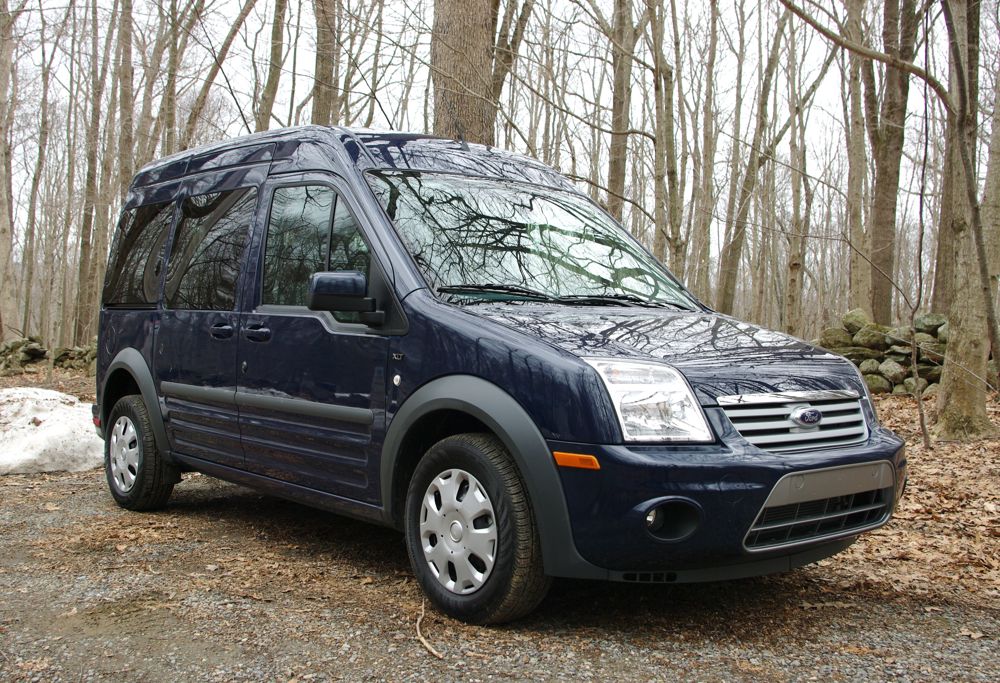
In keeping with the topic of space utilization touched on by the previous smart passion cabriolet discussion (see previous post, complete with Red Green Appreciation photo), we have a vehicle that, while certainly not huge on the outside, could almost haul said weenie little smart car around in its cargo area. This Master of Space doesn’t refer to itself in the lower case like the smart does, either, and proudly calls itself the Ford Transit Connect. This is a very European take on the van/minivan genre that is not only quite brilliant, but a great fit for a lot of folks in these United States. The basic chassis foundation is the same starting point as found on the Ford Focus, although it’s really a very different beast. What we ultimately have here in the T-Connect is a front-drive minivan with a very tall roof, great mileage and a really impressive amount of room. The version I tested had a rear seat (but no third row although there’s certainly room for one), and a decent number of creature comforts for about $25K. With the rear seat in operation you have 78 cubic feet of load space, and with that seat folded you have 118 cubic feet of cargo-gobblin’ goodness. This is a lot of room by itself, but when you see how small the vehicle’s footprint is it’s very smart packaging indeed.

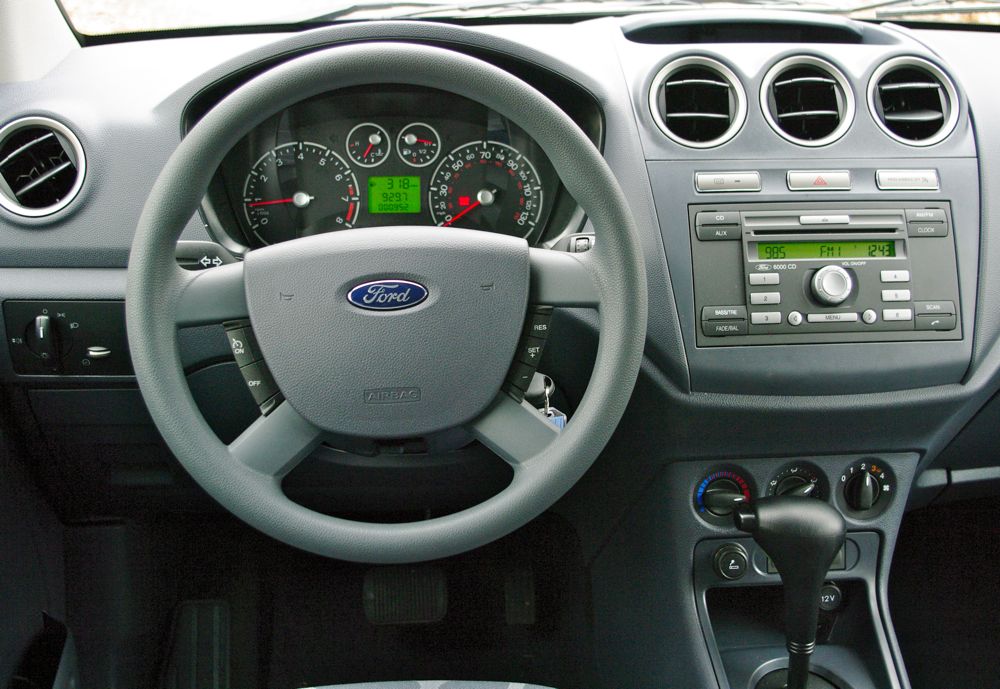
The lone powertrain is a 2-liter Duratec Inline Four with 136 horsepower, with is mated to a 4-speed Automatic transmission. Basic stuff, and certainly no dragster (0-60 in about 11.4 seconds), but it gets the job done around town just fine and delivered 24.7 MPG in mixed driving. I loved this thing. The moment you sit in it you see a Spartan yet nicely done Mobile Rolling Box Environment (MRBE), and I immediately looked around and started thinking about how a contractor could totally have their way with this vehicle and configure it to be the ultimate, fuel-efficient working companion. While you can’t quite stand up in the back of it, it does load an unload easily (two conventional doors in back, and a sliding door on both sides). Provided reliability is decent, I could see very low operating costs and considering it gets 10 MPG (or more) better mileage than most full-size pickups and has a lot of locking storage capability (even the hood opens only with a key-great for urban street parking security), it could be a very smart choice for many independent working folks. The question is, why did it take until 2011 for such an obviously useful vehicle so show up here?

Transit_connect_aTransit_connect_bImgp2818

The Golf Cart Writ Large, Or Did Red Green Motorize a Swing Set?

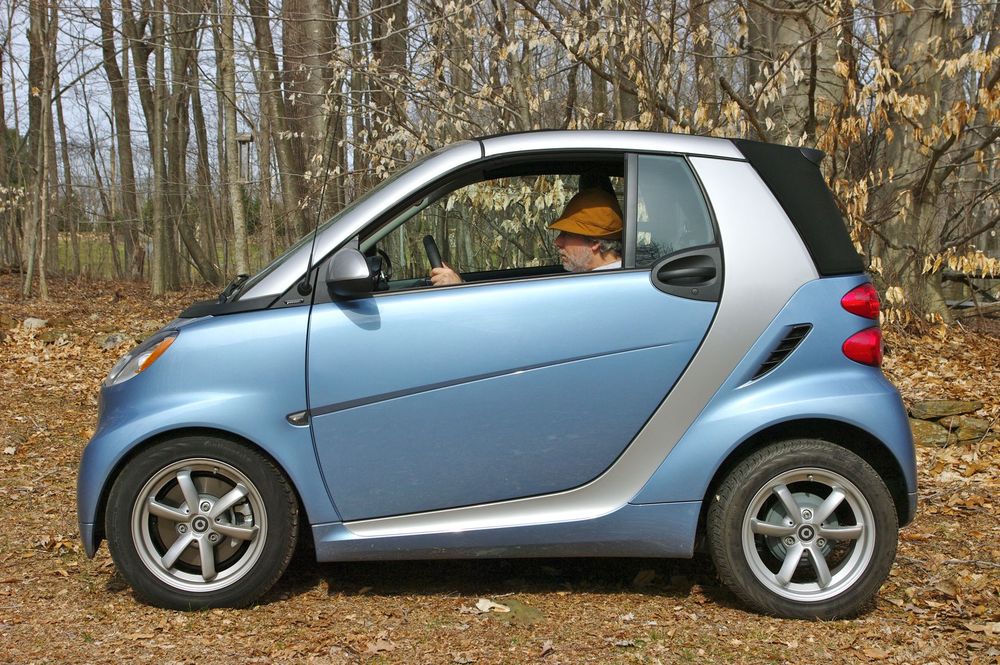
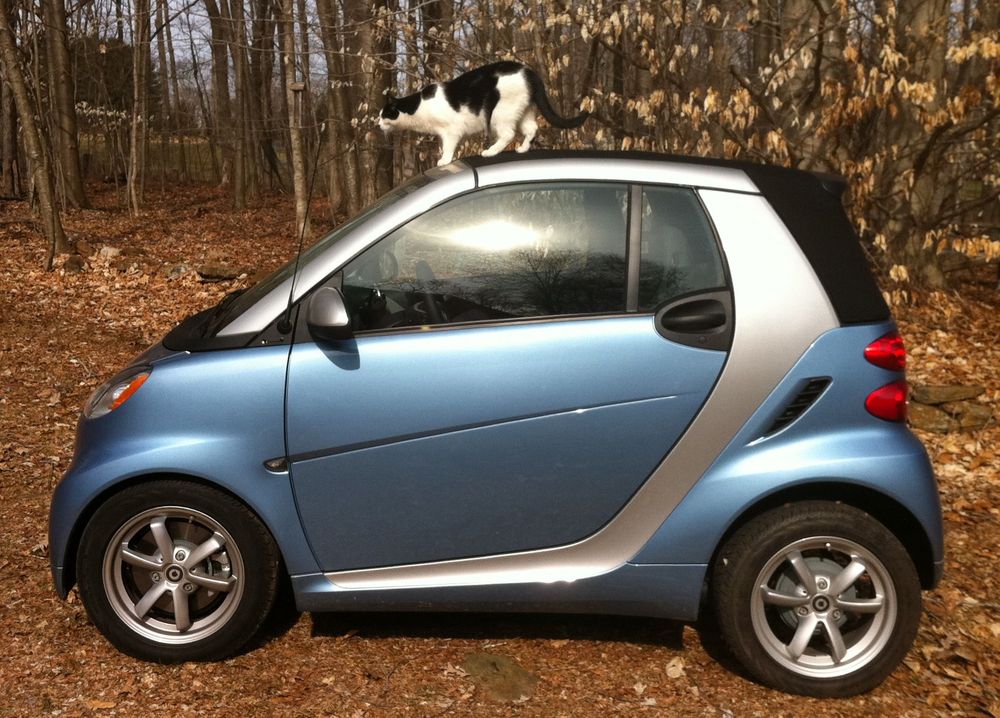
There’s nothing quite like diversity, eh? It does tend to sweeten the pot, and make a potentially mundane field of daisies (like economy cars) much more interesting. I like outside of the box thinking, even when it goes across the street, into the neighbors shed and into that box of old golf magazines that’s been there of decades. I think that’s what the makers of smart cars (yes, they deliberately keep themselves lower case) have done, because when I first fired up a passion cabriolet and headed out into the world of larger cars, I was reminded of an ancient Harley-Davidson golf cart I once guided around a golf course in Plano, Texas, many, many years ago. It was the sound of the engine and the similar size of the two vehicles I think that took me down memory lane, although the golf cart had more cargo room (but it was always exposed, unlike the smart).

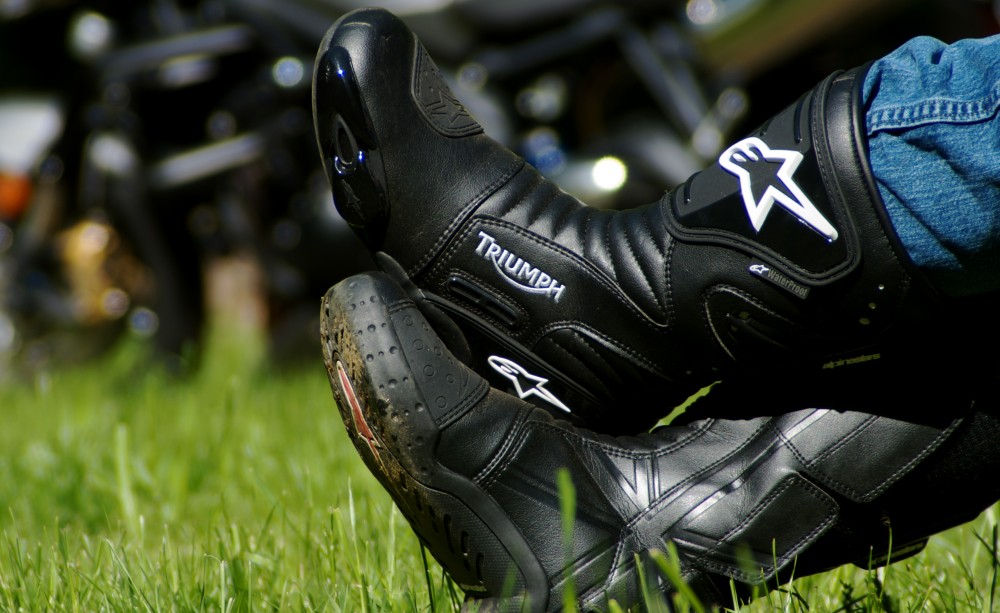
Once you get used to the fact that this car is so small, though, you get used to driving it like a regular compact and most of the golf cart comparisons disappear. Not all of them, though. They are both rear wheel drive, which is kinda cool, and both have wickedly tight turning radii, which is likewise desirable. I have no idea what kind of engine the Harley cart had, and to be honest it was the first and last golf cart I ever used that wasn’t electric. But I do know what propels the smart, as it was a couple of feet behind me below the cargo floor. Open an access hatch and you’ll find a modest little wheezer of a mill, a 999cc Inline Triple with a whopping (claimed) 70 horsepower. Oh, lest you think we’re talking a gas-powered sewing machine here, there is 68 lb-ft. of lovely torque, which unlike the horsepower figure is better than the claimed output of my Triumph 675 Street Triple (107 horsepower, 51 lb-ft. of torque). Makes you think, though. Either this 1,800 lb. car is a tad on the weak side, or my Triumph is all-powerful. You decide.

But wait: in order to make a sound judgement you must drive the smart, and while it’s almost small enough to email it to you, I can’t, so you’ll just have to trust on my impressions. 0-60 arrives in a leisurely 12 to 13 seconds, and (amazingly) the real reason this vehicle falls far short of achieving escape velocity is not the bitsy box of pistons out back but the transmission. Smart (sorry, smart) calls this gearbox a smartshift Transmission, and it’s basically a 5-speed automatic with a difference. The difference is, there’s huge gaps between shifts that makes you think a rather foul, decrepit house elf (think Kreacher, from the House of Black) is doing the shifting and his wee legs have trouble reaching the clutch pedal. It’s really rather bizarre, and a major flaw in what otherwise would be an acceptable (albeit underpowered) drive train. A surprisingly thing is this little egg can whiz down the road (dare I say it?) rather smartly at 70 MPH, and seems stable enough unless it gets really windy. It’s a ball to throw around on a tight road, the suspension soaks up bumps surprisingly well and its tridion safety cage should keep you as safe as is possible in a crash. It would probably bounce off of anything that it hit like a beach ball, and has very high crash safety ratings. The cabriolet’s convertible top works well, and can be deployed and retracted on the move. Oh, and you can park this thing pretty much anywhere, as it really doesn’t have a footprint much larger than a lawn tractor.

But, it must be said it doesn’t have the chops in the fuel efficiency department, which is very surprising as you would think that’s what it’s for after all. I only got about 35 MPG, which means a Prius not only destroys it at the drag strip but the fuel pump as well. This might be OK if you could by a brace of smarts for the price of a lone Prius, but our tester (nicely equipped, but no cruise control, spare tire or tilt wheel) was stickered out at $21,590. That’s a lot of tee times, chum. But, in this rather wild little two-door’s defense I will say in over a decade of driving Other People’s Cars nothing, even some pretty exotic stuff, has ever landed the kind of attention this funky little buglet does. Some laugh at it, some laugh with it, but it brings a smile to the masses like few things I’ve ever negotiated through a crowded Sear parking lot. They may not make it worth the asking price, but it does say something about being different. Now, if they’d only sell an electric version with decent range. . .

RedLittlesmart

Honey, Did you Plug In the Car?

Here’s a bit of futuristic fun. The nice folks in the Toyota press division did a very cool thing: they loaned me a Prius Plug-In Demonstration vehicle for a week to get a feel for what they’re doing in the evolution of the hybrid platform. They did this despite the fact that, years ago, I may have just been the first person on planet earth to hit a deer with a Highlander Hybrid. Hey, in my defense I didn’t hit Bambi, Bambi literally flew out of the woods and hit me. Much damage but fortunately all of it cosmetic and I was able to soldier on and review the machine. Loved it, too, but I totally dig the Hybrid lifestyle. It’s the biologist in me, and the fact that I hate waste and love efficiency. 

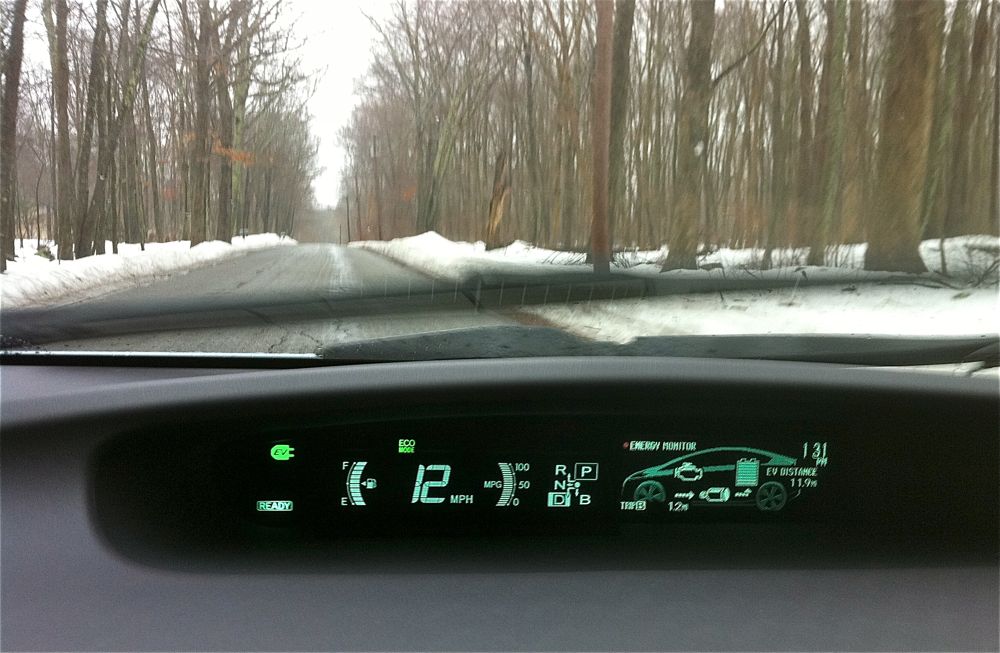
So, what’s up with the plug-in Prius? The initial differences are quite straightforward: instead of the nickel-metal-hydride battery pack the “normal” Prius uses, a lithium-ion battery (actually fairly similar to the one in the laptop I’m using right now) is employed in the Prius Plug-In Hybrid Vehicle (PHV) and a plug receptacle is found just in front of the driver’s door, with a flap very similar to the flap covering the gas cap that’s simple to locate. This was all set up for totally turn-key at-home charging, where you literally just plug in a 110V extension cord for about three hours to get all juiced up (it can also be charged in half the time using  220V). This allows you to drive the Prius for about a dozen miles (depending on conditions) in electric-only mode, thus saving fuel. When you exhaust the bulk of this charge, the car reverts to normal hybrid operation meaning it is propelled by the gas engine, or the electric motor, or both. Both the engine and regenerative braking keep the batteries charged up like the regular Pri. 

In practice, this is a pretty easy-to-live with way to get even more miles per gallon out of a Prius. The household power required for a nightly charge was no big deal, using about 3.45 kW hours for the task (pulling around 12 amps, at about 1290 watts). With our pretty expensive electricity here in CT, this amounted to less that $4/week or about the cost of one gallon of gas. Impressive. Mileage in the dead of winter amounted to the mid to upper 50s, which is quite good as some engine running is necessary to help heating operations (although far less than you might think thanks to the amazingly complex yet efficient heating system on the PHV). 

The obvious question here is how will this car (available in select states about a year from now) stack up to the new Chevy Volt. GM has not graced me with one to test yet, but the two cars are very different in that the Volt is an all-electric car that has an engine for supplemental battery charging. It’s much larger battery array means more Electric-only operation, but much longer charging times as well. The Prius PHV is just an extension of the Prius family, whereas the Volt is a totally new venture for GM. I will be commenting more about this stuff once I get quality time in the groundbreaking Chevy, which hopefully will happen soon.

As for the plug-in Prius, I really enjoyed it. We own a ’08 Prius ourownselves, so I’m very familiar with the breed and this newbie (based on the 2010 Prius) is much improved over an already superb greenie machinie. The only think about the PHV is you have to remember to plug the sucker in for maximum fuel efficiency. And the price? It’s not set yet, but I doubt it will be too big a bump over the cost of a regular Prius. We shall see. 

Prius_phv_aPrius_phv_bChargePrius_phv_e

Can You Hear Me Now?

This has been a very significant decade for automotive diesel engines, and fortunately for you I’m not going to wade through a chronology of the changes that have made the evolution of the “smokers” so interesting. I just don’t have the time, you see, and neither do you. Instead, I will just take a moment to sing the praises of the latest diesel I’ve sampled, which happens to be a sterling example of how far we’ve come in cleaning up and polishing these durable, torque-happy engines. 

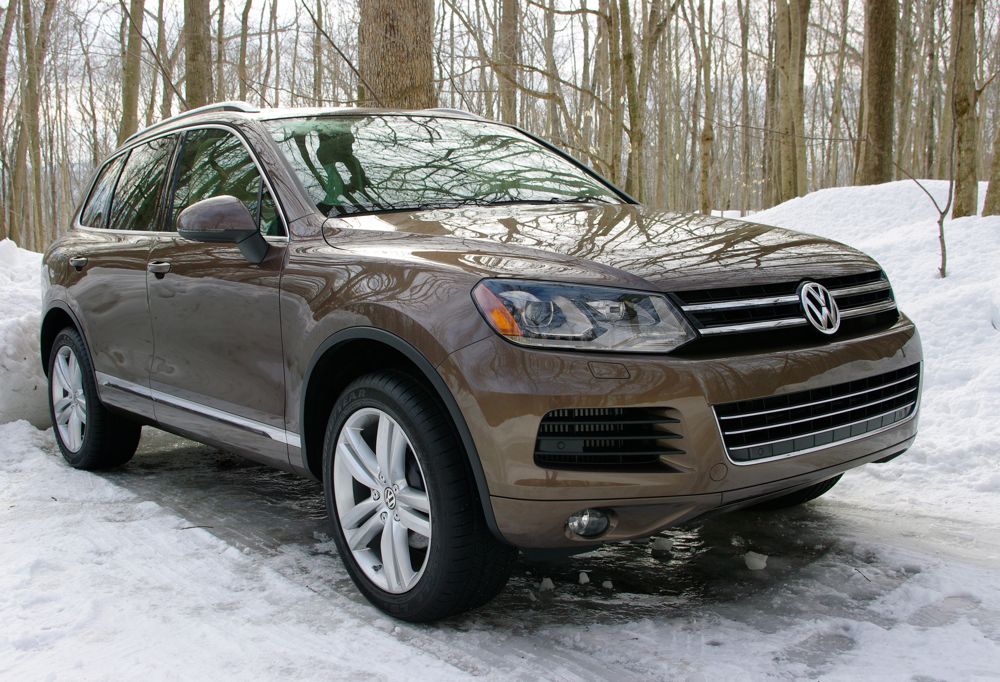
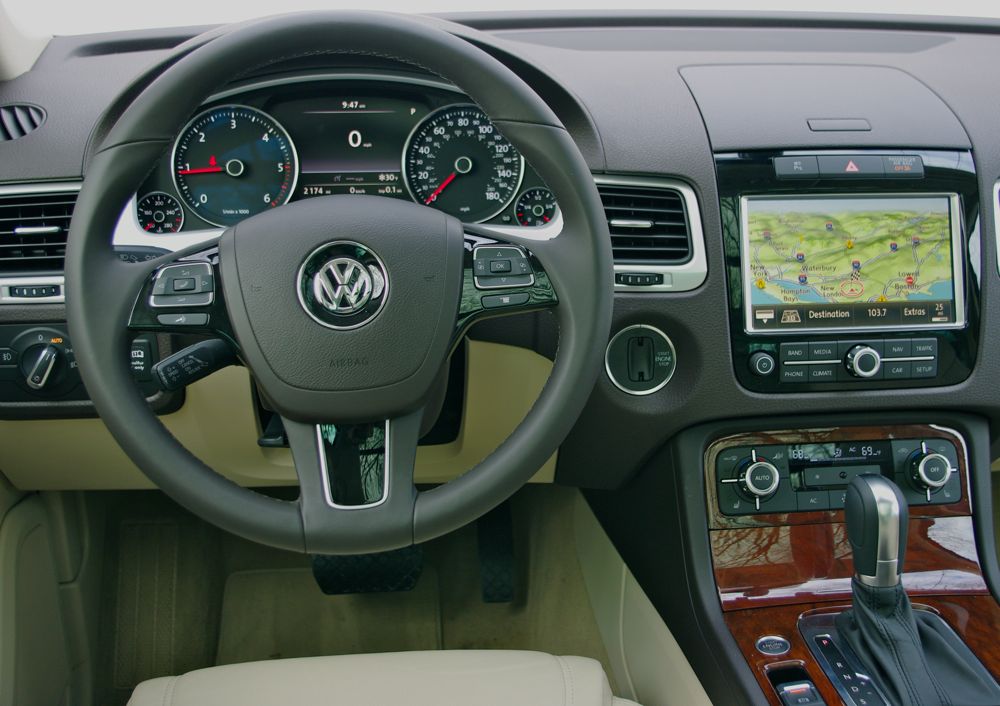
You’ve no doubt heard of the clean diesel phenomena, and what we have is a very complex exhaust treatment systems that manages to get rid of all the nasty particulates and other evil combustion by-products so the diesel engine is as clean emission-wise as most gas engines. This was no small task, and also required the adoption of mandatory low-sulphur diesel fuel to make the technology work. But work it does, and not only are modern marvels like the Volkswagen Touareg TDI’s plucky 3-liter turbocharged V6 clean they are amazingly refined, robust, and most surprisingly of all, quiet. The Touareg is already an interesting critter, with its weird name (it has a desert nomad heritage), luxurious insides and surprisingly capable All Wheel Drive chassis. The TDI powerplant suits it to a T, and the amazing thing is how it is, and isn’t, an engine that you would recognize as a diesel. Torque? Yes. Lots. 406 lb.-ft. they say, and I believe it. So the diesel’s reputation for stump-pulling grunt is intact. Also present is decent fuel economy, as we saw about 25 MPG in a week of mixed driving, much of it in very winterish conditions.

So what’s missing, apart from all the foul, lung-choking particulate poop that diesels used to spew at will? Noise. Vibration. And Harshness. For those of you in the auto trade (or at least enthusiasts that enjoy the literature), you know of the ol’ NVH as there are entire engineers (and entire engineering teams) devoted to quelling these refinement-spoiling demons. This new TDI mill is pretty amazing, and can actually pass for a gas engine in polite company. It really is that smooth and quiet, and while there is some diesel clatter from time to time it’s truly night and day even when compared to diesels from just a few years ago. Downsides? Well, it is a tad pricey (but not excessively so) and it is an incredibly complex engine that requires a refill of AdBlue fluid (which is mostly urea) during regular maintenance intervals. It’s a very complicated, highly-advanced catalyst sort of thing. You have to feed the beast so it will behave.

But in return for these minor things to deal with, you get a very state-of-the-art green engine that has amazing things going for it. Oh, and it’s quiet, too, believe it or not. Did I mention that already? Hopefully, it will have at least a decent measure of the longevity diesels are famous for to seal the deal. Time will tell on that last score.

Touareg_tdi_aTouareg_tdi_bTouareg_tdi_c

The Wheels of Winter

Well, how’s your lower back treatin’ ya, eh? I have shoveled and shoveled and everything was fine until I was clearing a trail for one of our cats (long story), and a strange, unpleasant pain ensued. Oops. Thus we have one of the many downsides of the Winter from Hell, where we have received more snow in a month than any month in history (or so I am told). I have no reason to doubt this claim. It has been pretty cold and white, all the damn time.

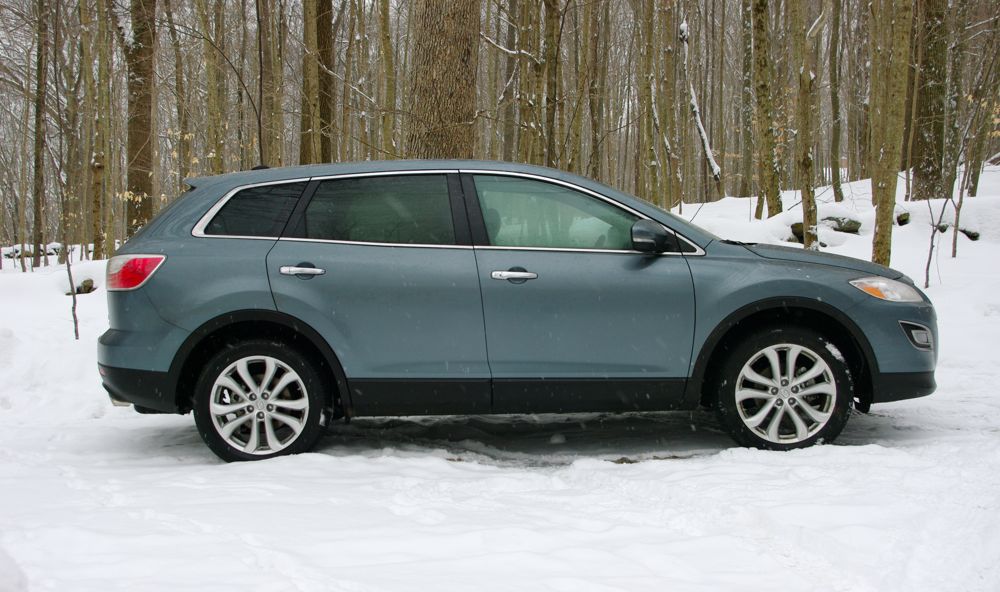
But there has been a drop or two of lemonade in this lemon of a season. It’s given me the opportunity to do a proper shakeout of some all wheel drive machines (and some non-AWD autos as well) under very wintery conditions. A lot has changed in the last couple of decades in terms of both the availability and sophistication of four wheel drive systems, and now what was just a comparatively simple mechanical drivetrain has now become more complex, and largely electronic in nature. Here’s two examples of the state of play: the Mazda CX-9 AWD and the Jeep Grand Cherokee 4X4. The Mazda’s AWD is simple as you really never even have to think about it. Normally it’s a FWD machine until things start to slip, and then you get help from the rear wheels to keep you moving. It works splendidly, and great tires and decent ground clearance have made even unplowed roads negotiable. It was very sure-footed, and I was impressed.
The Jeep has the marque’s latest off-road wizardry, so much so that it’s a bit daunting at first to wade through it all. This includes Quadra-Trac II, Select-Terrain traction control and Quadra-Lift air suspension. Got that? It is a ball to play with, as the Select-Terrain switch has a mess o’ modes including Sport, Auto, Snow, Sand and Mud, Rock, Skulls (see Terminator II) and Crushed Cars. OK, I made those last two up, but you get the point. Amazing stuff, really.
However, I have to admit I preferred the Mazda in the snow. Why? A very simple reason: tires. The OEM units on the Jeep, astoundingly, were really lousy in the snow compared with the standard All Seasons on the Mazda. The Jeep’s shoes were in fact Mud and Snow rated like pretty much all the units sold in these parts, and were made be a very reputable manufacturer. But they really couldn’t deal with snow and ice very well at all. Even with all the electronic aides and modes and Trial Rated badges and Quadratics the Jeep slid around a fair amount, and even glided backwards a bit when parked on hills. No fault of the vehicle there, to be sure. Bloody hoops were the culprit, don’t cha know.
Take home lesson, and if you don’t know this already you should take heed: nothing is better for traction, on any type of surface, that excellent tires. 2WD cars with full-on snow shoes do amazingly well on even really nasty snow and ice. And crappy rubber can make even the best AWD systems around lose their might when the surface gets nasty. I’m just sayin’.

Cx-9G