It’s a Hybrid, But. . .

Honda has always been pretty good at squeezing a lot of miles out of a little bit of gas, but they’ve never really been sales leaders with the whole Hybrid thing. Their Integrated Motor Assist is very simple, and the reason why is because all the electric motor does is help the engine; it never powers the vehicle on its own. To their credit they did have the first production Hybrid on the road in the US and it was very frugal, but it was a tiny 2-door roller skate of a car called the Insight. The Hybrid Civic has been fairly successful, but the Hybrid Accord has been discontinued and the new 4-door Insight is much larger (and better) but still no match for the Toyota Prius in any category.

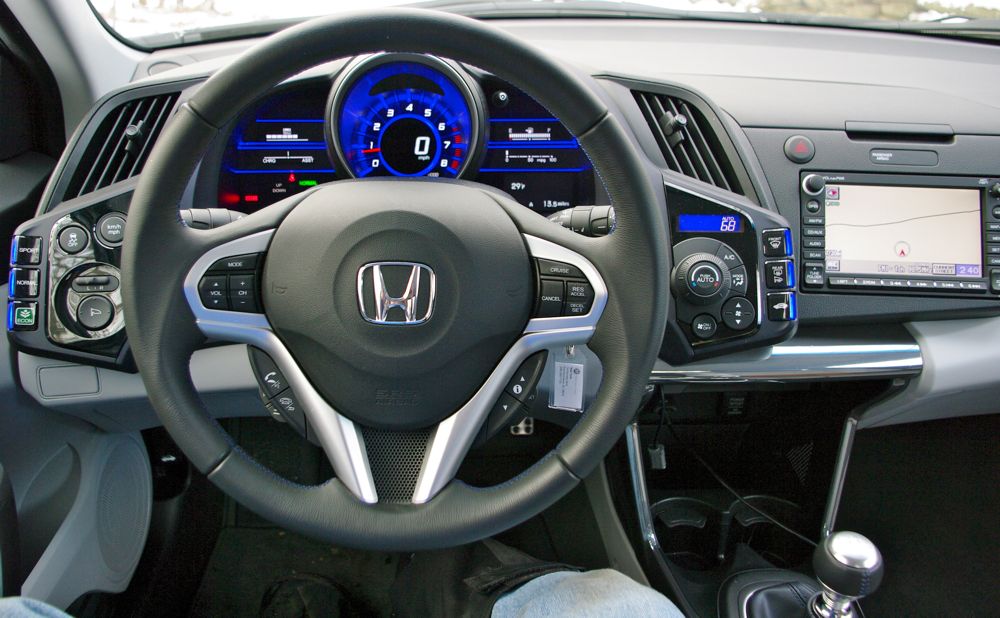
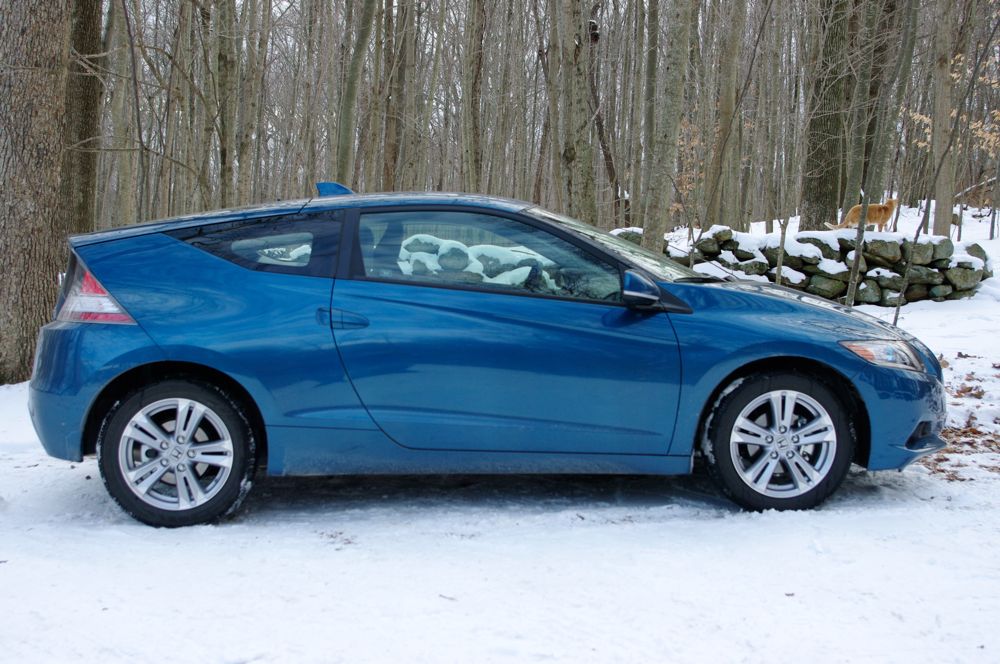
This brings us to the new CR-Z, which is yet another 2-door Hybrid but this time it’s a much more useful car. It’s also fairly sporty and really fun to drive, and the interior is actually pretty cool with some interesting instrument lighting that changes hue the more efficiently you drive. It also has a multi-mode Drive System (with Sport, Normal and ECO settings) to fine-tune your power output. Here’s the thing, though: it’s a two-seater Hybrid, and yes, it is reasonably quick but you would expect it to also be really stellar in the fuel efficiency department. It isn’t, really. The EPA numbers are 31 city/37 highway with the (rather excellent) 6-speed manual transmission. I averaged 33 MPG when I had the car which is not too hot (but it was in the dead of winter). Speaking of which, it wasn’t bad in the snow which is always a plus, Hybrid or no. 

Cr-z_ex_copyCr-z_int

This Caddy’s Your Daddy

Well, this has certainly been an interesting last few months, mechanically-speaking. We finally see a production Chevy Volt, Nissan has released a genuine all-electric car and Ducati, the motorcycle entity whose name is synonymous with sport bikes, has launched a cruiser (more on that in a later post). And I finally got my mitts on a Cadillac CTS-V, which proved to be quite a surprise. I shall explain. 

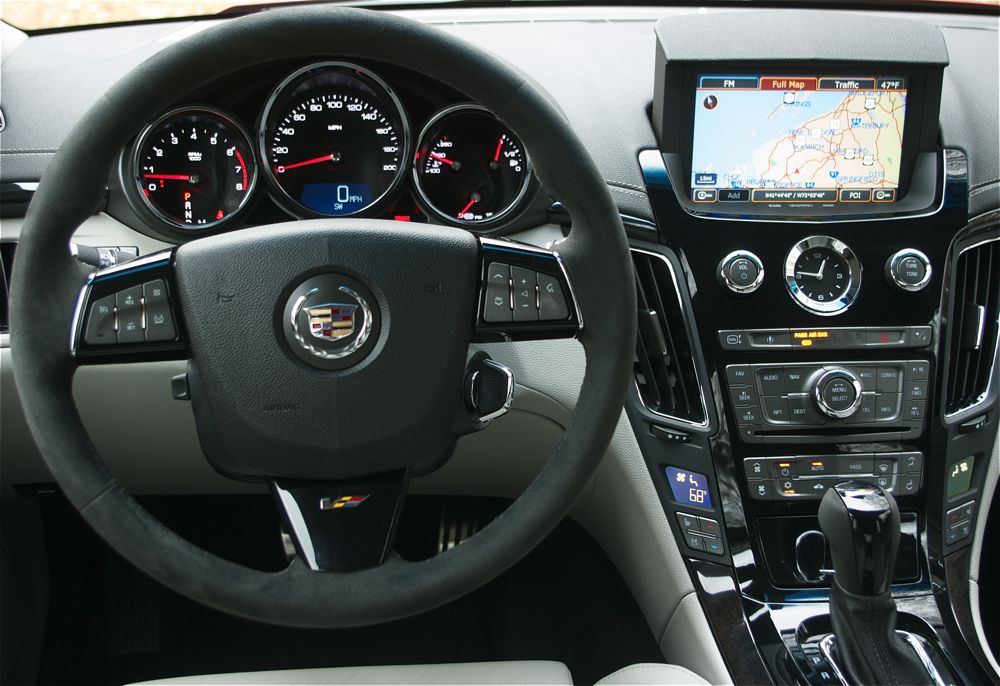
Caddy’s CTS sport sedan has enjoyed great critical success, but to be honest it has really never blown my socks off. I’ve always found it cramped, and while it was a decent, competent curvy-road plaything it always had sort of a not-quite-dialed-in feel. There was also a nagging,  underlying weirdness to the interior that was just no match for the competition from the likes of BMW, Mercedes, Lexus and Infiniti. 

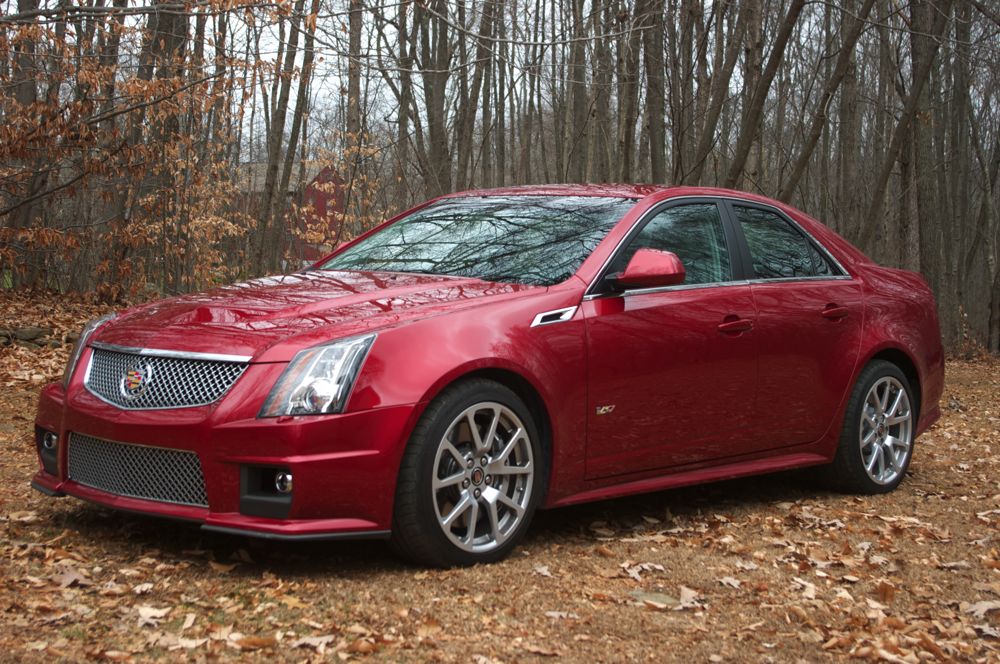
So, given my previous relationship with this car, I wasn’t expecting too much out of the CTS-V except for some serious rocket poop from its massive 6.2-liter Supercharged V8. The specimen I have at this writing has the Saturn-V boost, no question (I’m talking take your breath away, the first time you do a 0-60 run), but this is a really balanced package. It’s so good, and so entertaining in fact, that I have changed my mind about the CTS in general. 

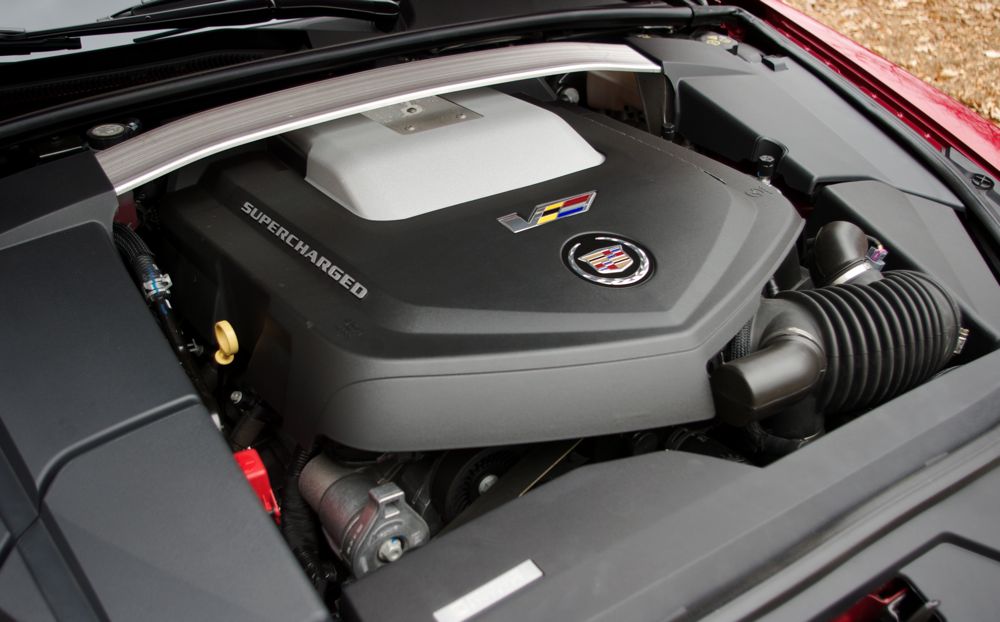
This is dumb, because I know in my heart it’s that freakin’ engine that pushes all the buttons. It’s a total Road Warrior petrol-beast, and although you will not find a bigger fan of fuel efficiency when you bolt a supercharger on a big-ass V8 I get weak in the knees. From the Jags, Range Rovers and now this CTS that I’ve sampled with this pumped-up plumbing they just are too much fun when you screw it on.  Turbocharging is but a lazy, gentle sneeze compared to the smooth explosion of Supercharging. This particular system is really elegant and quite advanced, and allow me to quote from a Cadillac statement: “The engine features an intercooled Eaton Twin Vortices Series™ (TVS™) supercharger.  This unique supercharger design employs twin four-lobe rotors, twisted 160 degrees. Typical superchargers feature three lobes twisted 60 degrees. The fourth lobe and added twist, when combined with unique air inlet and outlet ports, create smoother, more efficient airflow into the engine. In addition to improved overall efficiency, this supercharger has superior noise and vibration characteristics compared to more ordinary designs.”

This translates into a simply brilliant powertrain. It works flawlessly, and still delivers the kind of  aural candy that only a supercharged mill can possess. But it is here where I have to give great credit to the rest of the vessel in question, because the tranny, suspension, and especially the Brembo brakes do a wicked good job of making the 556 horsepower manageable. It’s no small feat, building a worthy carriage around so formidable a powerplant. But, they did it. Even the special “V” logo is cool. Well done, Cadillac. 

Cts-v_aCts-v_bCts-v_cCts-v_d

Jetta? We Hardly Knew Ye

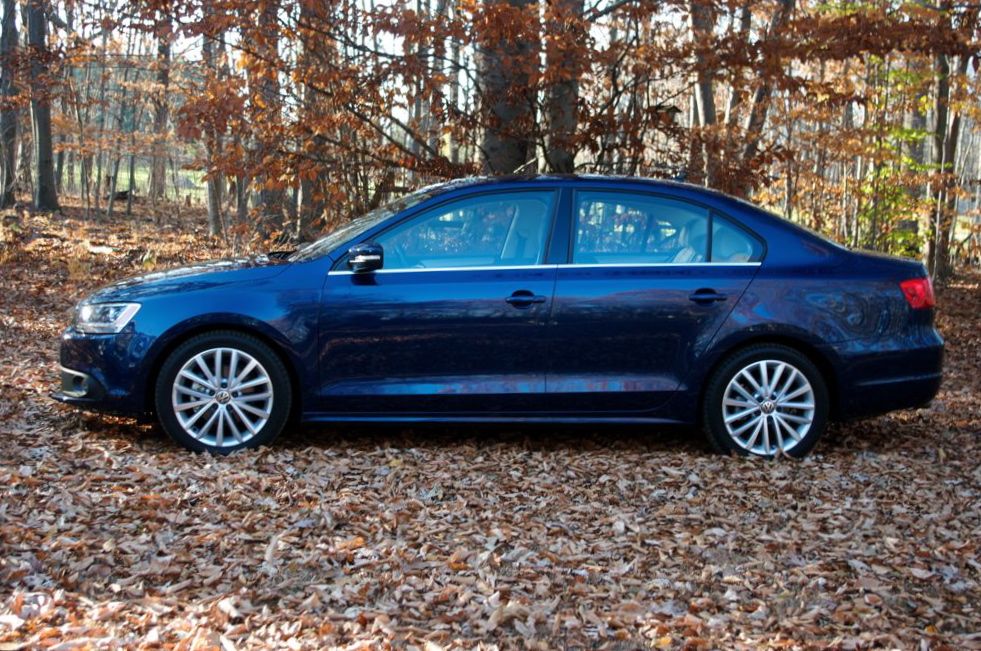
The Volkswagen Jetta has not only been a very popular compact sedan, it has generated some pretty intense loyalty among auto enthusiasts largely due to its seriously plucky personality. It’s been known as being very Euro in nature, with a very stout chassis that delivers a firm ride, sharp handling, and the kind of driving feedback that inspires operators to have a bit of fun. These traits have made Jettaphiles very satisfied, even cocky, owners, and naturally when the folks in Wolfsburg start messing with their baby they have reason for concern. Either the all-new Jetta will take the qualities of the previous generation and move the bar higher, or they’ll change direction in order to try to garner more sales success.
So, with the revamped 2011 Jetta, which way did they go?
Ordinarily, this is where I say, “Fortunately, the loyalists have nothing to fear. All the Jetta’s most iconic qualities have remained intact.”

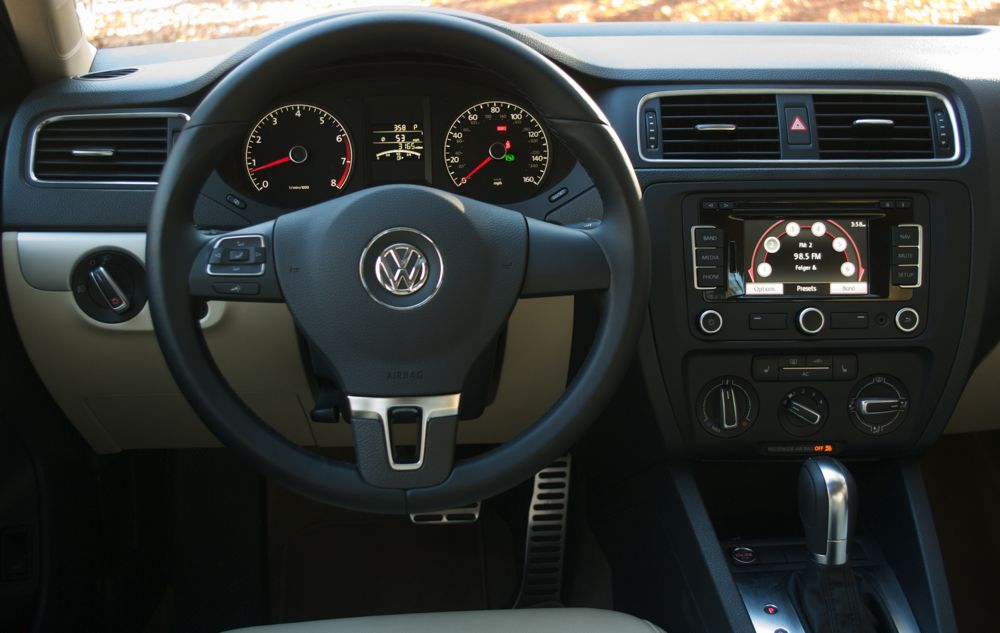
Instead, I must say, “Be Afraid. Or, at least be Wary.” Here’s the thing: I am not saying that Volkswagen screwed the Jetta up, because I have no idea what the engineers and designers wanted to accomplish and for all I know they nailed their objectives. And while the car is larger, roomier, and starts out at a very attractive price point, the sense that this is a Jetta of the type that has gained such a following is lost in the fog. The Jetta SEL with the Sport Package I sampled was nicely equipped, but had amazingly light non-Jetta steering and a 2.5-liter Inline Five that was a tad anemic. Not only that, it wasn’t particularly frugal with the petrol, either. At 24 MPG it tied the titanic Toyota Avalon I had a few weeks ago in the mileage department, and that beautiful barge could blow the doors off the Jetta thanks to its silky-smooth V6. Weird, eh? I thought so, too. And you could almost fit the Jetta in the back seat of the Avalon. Yes, I kid. A bit.

Are there good things, too? Absolutely. A massive trunk. A really comfortable rear seat; very nicely outfitted and complete with excellent map lights and a ergonomically excellent fold-down arm rest. Workmanship is good, and the car gives you a lot for the money.
But will this be enough for the Faithful? Time shall tell.

JettaJeta_int

Minivans, and the Fragile Male Punk-Ass Ego

“It has always fascinated me the way so many egos, especially of the male persuasion, get tied up in the vehicular animal. It’s a big deal. It’s why America sells so many full-sized pickups to guys that basically don’t need a truck at all. But it makes them happy to pretend to be the hardhat in the Village People, so it’s all good, right? That’s what matters. If there’s one thing we’ve learned since the days of Reagan, it is that you should just do what you want and anything approaching common sense or social responsibility is for wimps. This is Freedom. This is America. Anything that conflicts with this view is merely the ravings of vile hippies with dirty feet, who pleasure trees. This has become the conventional wisdom.”

That quote comes from The Dude, who is a cult figure from the silver screen. 

Actually, it does not. 

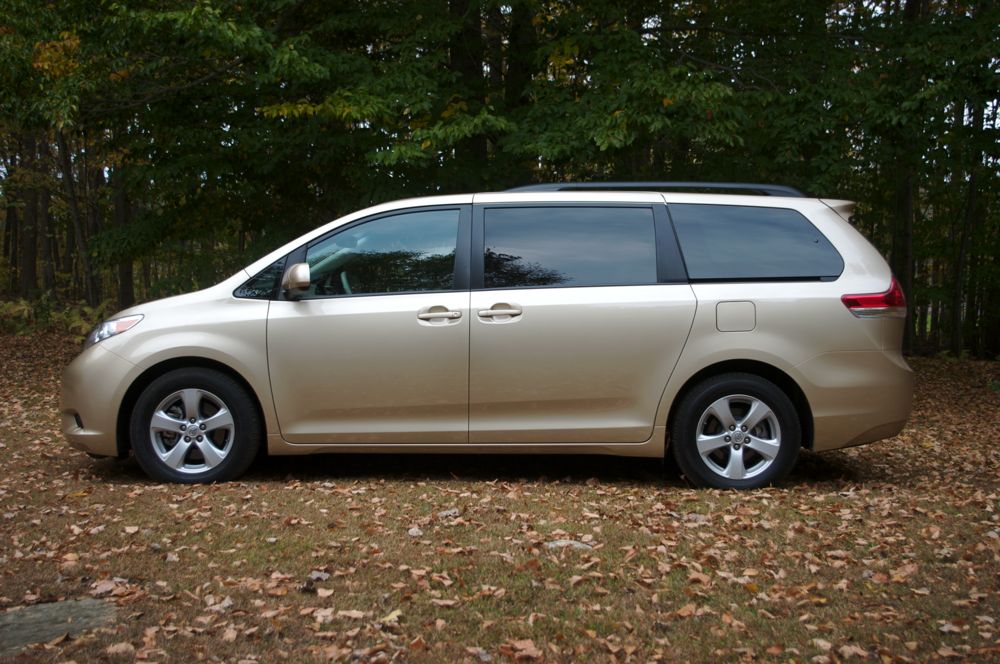
I think it may have come from the strange apparition in the mirror, who seems to, on occasion, have an agenda. Why this weird diatribe? Well, it has to do with minivans. They get the crap beat out of them on the PR front, even though they are marvelously useful vehicles. Take this 2011 Toyota Sienna, for example. It is a big doll house on wheels, with incredibly versatile seating variations. Its also got a great drivetrain with a strong, smooth V6 (a Four is also available) and is actually fun to hustle though the bends. But the the critical attribute of this machine is its exemplary ability to haul human beings and their kit around in serious comfort and safety. Over time, Toyota has refined this van and it is loaded with a lot of useful touches. Yes, the steering is a bit light, but otherwise I found few flaws and much to really like about the thing. It’s something you could haul a mess o’ screaming relatives of assorted sizes around town in (or coast to coast for that matter), or you can reconfigure its innards and load it up with a bushel of crap (or a motorcycle). It has more real usable space than any SUV, and yet delivers 22 MPG. You can also get it with All Wheel Drive, too. 

So, it’s great but it’s not manly, right? Here’s the thing: what makes a vehicle most interesting is not really the vehicle when you get down to it, but the occupants. Minivans carry the most precious cargo out there. They do it with refinement, and excellent driving dynamics with the strong hand of the right pilot at the wheel. The segment is a volatile one, as Ford and GM quit building minivans opting for something more style oriented yet ultimately less versatile and less fuel efficient (the CUV). Toyota, Honda, Chrysler, Kia, Mazda and even Volkswagen are still on board. Interesting. 
Sienna

Big Bottom, Drives Me Out of My Mind

Wow. Who woulda thunkit, especially those among whom I would describe as great thunkers? I think even great ponderers of Deep Things would never have foreseen the expansion of the enormous Butt in American luxury cars to now include two legendary marques, who have been engaged in mortal combat for nearly a century. If you recall (or better yet, scroll down and read Does This Butt Make My Car Look Fat?  below) I stated something along the lines that the new Cadillac SRX has a rather bodacious butt. It’s huge, man. It dominates the styling of the vehicle, unless you stand right in front of it. That said, even when stationed directly in front of the sucker you can sense there’s an Ass the Won’t Quit stalking you. In the words of the late Peter Cook and Dudley Moore, it’s like the mark of a great nude painting when the bottoms follow you around the room.  

In a direct response to this bold, bombastic backside, Ford’s Lincoln division has responded with their Lincoln MKT, which also has some big-ass boom in the basement. It’s based on the Ford Flex platform, which is basically a shoebox on wheels so it really doesn’t resemble the Lincoln version in the styling department. The Flex is buttless, the MKT is totally a BFD in the BBB. Hey, the SRX is fine, but check the cheeky styling on the big Lincoln. I said it before and I’ll say it again: It’s huge, man. What’s going on here? 

I have no idea. As for the rest of the car, I sampled a new EcoBoost twin-turbocharged V6 which was very smooth and strong, but as the whole point of this complex mill is to deliver the performance of a V8 with the mileage of a lowly V6 I was disappointed. I averaged 16 MPG, which is V8 Tahoe territory. This did not impress me. Like the Flex I never feel like the thing is as big as it should be on the inside, considering the dimensions on the outside. But otherwise, build quality is top-notch, it handles quite decently considering the caboose, and it has a killer mega-moonroof and a fine sound system. Oh, and for Ford’s Sync, suffice it to say that’s another topic for another day. 

I wish to point out I got through this narrative with very few Spinal Tap references, aside from the title. Not sure why I did this. I love those guys. 

Mkt

Keep the Hybrid, Lose the Vermin

They are controversial, as a lot of motorheads (including too many auto journalists that I never hang with) hate them, for they find the concept of fuel efficiency and amazingly low emissions boring and prefer raw power and big, brawny styling. Hybrids are weenie little cars that should be ground beneath the wheels of Power Wagons and Raptors, for fuel mileage and low emissions mean nothing. Right? Torque is everything, and climate change concerns are for Al Gore and his liberal weenie followers.
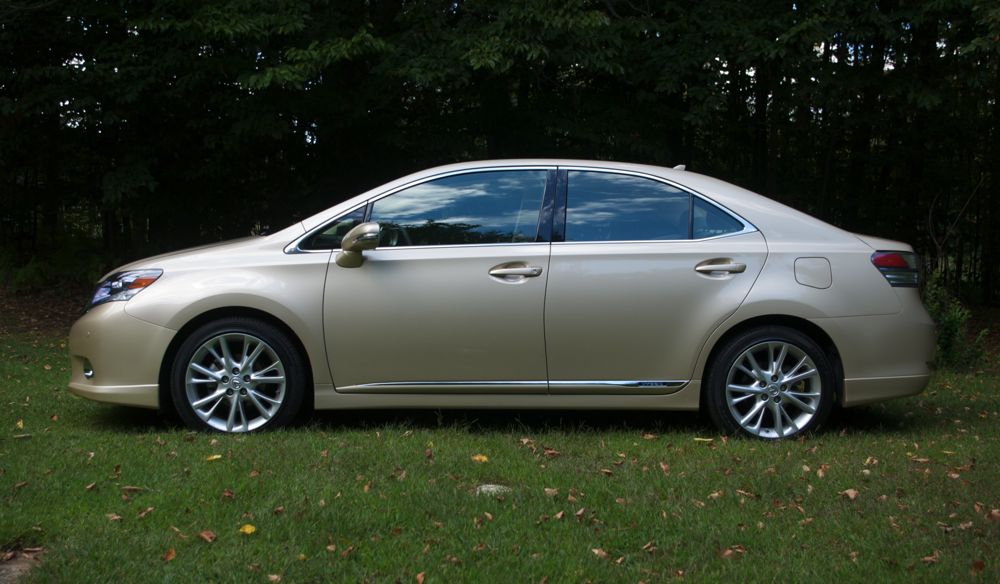
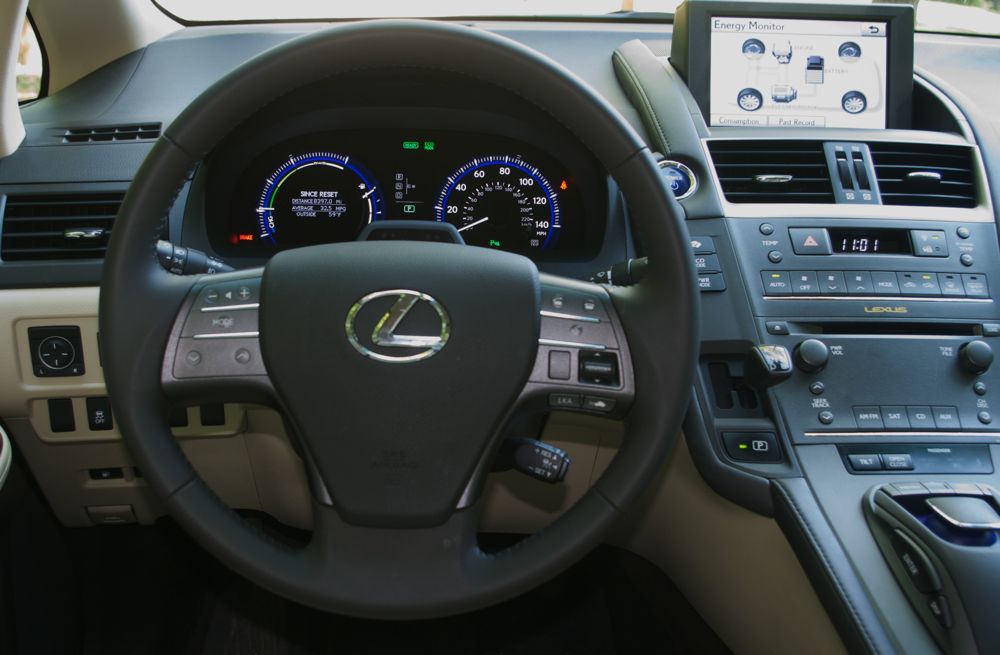
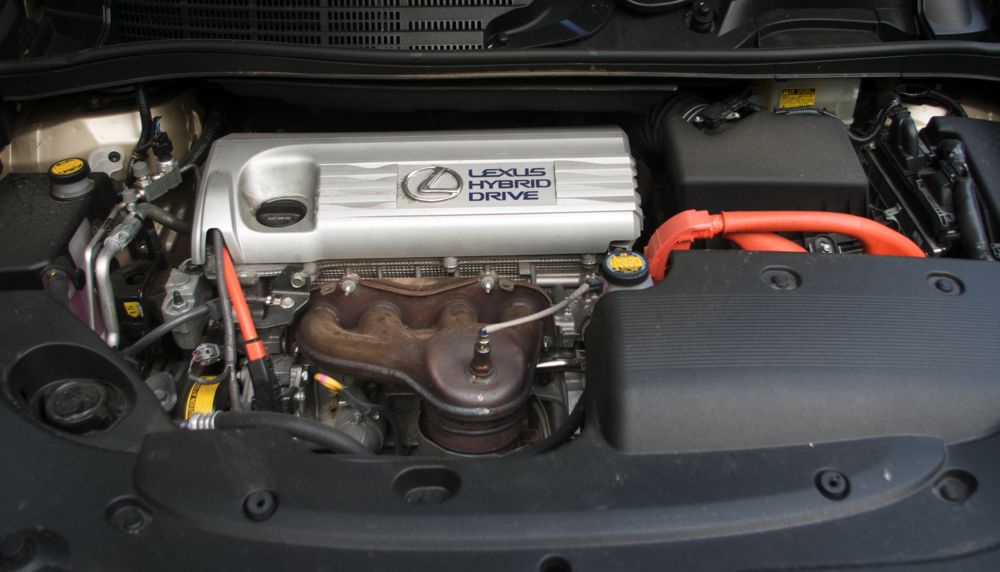
I do not grok these sad, punk-ass ignorant thoughts. I am quite found of pretty much every production hybrid I’ve driven (with the exception of some early GM efforts that were really hybrids in name only), and enough time and mileage has gone by that the public has discovered these are amazingly reliable vehicles. Toyota gets the credit for really mainstreaming the hybrid automobile and establishing a huge base of satisfied customers, and now they are expanding hybrid technology to all corners of their extensive product offerings, including their top-shelf Lexus line. I was able to score a Lexus HS250h sedan, which is really interesting in that unlike a lot of US Lexus models it’s not a car that resembles an existing Toyota model that gets luxuriated to the Lexus standard. This sedan, which is unique in the family, does seem familiar in that it’s kind of like if you blended a Prius and Camry (sorry, ES350) together. Toyota calls it, “Lexus’ first dedicated hybrid model,” meaning here in the states there is no non-hybrid version of this car, like the Prius but unlike the Camry. An Inline Four engine is mated to an electric motor and a CVT gearbox, and there are different modes you can use to tune the performance of the front-drive drivetrain to perform at different levels (like eco or power). There’s also an EV mode, where you can purr along engineless at low speed for a mile or two like a ‘lectric lion. The handling is considerably sharper than the Camry, as it’s sprung a bit firmer. The cabin is narrow, but very comfy and loaded with high tech geekology. Too much, in my view, when we discuss the Remote Touch Controller which is very much like a computer mouse and resembles Audi’s Multi Media Interface and BMW’s iDrive. I will be candid, as I can on this lovely little site: I hate all of these things. They require you to literally go through more motions than is necessary for a variety of simple actions; the kinds of things (like tamper with the radio) that are much more easily accomplished with a more traditional array of intelligently-designed controls. But they look really slick and cool, and while I expect such over-engineered technoscheiss from BMW and Audi I’m disappointed that Lexus ran with this goofology.
But there is other ubertech that is most welcome. Adaptive cruise control that works well (the radar sensor is in the middle of the grill), a very advanced Pre-Collision System, the lane wandering light goober, and other goodies too numerous to mention (there’s at least ten airbags, too). Oh, then there’s a favorite, a bit of simple but brilliant engineering called an Exhaust Heat Recovery System. In the words of Lexus, the bit of exhaust output scavenging “captures the heat of spent exhaust gases to speed engine coolant warm-up and allow the hybrid system to stop the engine earlier and more often in the driving cycle when it’s not needed, for example in low power demand conditions in city driving.”

I love the fact that we’re finally trying to capture what used to be waste and make it work for us, just like regenerative braking takes the kinetic energy of the hybrid you’re driving and use it to recharge the battery. Simple. Elegant.
And speaking of elegant, this is a very classy sedan. A very solid, satisfying Lexus that returned 34 MPG, in a certain silence. A good way to go, overall, if the room suits you.

Hs_aHs_bHs_c

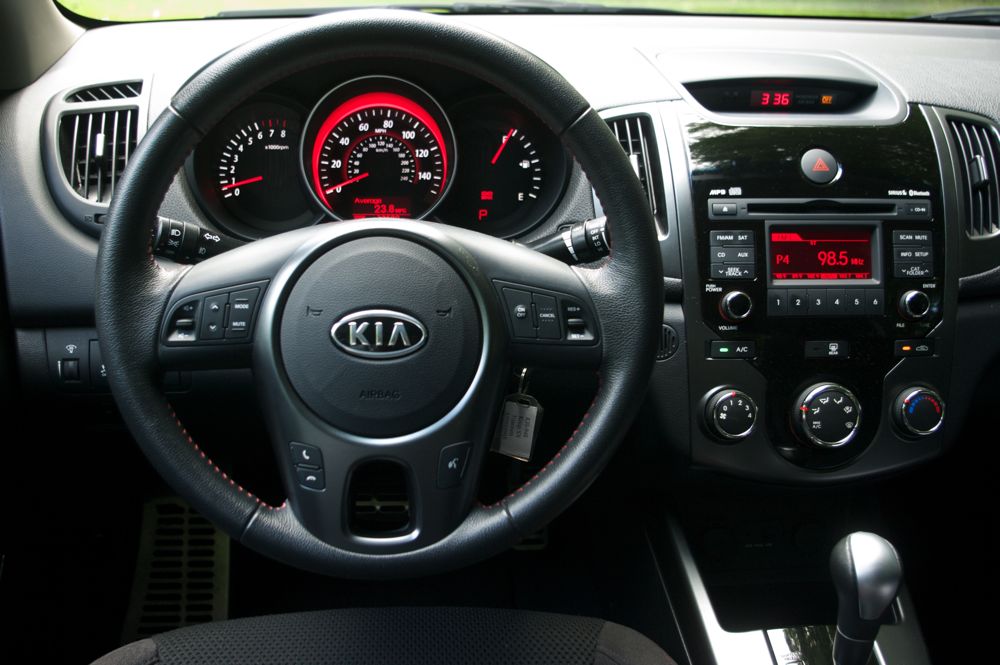
Kia Kreates a Koup

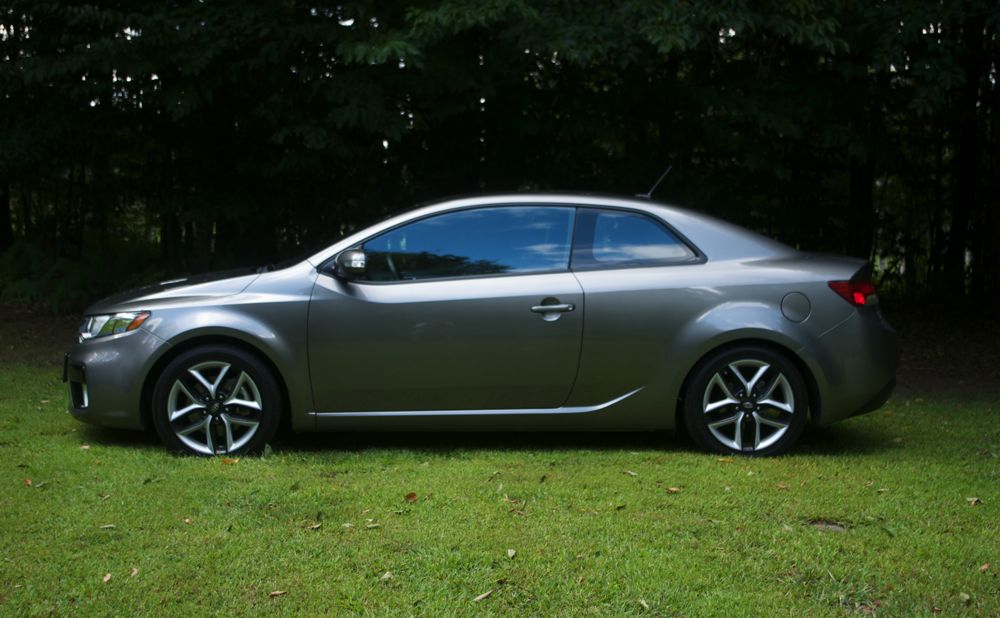
Well, what have we here? What we have is the Kia Forte Koup, which is a two-door sibling to the Kia Forte sedan (which is actually quite interesting its ownself). I actually met this chap at an excellent party thrown during the NYC Internat’l Auto Show, like, two years ago. The car was parked in a small and very cool little art gallery, and shrouded (except for a portion of the front bumper and one headlight) in a fashionable wrap. It was a pretty clever way to tease the sportiest Kia we’ve ever seen, although it did take a pretty long time for it to appear in showrooms.

Anyway, it’s finally on the road and very different than what I expected. First, it’s very affordable. From a styling standpoint, I think it’s pretty outstanding. The overall form is well proportioned; with fast, swoopy lines that are familiar yet manages to have a look all its own. Inside, there are some pleasant surprises. The seats are pleasingly supportive with great lateral bolsters and the big thing is this tight little Coup (Sorry. Koup) has more room than you would expect. Even the rear seat can handle actual humans, and it’s pretty comfy which is unusual in this class. They have done a nice job with this creature in all the things that will please folks who want something that says “hey, lookit me,” and yet you can take a few folks along without excessive bitching, as long as they aren’t Ents. There’s a decent-sized trunk, too, and 60/40 foldable seatbacks so there is some practicality in this K-Car.

Where I was disappointed was the performance, for while it wasn’t a slug (and I had the larger of the two Inline Fours but a 4-Speed Automatic) you just wanted more given the look and atmosphere of the cockpit. Handling is reasonably crisp, with decent suspension compliance. Brakes were a high point, with really short stopping distances and excellent feedback.

But hey, the price of admission is such that it’s not hard to realize why this is a front-drive inline Four instead a Rear-drive V6 or V8-powered Road Warrior in a tux. Once I got around that, I say well done. I just was completely seduced when I first saw the thing and was thinking it might be a Kia-ized Genesis coup (Hyundai owns Kia) but they decided to go their own way and keep it affordable and economical. Because of this, it sort of occupies its own niche which can be a very good thing as long as said niche appeals to enough customers. We shall see, but I think it might do well.

Koup_aKoup_b

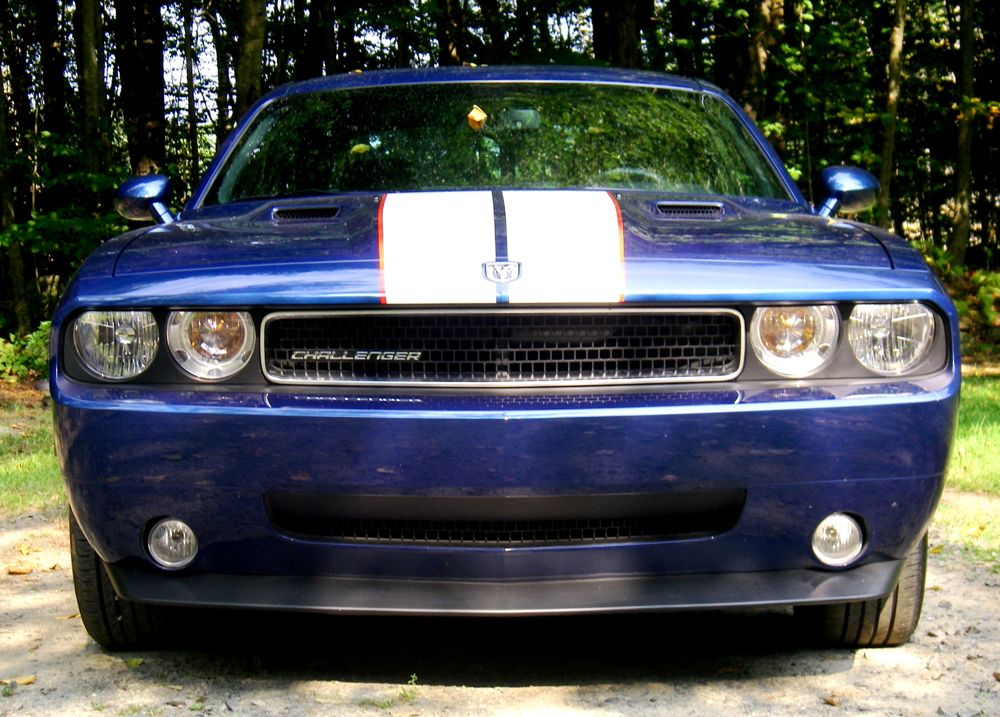
The Challenger Is Victorious

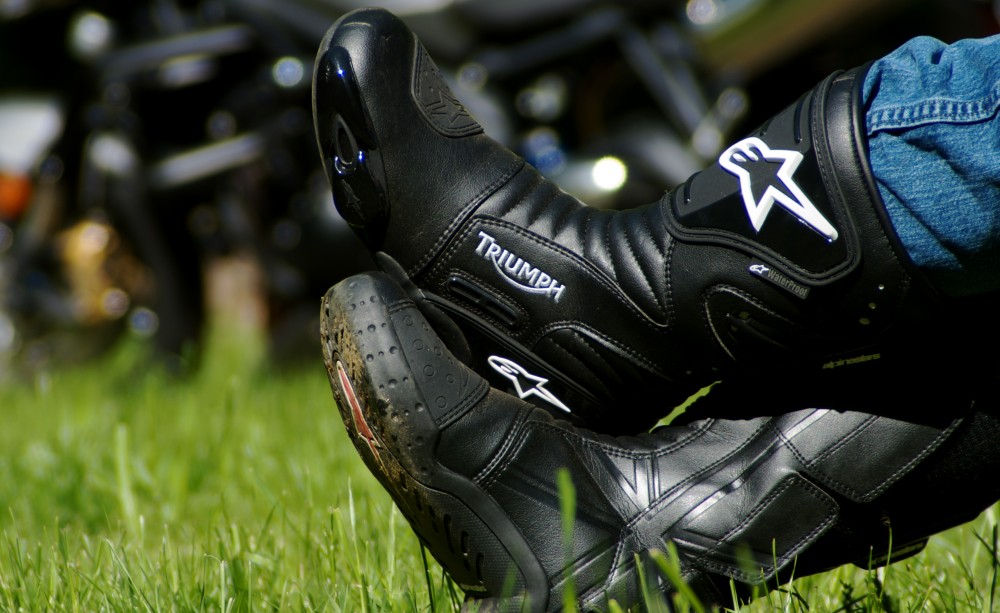
The fact that the Big Three US (I know, the American identity is debatable on many fronts) automakers have embraced their pony car past is quite interesting to me. Yes, even given the fact that by and large prospective car buyers want the latest tech and decent fuel economy when looking for a new car, the firms believe that their product lines are big enough to allow the likes of a retro hoopty like a Camaro, Mustang or Challenger in the mix. I’m old enough to remember the originals in their heydays (although I wasn’t old enough to drive them just yet; only later did a sample some used units) and it became clear that I never really had the pony car gene. While the Camaro SS, Pontiac Trans Am and Ford Mustang GT where lusted after by most males when I was a teenager, my tastes gravitated toward Datsun Z cars and International Scout IIs. Weird, I know, but that’s what I was into. Motorcycles came later, and totally have dominated my ideas about street performance. That said, these days I do enjoy a fast, great handling sports coupe as much as anybody.

But in terms of these new retros, it’s an interesting choice these days. Time has marched on, and sports cars in general offer the kind of overall performance (especially in terms of handling and braking) that the old pony cars couldn’t get near, with the exception of pure, straight-line standing-start acceleration. So the resurgence of the Mustang, Camaro and Challenger is really fascinating to me, because I’ve always wondered who these cars are really built for. It seems a person that wants to recapture that original pony car magic would likely be in their mid 50s at least, and yet there’s no denying that if you’re behind the wheel of any of these retro runners you get noticed everywhere you go by folks in every age group. Both Ford and Chevy sold around 7,500 of their pony cars in July, which some auto analysts have described as hot sales. I guess that is good, but Toyota sold 5 times as many Camrys. Different animals, I know, but when you consider how badly Detroit needs to sell a lot of cars to get back on their feet, do these trophy cars make any sense from a production standpoint?

I know, who cares? People like these things, at least to look at, and the Camaro/Mustang grudge match is back on after decades of dormancy. The thing is, after having sampled the Camaro SS and RS, the Mustang GT and the Dodge Challenger SRT8 and SE, I have to give the clear nod to the least popular of these cars, the Challenger. There’s something about this car that seems to work much better in its retro muscle car mission than the other two, especially the Camaro which is surprisingly claustrophobic and just generally not much fun to drive. The Mustang has kind of a cheap feel to me, and c’mon, a live rear axle? It’s like it’s part F150.
The Challenger is a big ol’ lump that is entertaining, and actually handles well (although the steering on the SE I have right now is light, and the V6 a tad weak. Anybody who buys any of these things w/a V6 doesn’t get it). The bottom line here is, in my most humble opinion the Challenger is just more fun that the other two by a margin, and that’s why you’d buy one of these cars after all. There’s also room for actual adults in the rear seat, the front buckets offer superb support, it seems well-built and even the trunk is excellent. It has also got this genuine Mad Max persona, although the Road Warrior drove a Ford Falcon. Times change, mate.
ChallengetheeChallengerint

SeBringIt

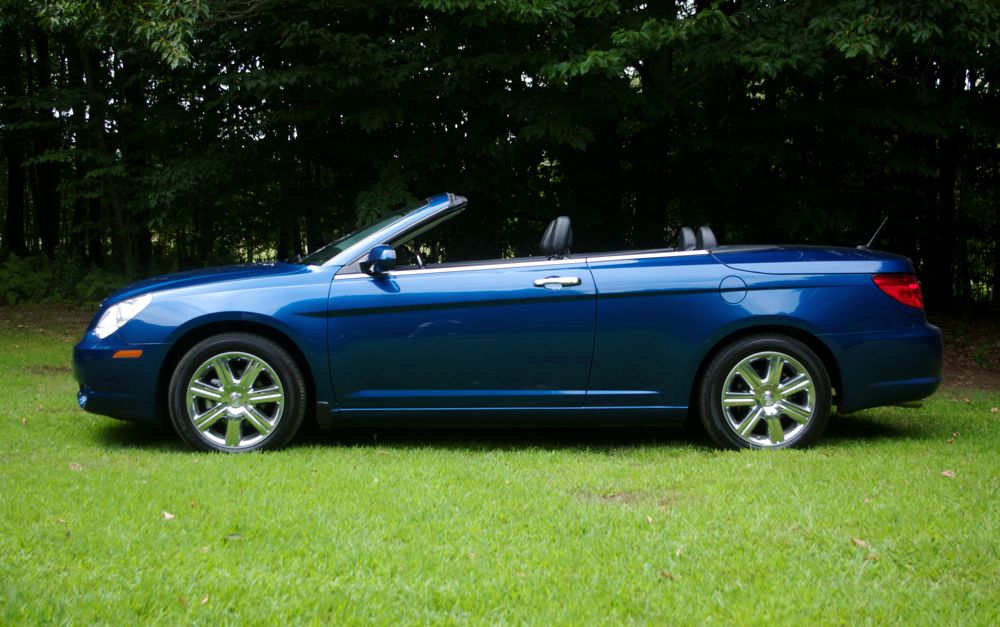
Chrysler has had a pretty rough time with the pretty rough times the auto industry has been dealing with. What with the bankruptcy, alliance with Fiat and associated complications the fact that, yes, they build and sell cars you can get a dealership down the street has almost been overshadowed.
So it was a very pleasant surprise that a new Sebring Limited Convertible rolled into the Top Secret Area Fiddy-one Test Facility last week, because what I thought was going to be a kludged-out yawner has turned out to me a very pleasant experience. The cloth convertible top (a folding steel version is also available) is unusually stout with two thick layers and is quite quiet at speed. When you hit the button to put said top down, it folds neatly into the trunk in the fashion similar to the steel units and even leaves a bit more trunk space that usual for a bit of practicality (with the top up trunk room is generous, with outstanding access thanks to the clamshell trunk lid). There’s a lot less cowl shake with the top down than with a lot of other convertibles out there, and overall the sucker feels very solid and well-built. A product of the state of Michigan (imagine that), I also discovered a smooth, refined powertrain, great brakes, supple ride and an overall enjoyable driving experience. You can also fit actual adults in the back, provided they’re not Ents. Pretty dadgum decent car, this ‘Bring. Consumer Reports hated the one they tested, but that was in 2008 and they seem to have experienced a very different car compared to the one I’ve got. That certainly happens, and I in no way impugn their authority as overall they really are the the best out there. But who knows? As for me, we likes this one, a lot.

Sebringit

Ummmm Hmmmmm

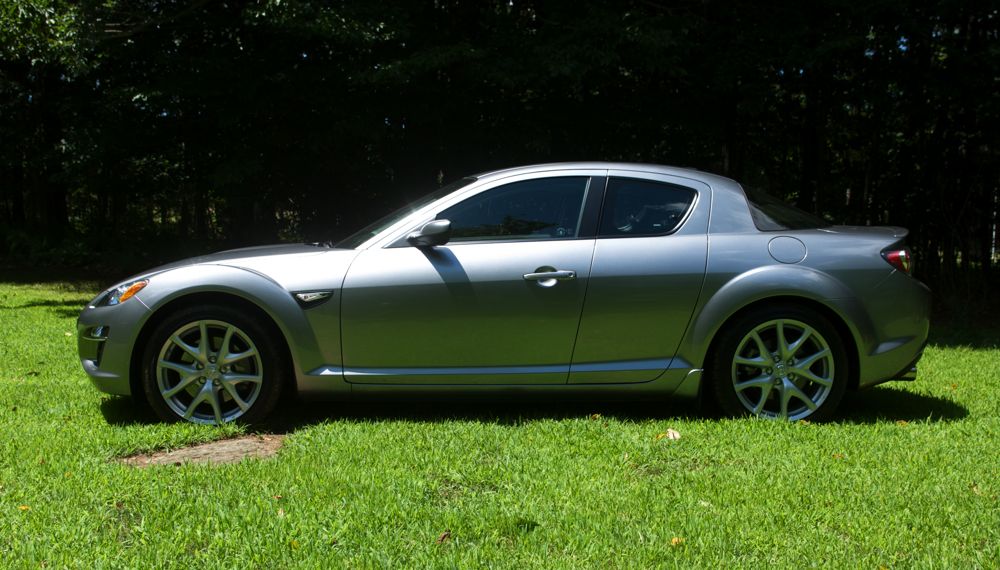
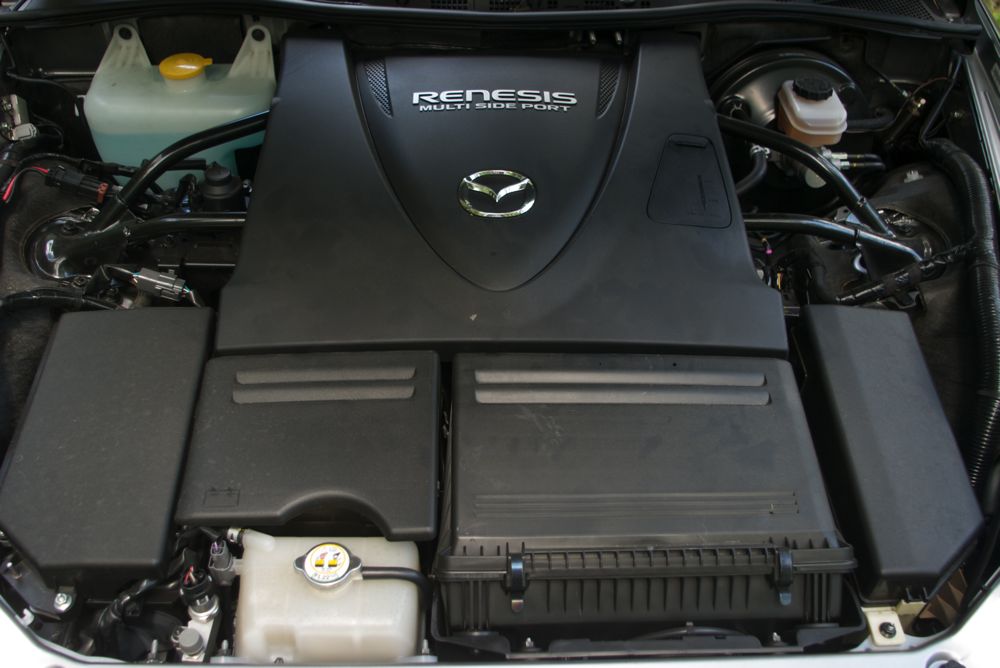
Let’s face it: unlike the motorcycle world, there isn’t really a huge variation in engine types among new autos for sale in the US. You have your Inline Fours, Inline Fives, V6s, V8s, and the odd V12. Oh, and then there’s the Flat Fours and Flat Sixes, so OK there is a bit of variety (and there are diesels in addition to gas models out there). But by far the most unique engine among the lot is the 1.3-liter RENESIS Rotary found in the Mazda RX-8. With 232 horsepower (with the 6-speed manual transmission) in a truly compact package, nothing in the world of internal combustion feels like this slick, unique mill. This engine design has undergone constant tweaking over many decades, and is now a seriously fun way to haul around this equally unique rear-drive platform. It’s silky smooth, hums in an intoxicating way and redlines at 9,000 RPM. Unlike earlier versions this latest permutation seems to have more low-end torque than before (although you still have to rev it a bit to get to the meat of the powerband). The car also has those funky rear-hinged rear doorettes that help access to the rear seats (and reminds me of the same rear door design of many, but thankfully not all, extended cab pickups).
All in all, this is a sports car that is truly unusual and (for me at least) a real ball to drive. Solid handling, great brakes and a very well-tuned suspension round out a grand touring kind of sports machine, and while it’s not a true hard-core sportster it does hustle along quite confidently. The purr of the rotary’s twin rotors seals the deal, and this is one Hummer I’m glad didn’t go the way of the Dodo.

Rx8Rotary_power