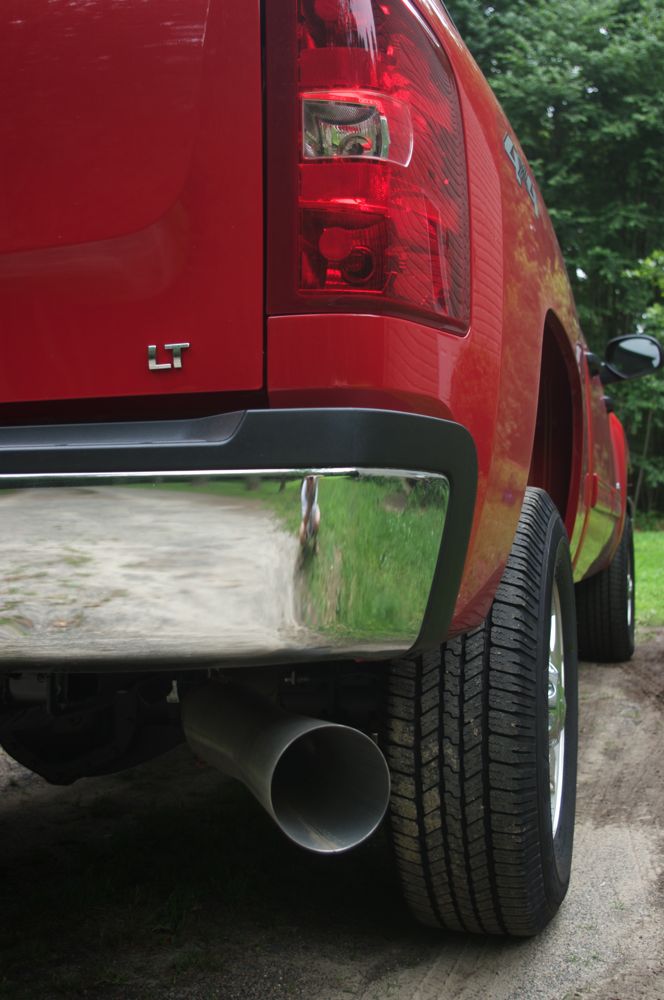
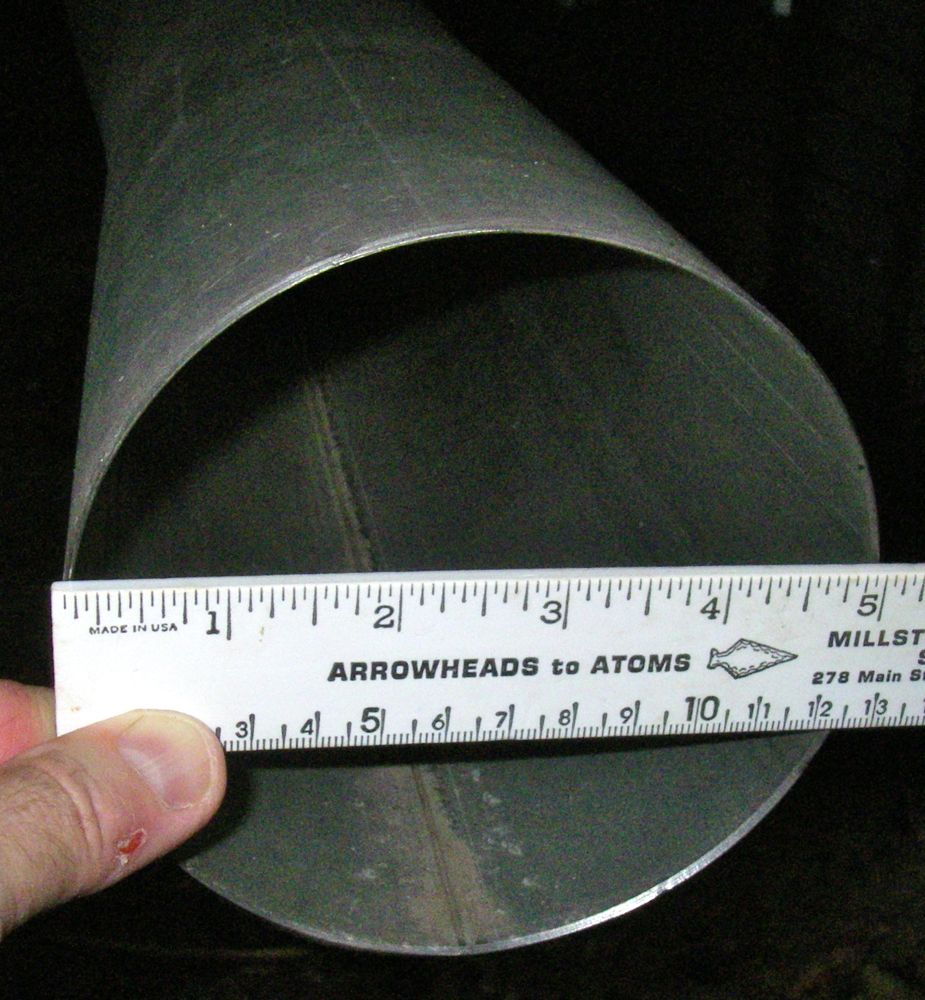
I’ve noticed a trend that seems to be getting out of hand, and while it’s possible there is a true functional reason behind it I still find it a be odd, and kinda hilarious. As the diesel engines for HD pickups become more and powerful, complex and sophisticated, the size of the exhaust pipes are getting X-Treme. The 2011 Chevy Silverado 2500 HD with the massive 6.6-liter Duramax Diesel has the biggest stock exhaust pipe I’ve ever seen on a light-duty (comparatively speaking) vehicle. Actually, it’s really more of a tunnel to the engine than a pipe. It’s the kind of thing that reminds me of a huge horn that might be blown by a creature from the imagination of Dr. Seuss, only not quite as ornate. Five inches in diameter, this thing. Does it make the driver feel more formidable? It ought to, considering the diesel w/ the 6-speed Allison transmission adds about $8395 to the price.
Category Archives: Automobiles
Does This Butt Make My Car Look Fat?
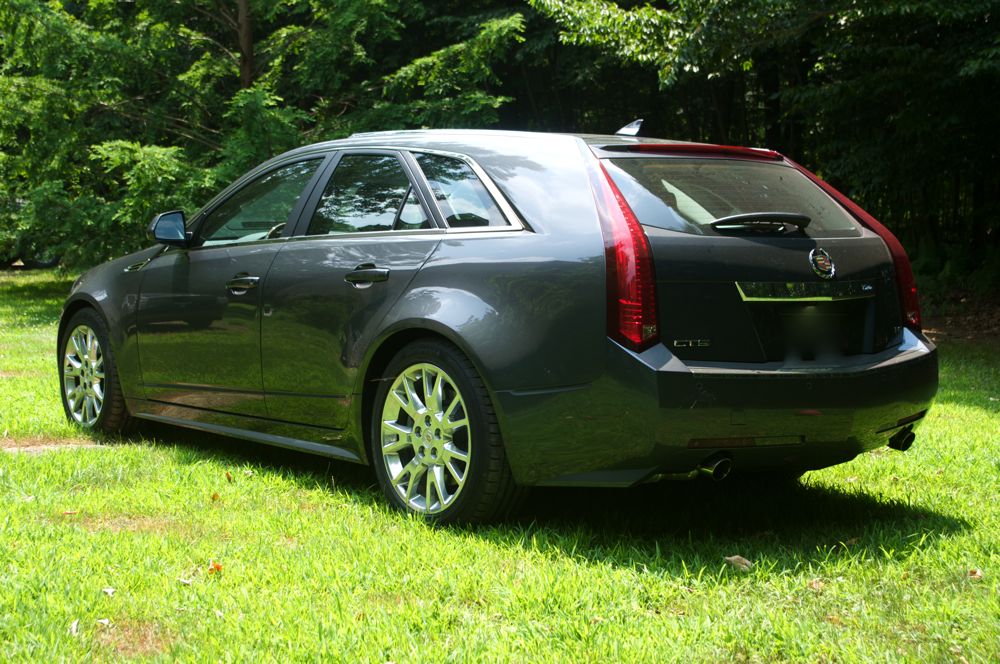
Cadillac has had a lot of creative fun (or angst, depending on your point of view) trying to get the sport wagon thing down. I personally thought the original SRX that was axed after the 2009 MY was a really interesting vehicle, but they really didn’t consider it a wagon (although if the old Olds/Buick Vista Cruisers/Sport Wagon sisters weren’t wagons, then what were they?). The SRX arrived in ’04, and was as square as a wagon could and therefore had decent room although it initially had some reliability issues.
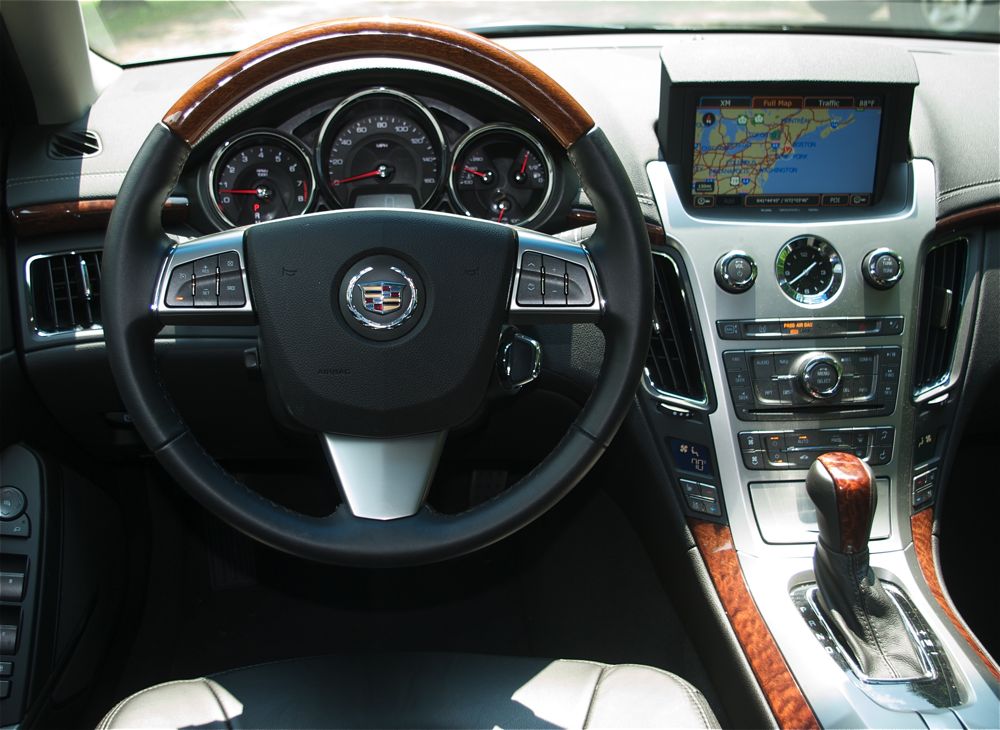
Anyway, the 2010 SRX is very different and much more in the modern crossover SUV mold, but Cadillac in not only not done with the whole sport wagon thing, they are actually calling a spade a spade with the 2010 CTS (wait for it. . . ) Sport Wagon. Much sleeker than the original SRX and definitely more Sport than Wagon in many ways, it’s pretty bold move but then again the sport wagon class is starting to gain popularity here in the US after considerable success abroad. This new entry is pretty tightly tied to the CTS sedan chassis, so there’s not a whole lot of real wagon room and versatility. In fact, I have doubts about GM’s claim that there is 53 cubic feet of space back there with the rear seats folded. But whatever. Most purchasers will probably just haul around priceless paintings or Ming vases anyway, and in this application it should work nicely. The Stay Puft CTS also handles well enough, and has a smooth RWD drivetrain with AWD available.
Location, Location, Location
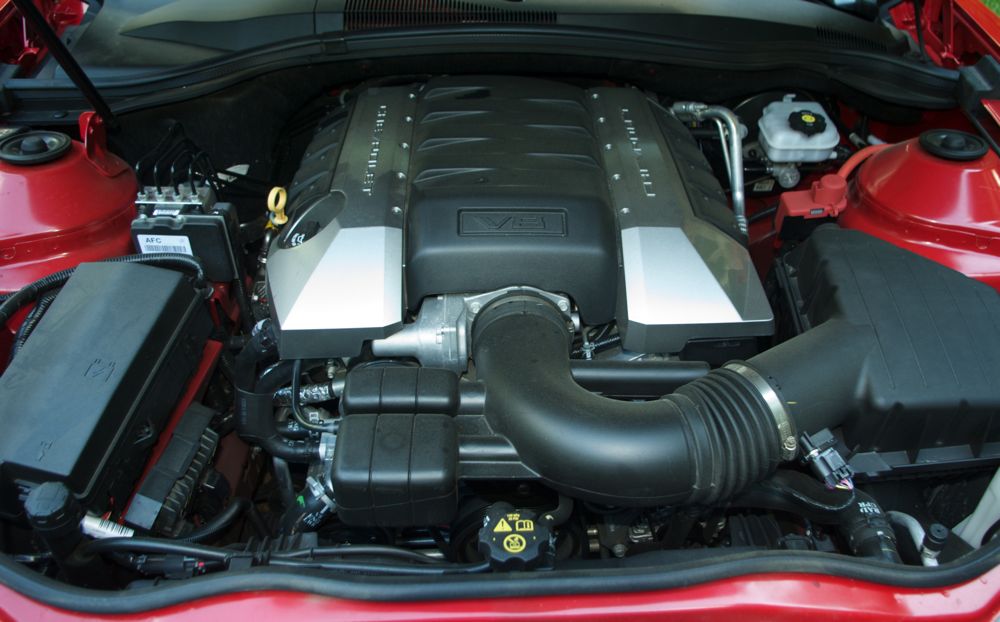
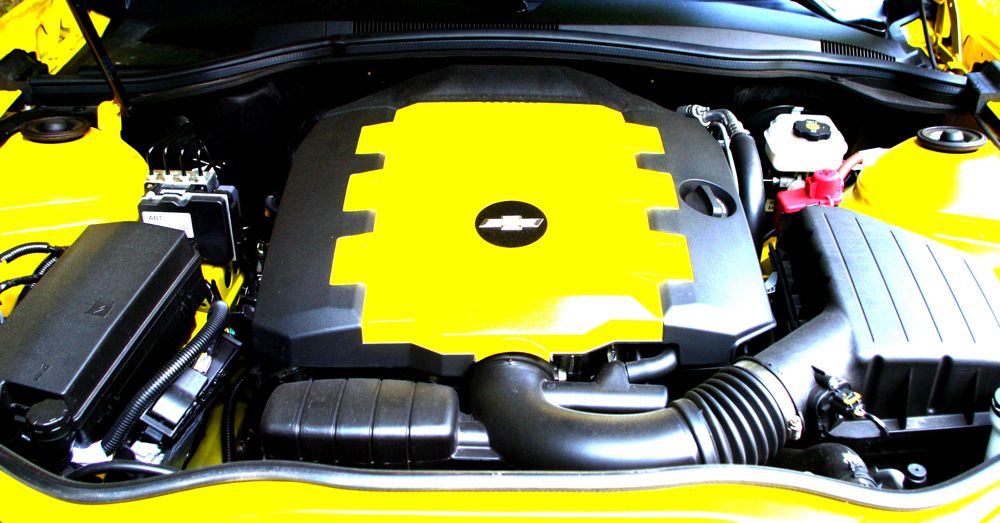
One of the first thins I noticed about the Camaro SS’ 6.2-liter V8 when I opened the hood was how set back the engine is in the engine bay. This is in contrast to the V6 in the non-SS versions where the engine is mounted much closer to the front of the car, further from the lateral axis of the front axles (the red body is the SS, the Yellow the V6 RS). The big old lump of a V8 (made of aluminum, but still pretty heavy) in the SS is mounted much further towards the back, near the firewall, which has benefits in terms of centralizing the car’s mass for better balance and therefore crisper handling. Another thing I like about this is on the cooling front, where there’s more air around the engine and much more room for a larger radiator and associated chilling technologies.
It’s A Cultural Thing
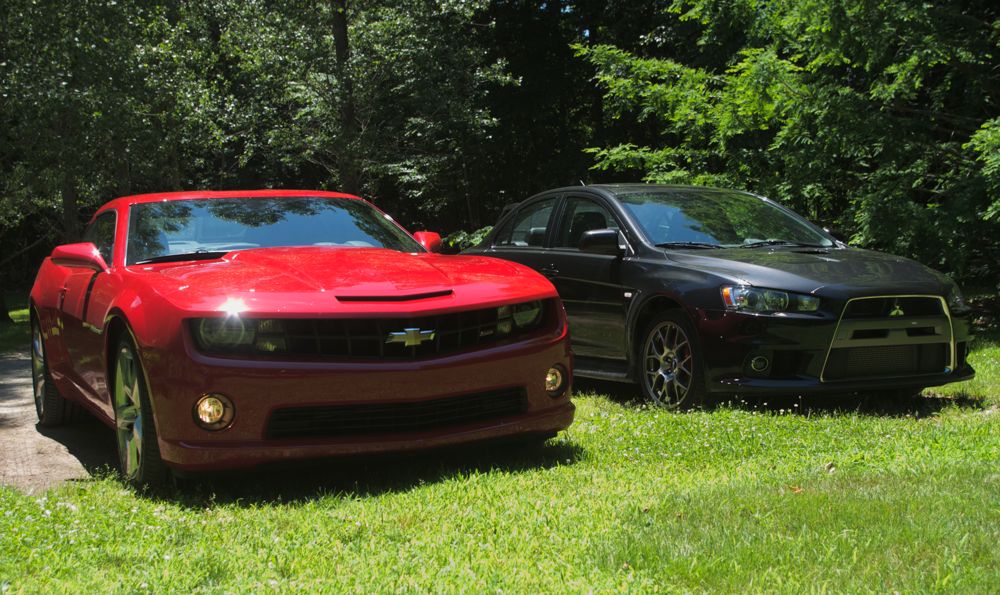
Here’s a real odd couple that amazingly enough both have basically the same mission in life: pin your butt in the seat and go down the road wickedly fast. In one corner, we have the Chevy Camaro SS. Over theyah, we have the Mitsubishi Lancer Evolution MR. The Chevy has an insanely huge 6.2-liter V8 with 426 horsepower, and a six-speed manual gearbox. The EVO has 2.4-liter Inline Four with a nasty intercooled twin-scroll turbocharger and 291 horsepower. One is a rear-drive American Icon (built in Canada of course), the other sports rally car DNA, All Wheel Drive and tons of serious Japanese electronic tuning and traction technology. One pretends to have a back seat, the other has a surprisingly roomy one. They are as different as chalk and cheese, but both go, turn and stop amazingly well. It’s really a great side-by-side, because they are both a barrel of minkeys (see: Inspector Jacques Clouseau) in their own way.
Funny, I love the EVO and have never had the Camaro Gene, even when I was a kid. I fully acknowledge that GM did pretty much exactly what they wanted to do with this car, and for a certain taste it nails all the right buttons. But I find it claustrophobic, a tad clumsy and full of cheap-ass plastic interior appointments. Great Brembo brakes, though.
The Mitsubishi actually approaches being a practical car, in addition to being a highly communicative RoadBeast. I hate Twin Clutch automatics generally, but the MR is getting it down. The doors sounds as tinny as, well, a tin can when you shut them. It drinks gas. It also has steering that is downright telepathic.
M Stands For MUH HA HA HA
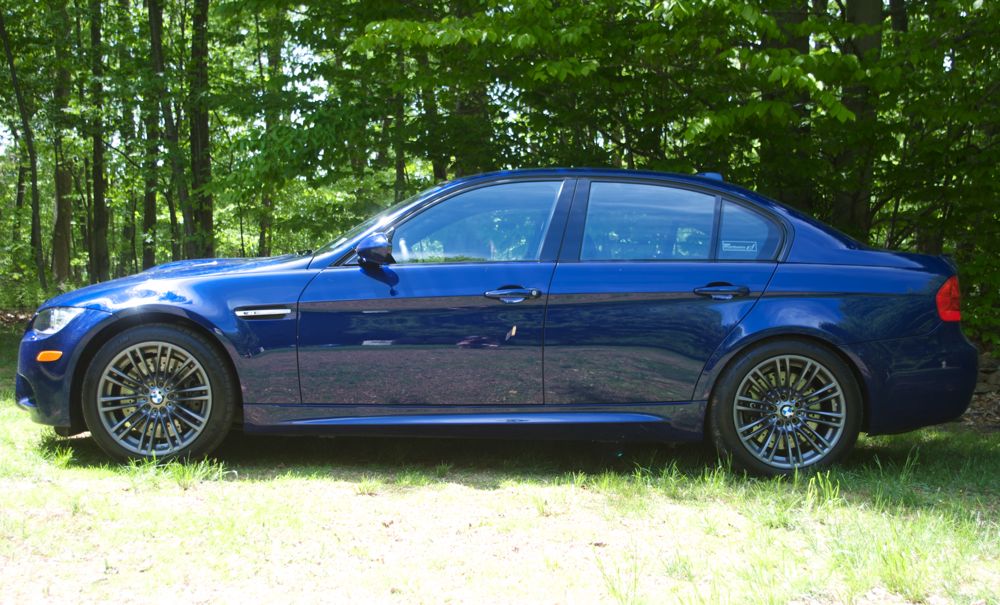
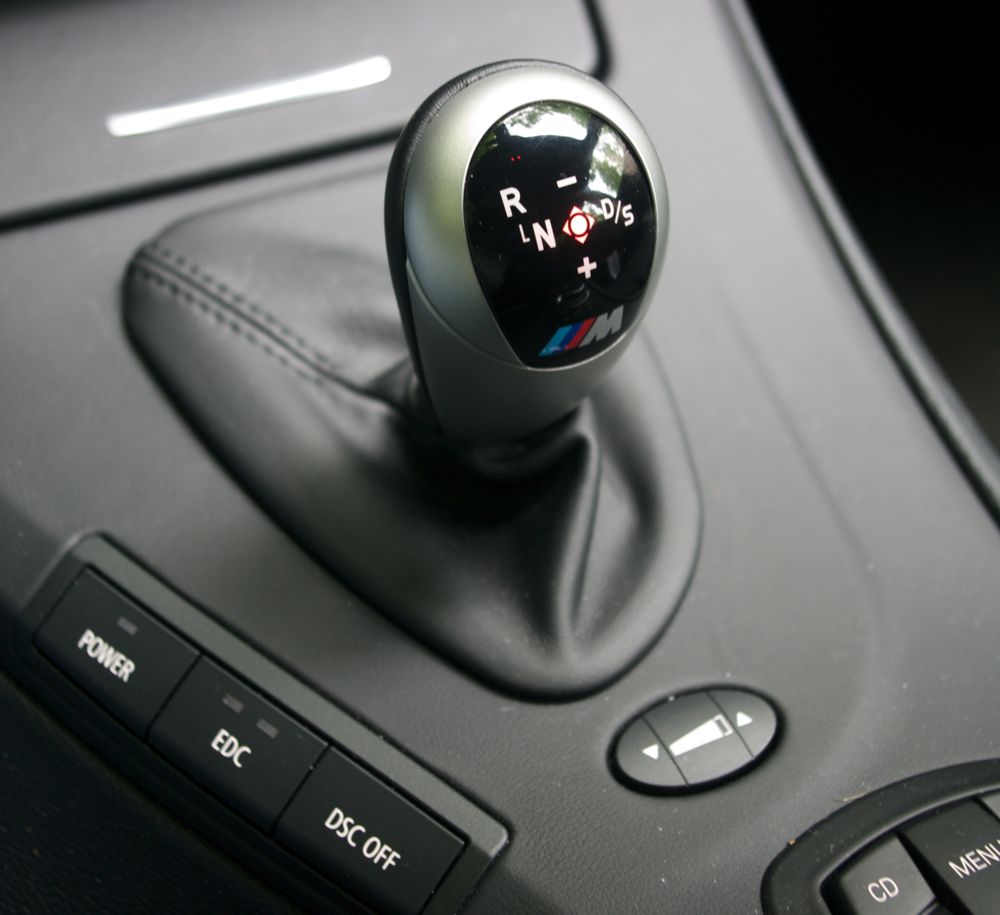
Dealing with BMW’s M3 (a wolverine in poodle garb if ever there was one) is a very interesting task. It’s ludicrously strong, and even though 414 horsepower and a curb weight of 3,700 looks pretty screamy on paper it actually feels a bit quicker than even these figures imply. My tester was equipped with BMW’s new 7- speed Dual Clutch Automatic, and while it’s magnificent at getting the power to the rear wheels with amazing urgency I never felt completely comfortable with it. It’s a technological Tour De Munich, with a number of modes to confuse the initial user. BMW states, “The Drivelogic control offers 11 different shift programs to suit the needs of individual drivers. Drivelogic offers 5 programs that allow for automatic operation of the transmission as well as 6 manual programs.” I’d opt for the 6-speed manual transmission, just to avoid all these all-powerful silicon chips.
The Dual Clutcher is pretty heavy stuff, and the weird little control unit in the console that operates it (along with the now common paddle shifters on the wheel for manual mode) is as mildly irritating as the iDrive controller, which is still a marvel of ergonomic and functional inefficiency. The M also wasn’t real wild about staying in reverse, and shifted pretty abruptly at times. God only knows what this test mule has been through, though, as it did have over 4,000 press miles on it and who knows what some of these vile journo-punks did when nobody was looking. Annoyances aside, this is a wicked-fast, wicked-handling and brilliantly-braked piece of hardware. lt’s such a great size, too, and answers the question of what would happen if a Mitsubishi Evo swallowed a Viper. True, the electronics dictate an owner’s manual so vast it has to live in the trunk, but such are the times we live in.
Hybrid Fever!
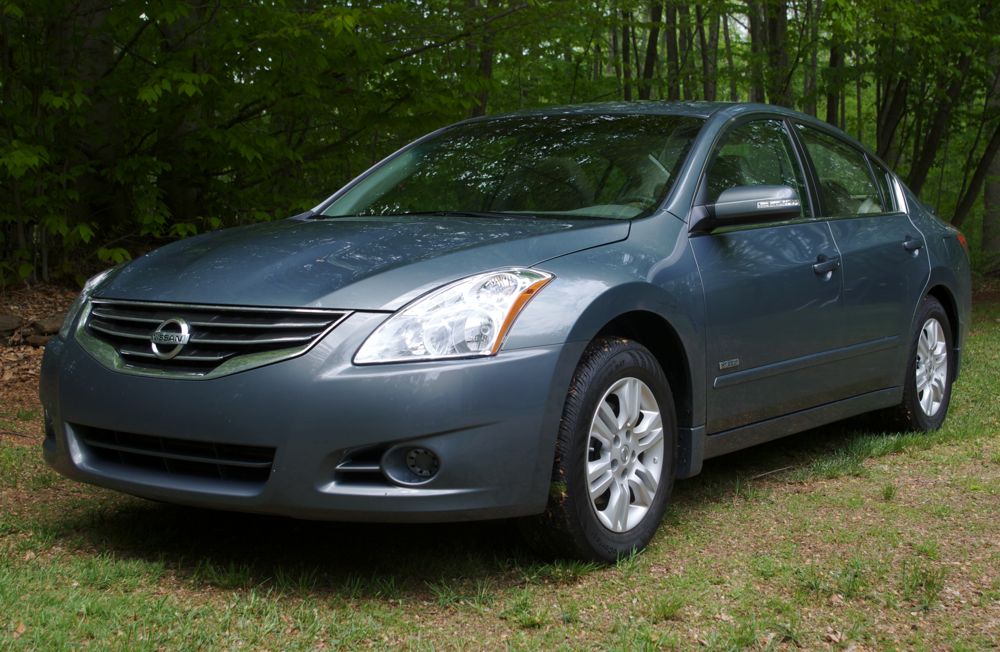
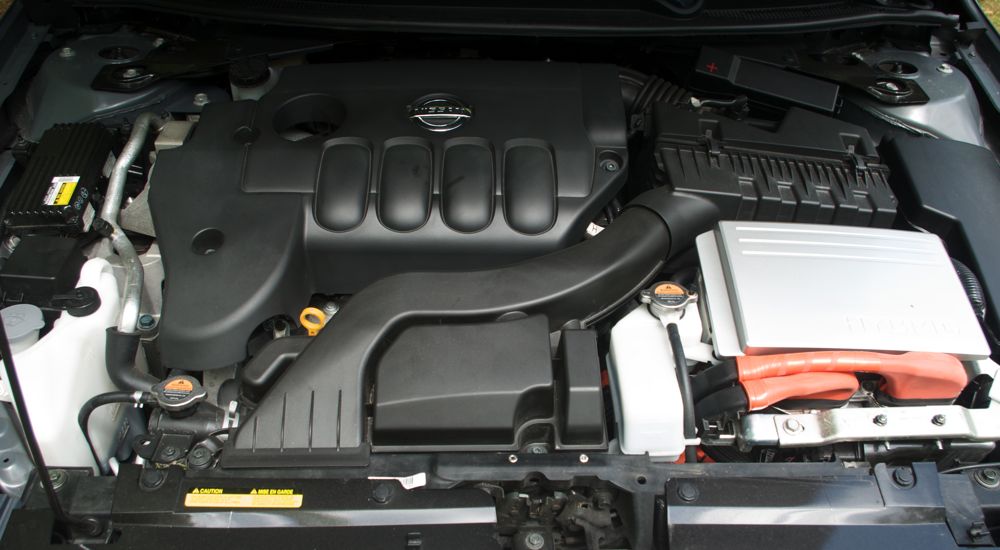
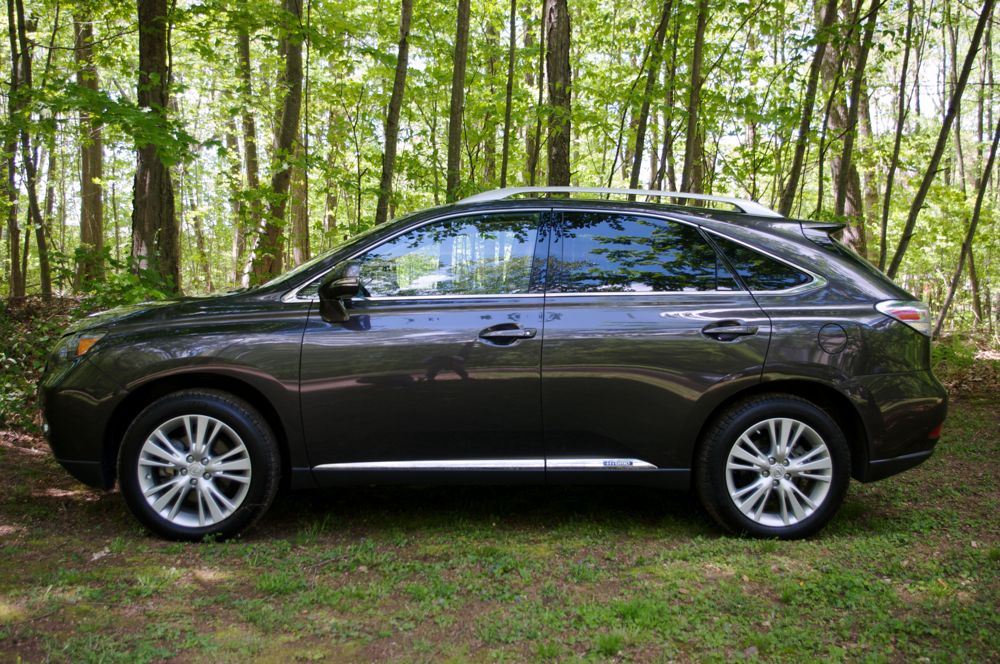
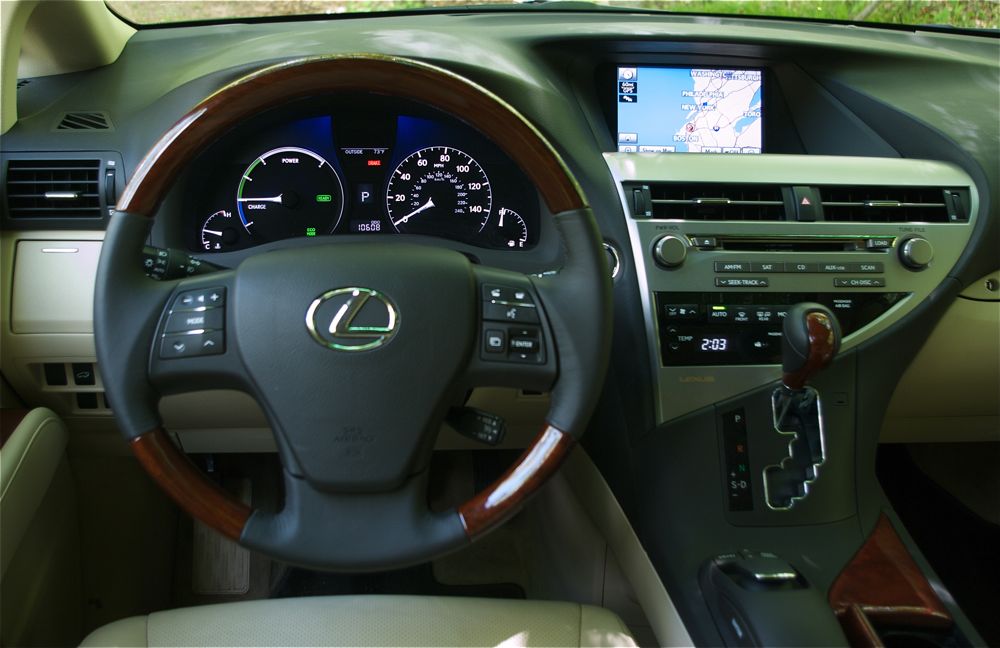
It’s not every day, or every week for that matter, that I have a brace of Hybrid autos to evaluate. But it just happened, and as I am (unlike a substantial number of auto journos who seem to feel threatened by them) a fan of the breed I’ve really enjoyed interacting with both of these eco-friendly machines. It’s been especially interesting to see the evolution of both the Nissan Altima Hybrid and the Lexus RX450h, as they have been tweaked to the point that they are quite improved over their original permutations. They are reasonably quick (both getting to 60 MPH in less than 7.5 seconds) and very refined in terms of transitioning between the gas engine and electric motor. Handling is crisp on both as well, although they are very different vehicles of course and the RX’s higher profile means more body lean and less steering response (although it is still quite acceptable). What we have here is a midsize sedan with almost full-size room that delivered an average of 34.6 MPG in mixed driving, and a midsized luxury SUV that got 31 MPG in a similar driving cycle. Costly, yes, but well worth the dinero if you need a vehicle in one of these categories and like the idea of consuming less fuel and spewing less crap into the air.
The Big MINI
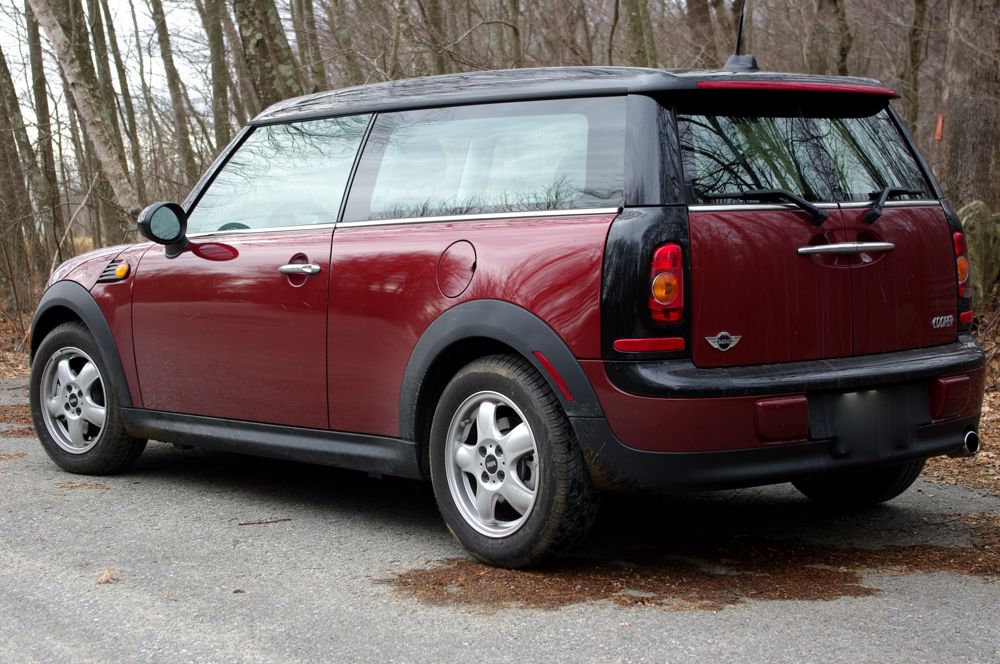
It is a welcome arrival in just about any parking lot, thanks to its somewhat whimsical demeanor. It is also a blast to drive, thanks to a stiff chassis and wheel-at-every-corner architecture. The MINI Cooper has been a popular choice for many seeking some compact wheels, so the BMW-owned concern decided to build more of a good thing by creating a larger version (sort of a wagonette, if you will) called the Clubman. And in typical MINI fashion, they decided to make it a tad unique.
Instead of a rear hatch, the Clubman has what they like to call “Split Rear Barn Doors” which pop open as if by magic when you grab the handle thanks to some very well-charged struts. But wait: there’s more. On the passenger side, just behind the passenger door is one of those weird-ass suicide doors the pivots from the rear like Ford and Chevy extended cab pickups (this time its called it a Clubdoor), and makes it easier to climb into the rear seating area. There’s actually decent room back there for a couple of adults, with about the same legroom as you get up front.
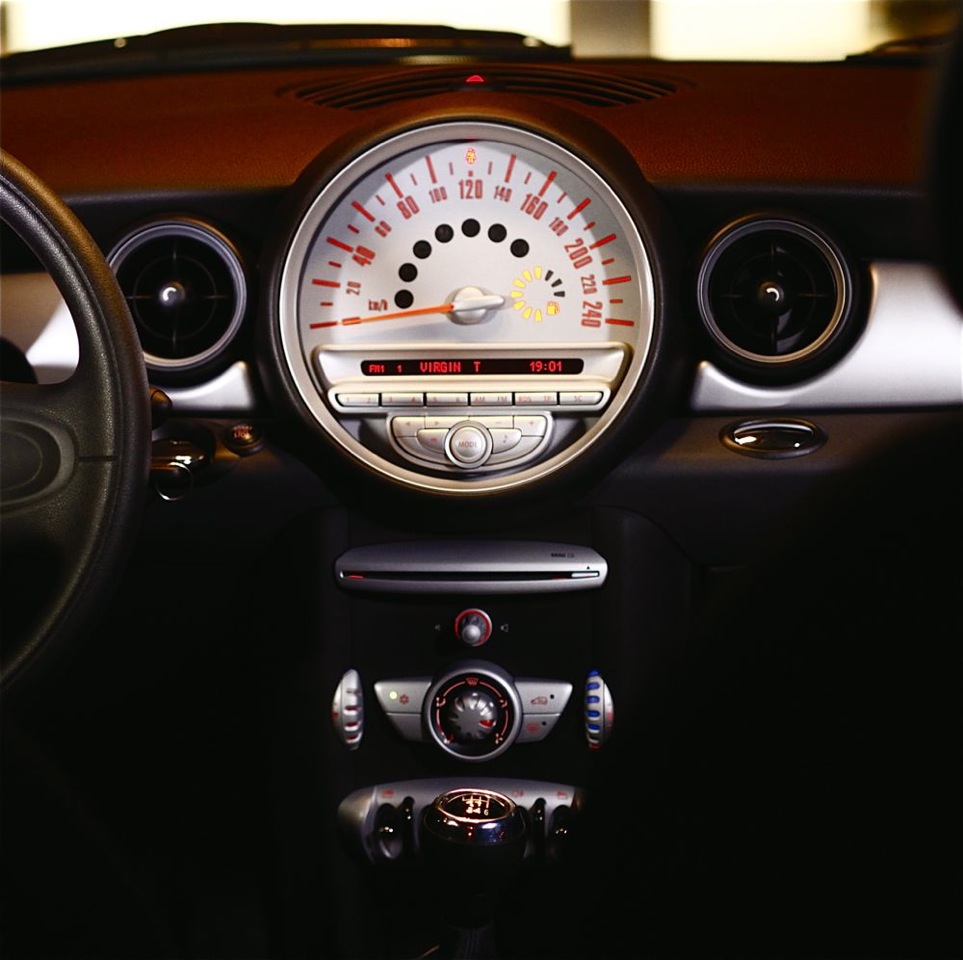
In typical MINI fashion this thing is no powerhouse with the standard normally-aspirated Four, but a Turbo version (or Tubbo, as they say in the South) comes in the “S” version. Handling is on a par with the standard MINI despite three more inches of wheelbase, which is to say exemplary. Also on a par with the regular sedan is a speedometer the size of a trash can lid, and some truly idiotic controls especially those that navigate the sound system. But, you get used to the latter and it just adds to the Clubman’s eccentric, genuine charm.
Transform This
The year was. . . actually I don’t remember what year it was. But if memory serves the car was a Mercedes SLK and it was my first exposure to the whole hardtop convertible concept, and while I didn’t wet myself in amazement (which I usually do for totally wild-ass technical innovations), I was really impressed. Shortly after this I landed a Lexus SC, and it was yet another expression of a really sound four-seasons idea. You see, convertibles and the Northern Climes have issues, mainly because it sucks to have to park your excellent drop-top machine when there’s a lot of cold, snow, sleet, and winterage in your life. Now even VW with their clever EOS has entered the fray, and I have to say it’s all good. Seriously. I’ve yet to roll in any of theses things that, while far from perfect, still doesn’t get the top-down-inna-heat, steel-or’-head-when-it’s-all-’bout-sleet thing down really well.
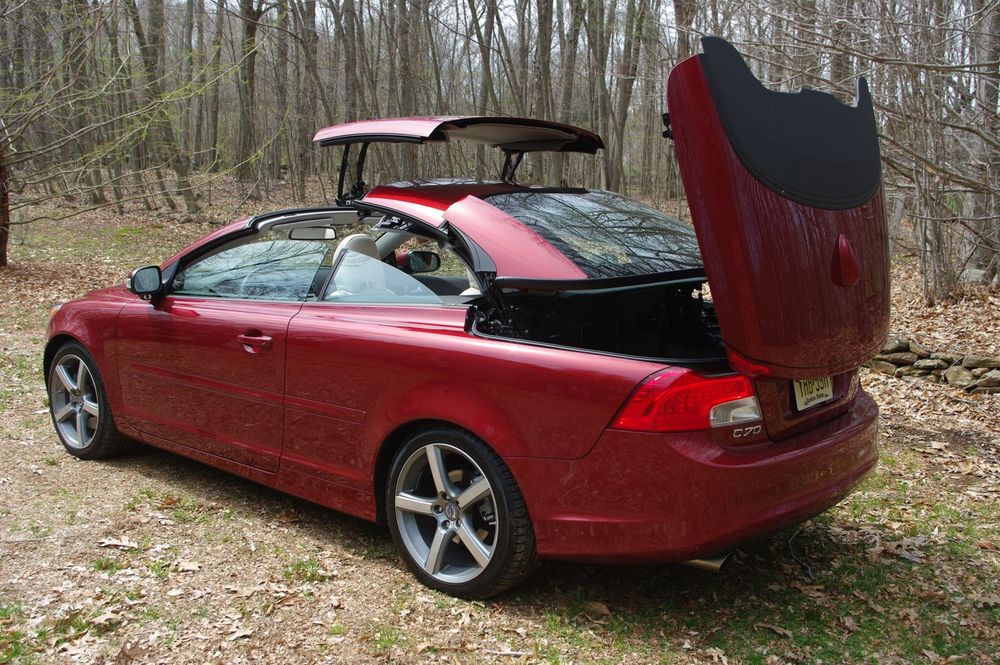
So, here we have a 2011 (no, really. The OEM’s have a really weird-ass calendar) Volvo C70. The top splits into pieces and flies into the trunk, fortunately only when you tell it to via a switch. It’s a pretty great machine overall, with a punchy, turbocharged Inline Five that scoots along nicely and has a very solid chassis (except for the windshield pillar which shakes way too much over rough substrate). It’s a wild bit of engineering to watch the top rebuild itself (including the headliner) when it slides back into place in way less than a minute. It’s a true all-season two-doh, a bitchin’ Swede that seats foh, and moves your booty in the great out-doh. That’s a poem, bitches. Deal wif it.
The Long and the Short of it
Things have been pretty unsettling of late for those who enjoy the Chrysler product. First, I honestly have no idea who owns the company at the moment. Oh sure, I should know, as it’s kind of a part of my job, but I am vexed and confused by the whole Cerebus, sorry, Cerberus acquisition. Then there’s the influx of government money, and how that all works. It gets even more interesting when it comes to Dodge trucks, for, apparently, there are no more Dodge trucks.
Much in the same way “There is no Dana, only Zuul,” in the original Ghostbusters ™, now “there is no Dodge RAM, only RAM.” I still don’t get exactly why Chrysler decided to separate the RAM from the Dodge, other than may to save money. Save money, you say? Well, think of all the chrome they saved by not having to print DODGE on all their pickups, just RAM. And, there are no doubt astounding savings in printing costs for the owner’s manuals. See, I told you I didn’t get it. Here’s a weird thing, though. As of today, you can still get to the RAM website via the Dodge site, or just go to ramtrucks.com. They haven’t moved completely out of the house just yet, in other words.
But no matter. The new RAMs are, more than anything else, on the same plane quality-wise as the machines they compete against. All modern full-size pickups are remarkably refined, capable, and impressively solid. In terms of the big three, it’s a shame they don’t spend more time engineering their cars with the clear attention to detail that they do with their trucks, but after all they all sell more pickups than cars. Why is this? Well, like so many things delightfully American, tons of males like to drive a full-size truck even though they don’t really need one. The whole rest of the world, even all the tradesmen, construction workers, you name it, get by just fine as a group with far smaller, more fuel-efficient vehicles. Go figure.
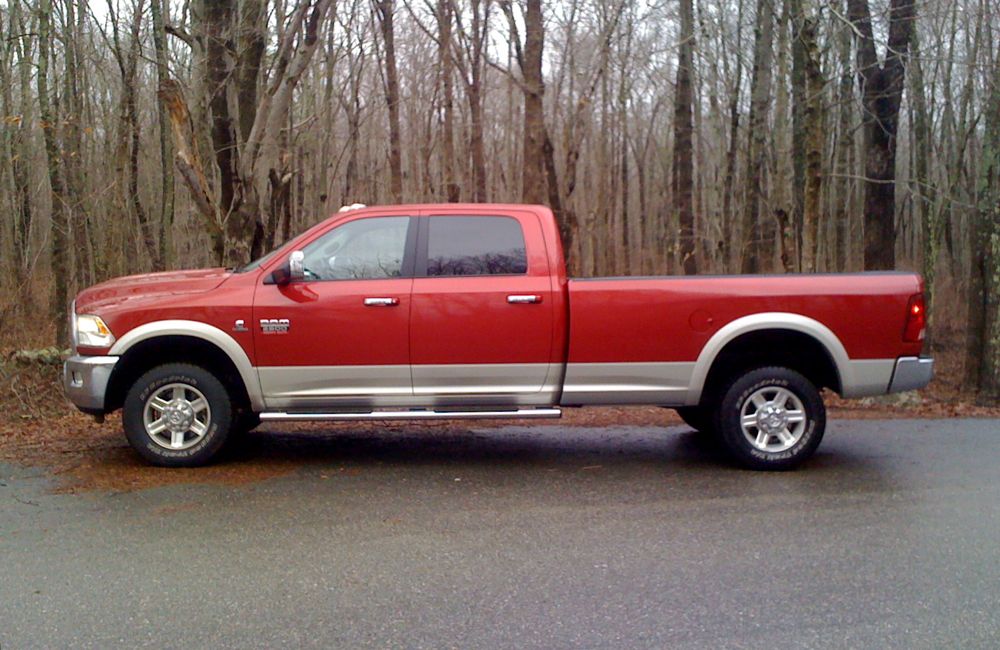
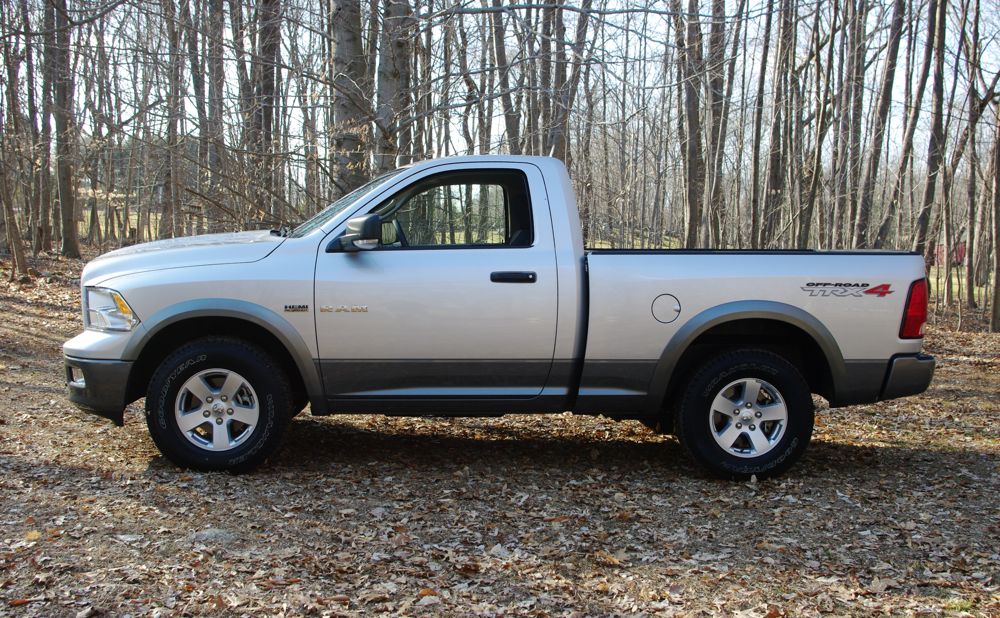
I got to sample a really interesting brace of pickups, sort of the smallest and largest of the RAM line. On the “small” side I had a 1500 SLT regular cab 4X4 short bed, and on the other side of the spectrum I had a 2500 Laramie Crew Cab 4X4 with the long 8’ bed. The 1500 had the 5.7 HEMI V8 (390 HP, 407 lb-ft of torque), and the 2500 was armed with a 6.7-liter Cummins Inline Six turbodiesel (350 HP, 650 lb-ft). The little guy has the only coil-spring rear suspension presently offered on a conventional pickup (the Honda Ridgeline and Chevy Avalanche are in a different category in my view), and ride quality is pretty decent overall. The 2500 HD is basically as agile as a supertanker, and you have to call the Pilot Boat when it’s time to moor the beast. That said, the turning radius is tighter than you might expect, and the stopping distances on the 2500 HD were actually slightly shorter than the 1500 even though it weighs over a ton more. The interiors of both trucks are as good as anything out there; high on comfort, utility and good build quality (both trucks are built in Saltillo, Mexico, BTW).
The Cummins Turbodiesel with its 6-speed automatic tranny (a 6-speed manual is also available) added about $8K to the price of the truck, got around 14 MPG with no load and requires 12 quarts of oil when you change it every 7,500 miles or sooner. Diesel ran about $3.20 a gallon here when I fueled it up (30 cents a gallon more than unleaded), so suffice it to say this is not a cheap truck to operate. But for someone who has to tow a small shopping center or haul a gross of solid gold paperweights, it’s up to the job.
Back to the Future
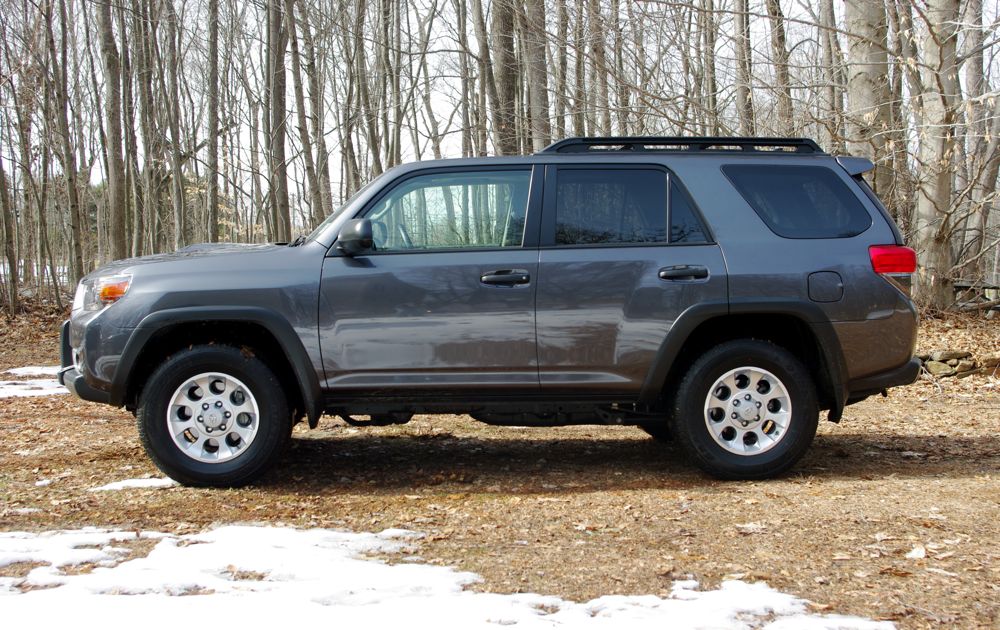
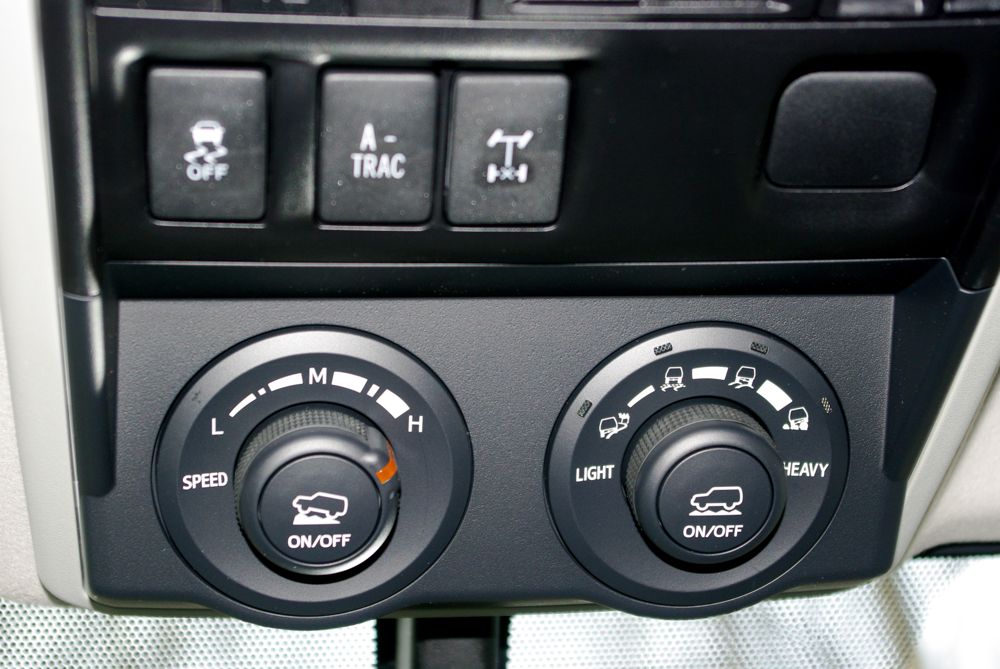
As a person who’s had long and happy relationships with more than one Toyota 4Runner, I have been quite interested in the latest iteration which is pretty much new from the ground up. As fresh as it is, though, it reminds me more of my old ’97 than the previous generation as it seems to be going back to its serious off-road roots (and the form factor is quite familiar). My thought here as to why Toyota went this rugged route (although all 4Runners have always had a stout body-on-frame truck chassis) is the global nature of the new platform. This ute will likely be part of the Land Cruiser family in many markets around the world, and have some serious, manual transmission/diesel variants for work in very primitive applications. In the U.S. we get all the luxurious electronics and bells and whistles, including on the 4Runner Trail I tested some truly mind-boggling off-road electronic gadgets (that can ultimate let the beast handle power and braking during rock-crawling while you just steer). I challenged some really nasty snow and mud-covered farm trails, where the high ground clearance and excellent suspension articulation made easy work of the teflon soup I was sliding around in. Steering is super quick; superb off road but a bit too light for my tastes on the road. That said, where pavement rules the brakes are excellent, and I managed 19.4 MPG which ain’t bad for this badass boulder basher. The dogs loved it, but then again from the ample space with the rear seat folded and the power window in the hatchback they probably thought they were in my rusty ol’ thing. Oh, waterproof seats rock, BTW.